Blog
39 articles on industry & market.
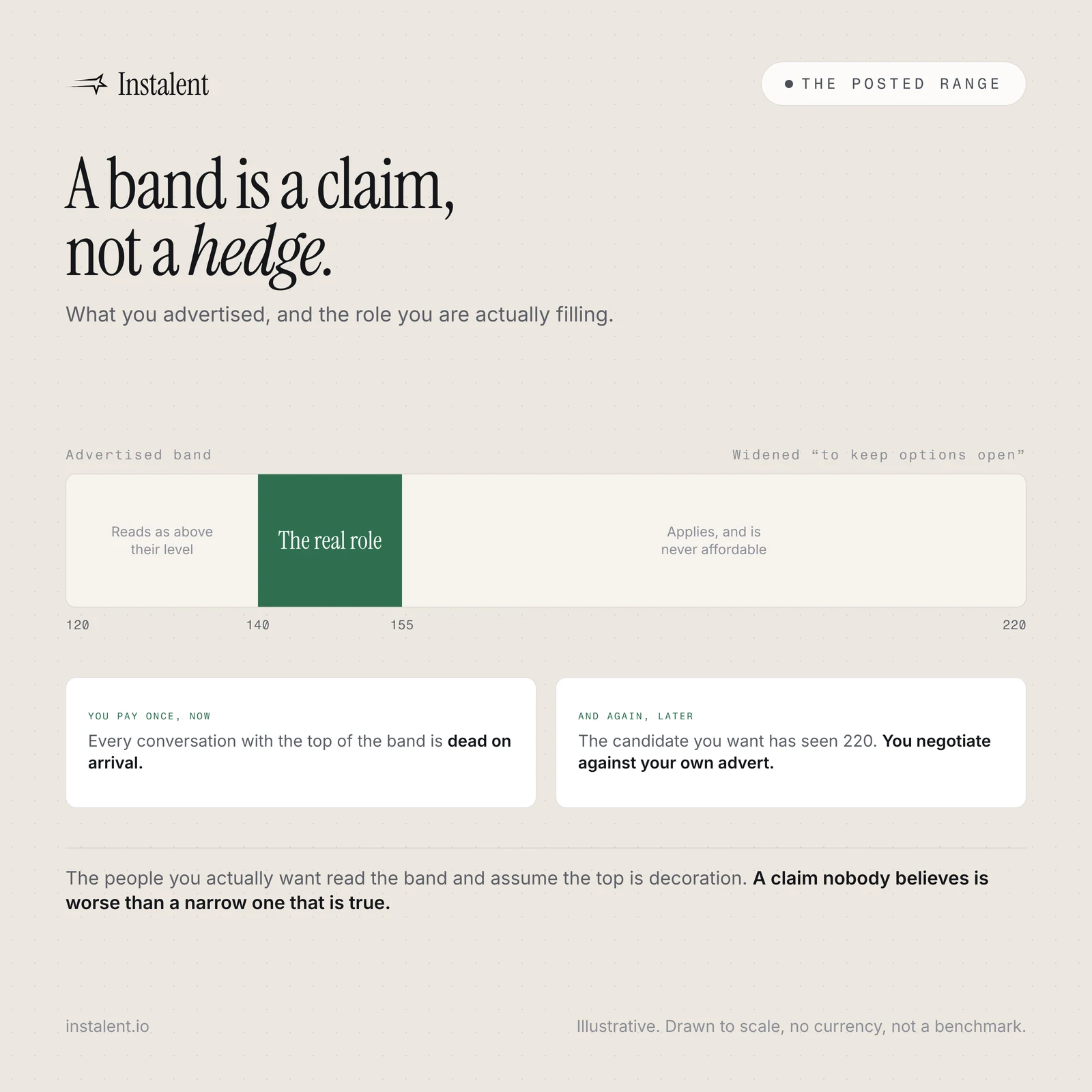
Most US postings now show pay. The range attracts, filters and anchors at once, and the wide band that attracts best wastes the most time.
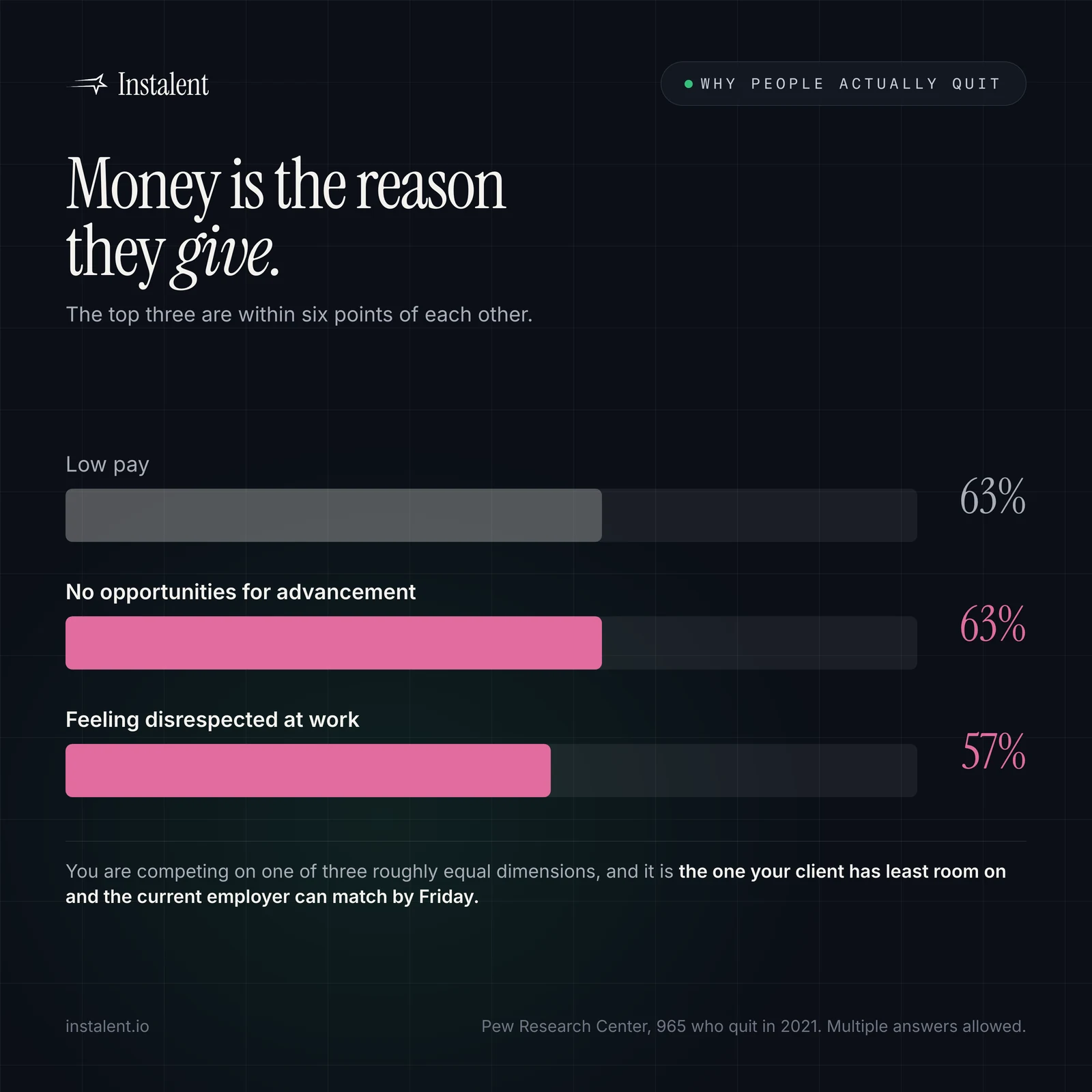
Low pay and no advancement tie as the top reasons people quit, with disrespect close behind. Two of the three are ones recruiters never ask about.
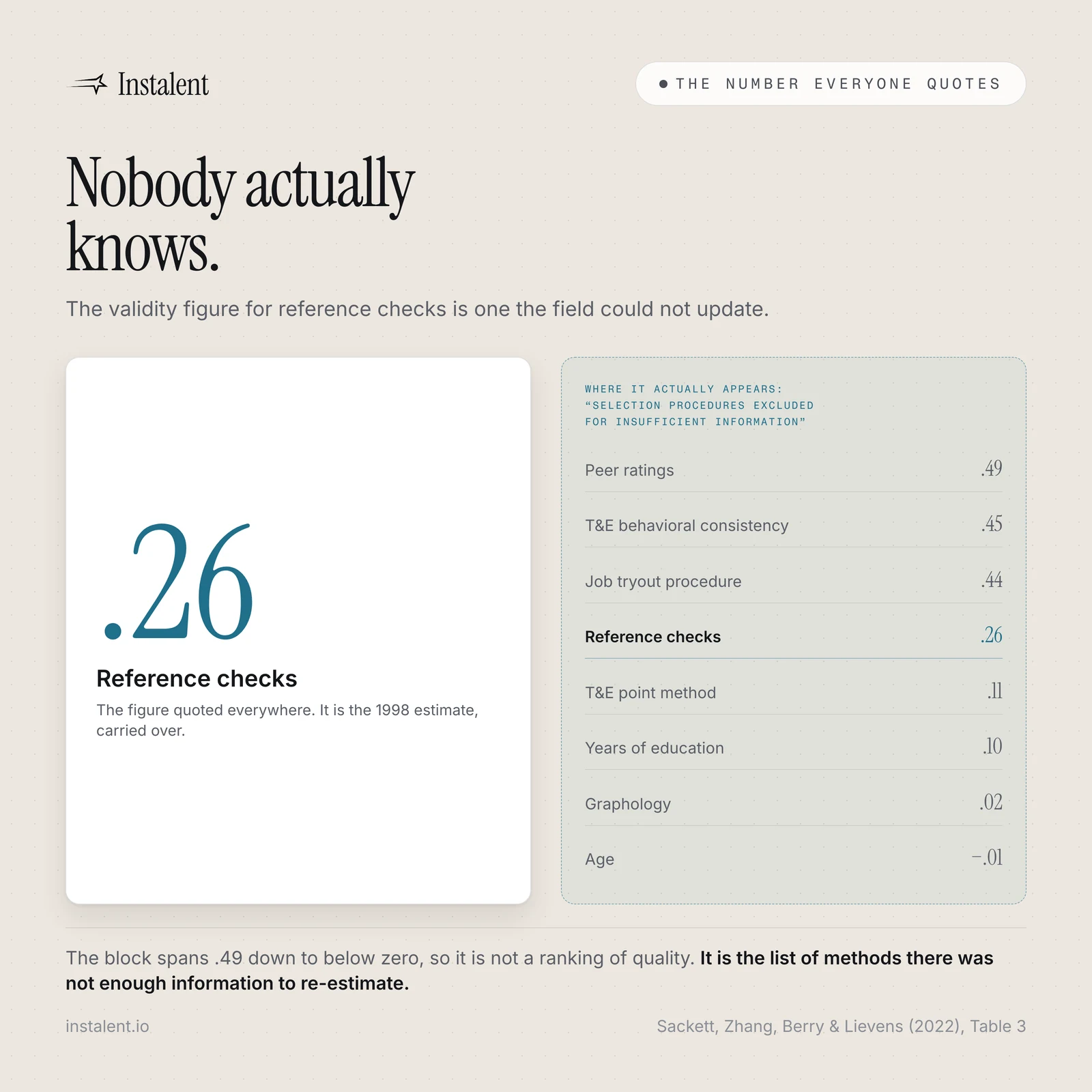
The most-quoted validity figure for reference checks is a 1998 number the field could not update. What the call is genuinely good for instead.
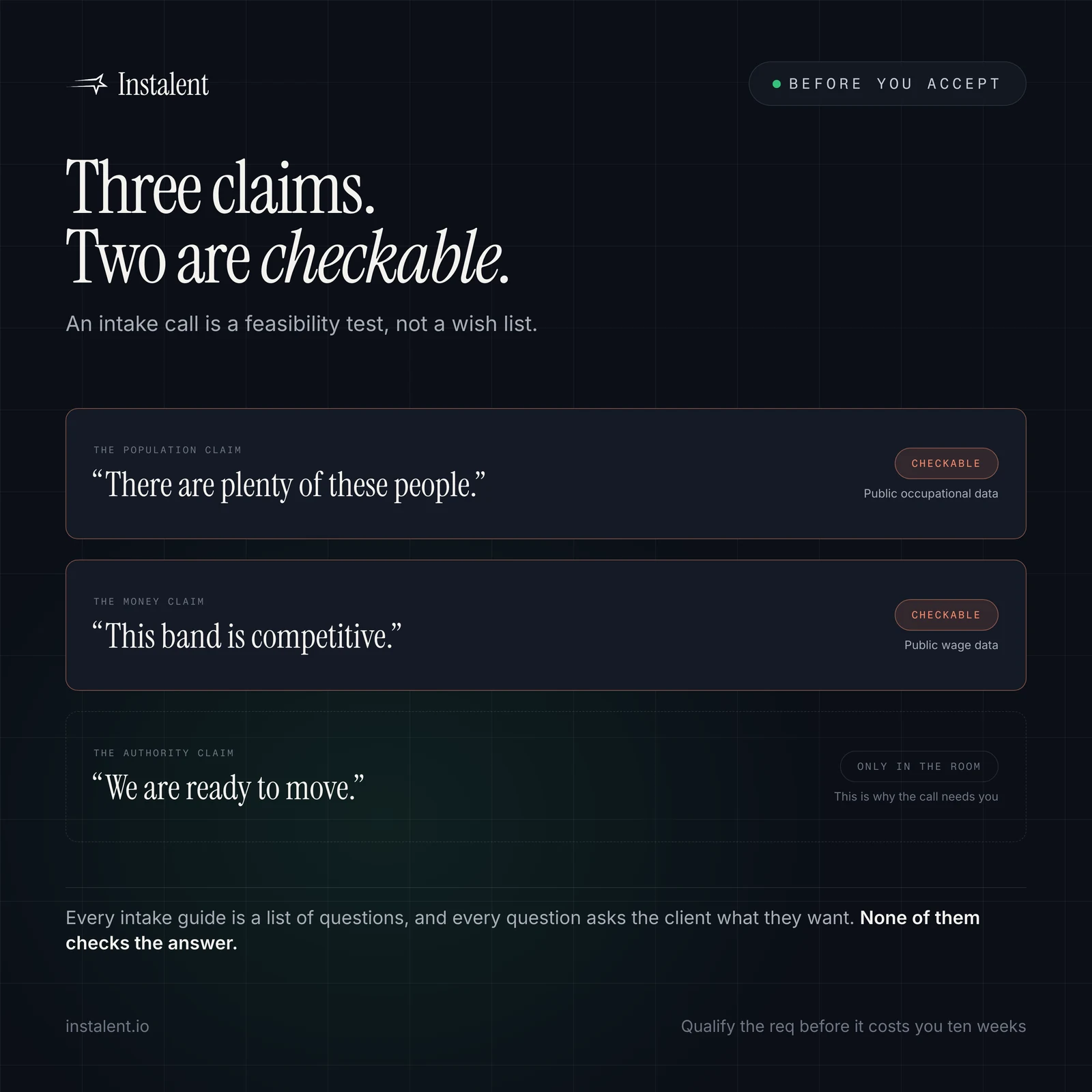
Most intake meetings collect requirements. The ones that prevent a dead search check whether the role is fillable, with public numbers, before you accept it.
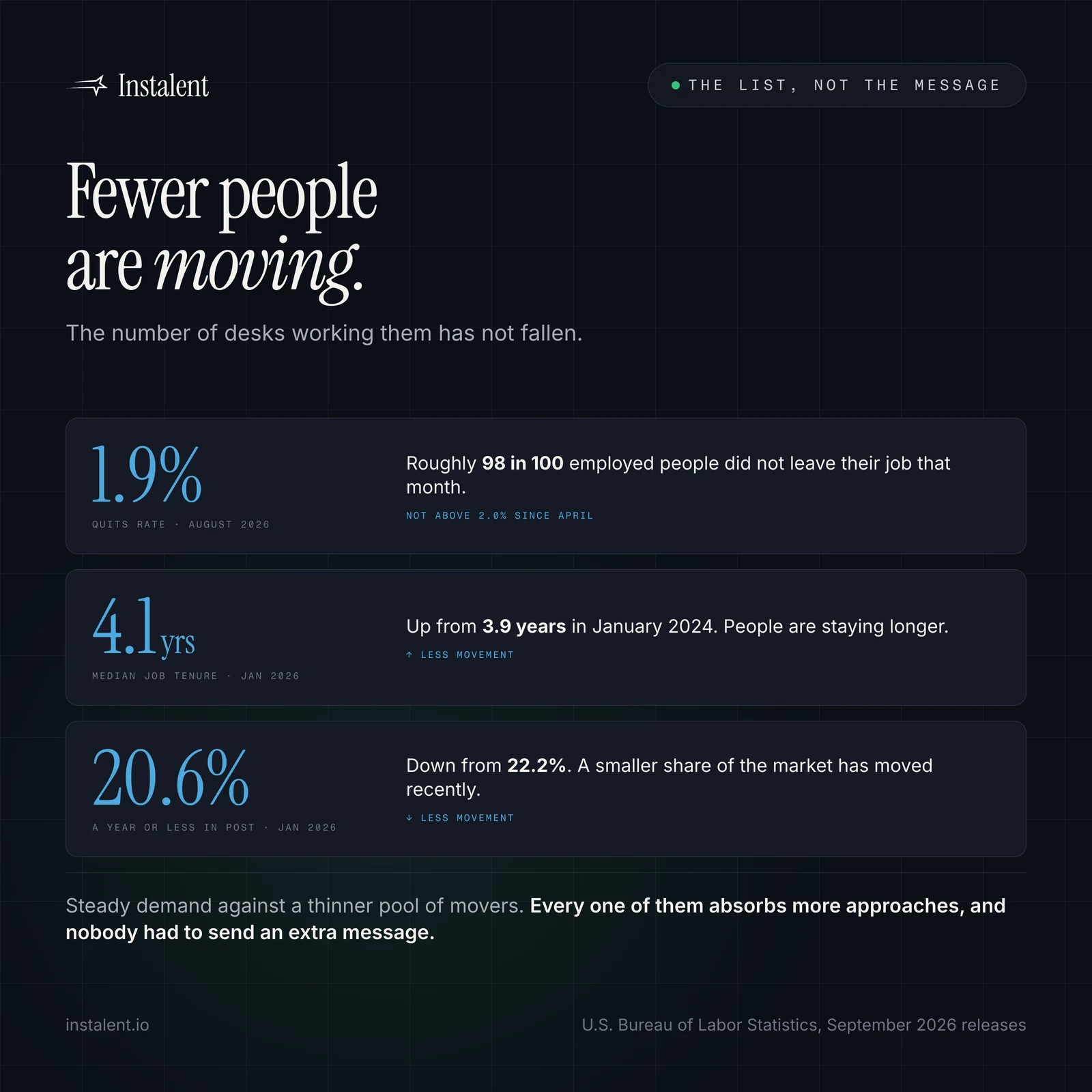
Fewer people are changing jobs while demand holds, so the same candidates absorb every approach. Why reply rates are a list problem, not a message problem.
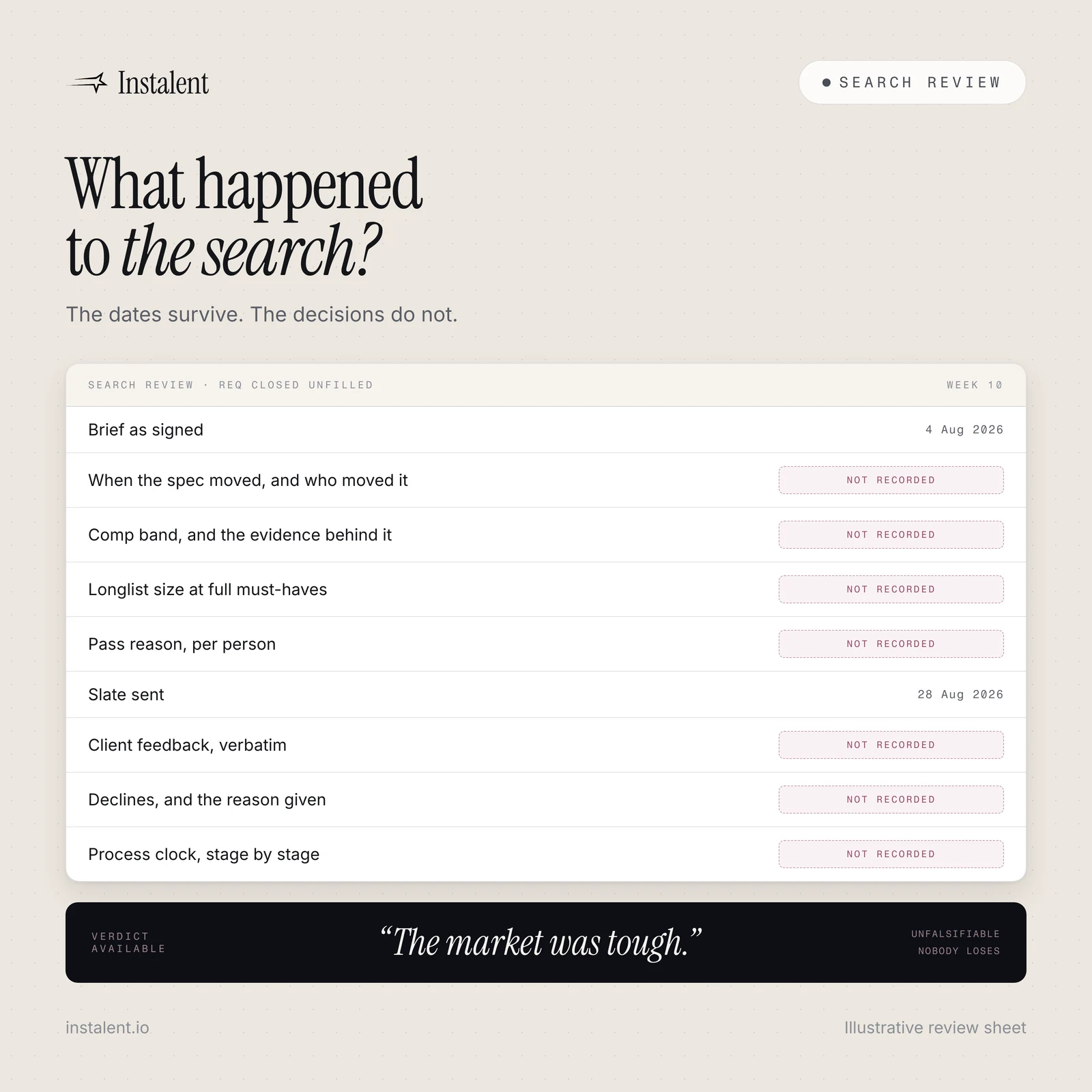
A search that never filled has a knowable cause, but only if you kept the record. What to capture while it is live, and the order to diagnose it in.
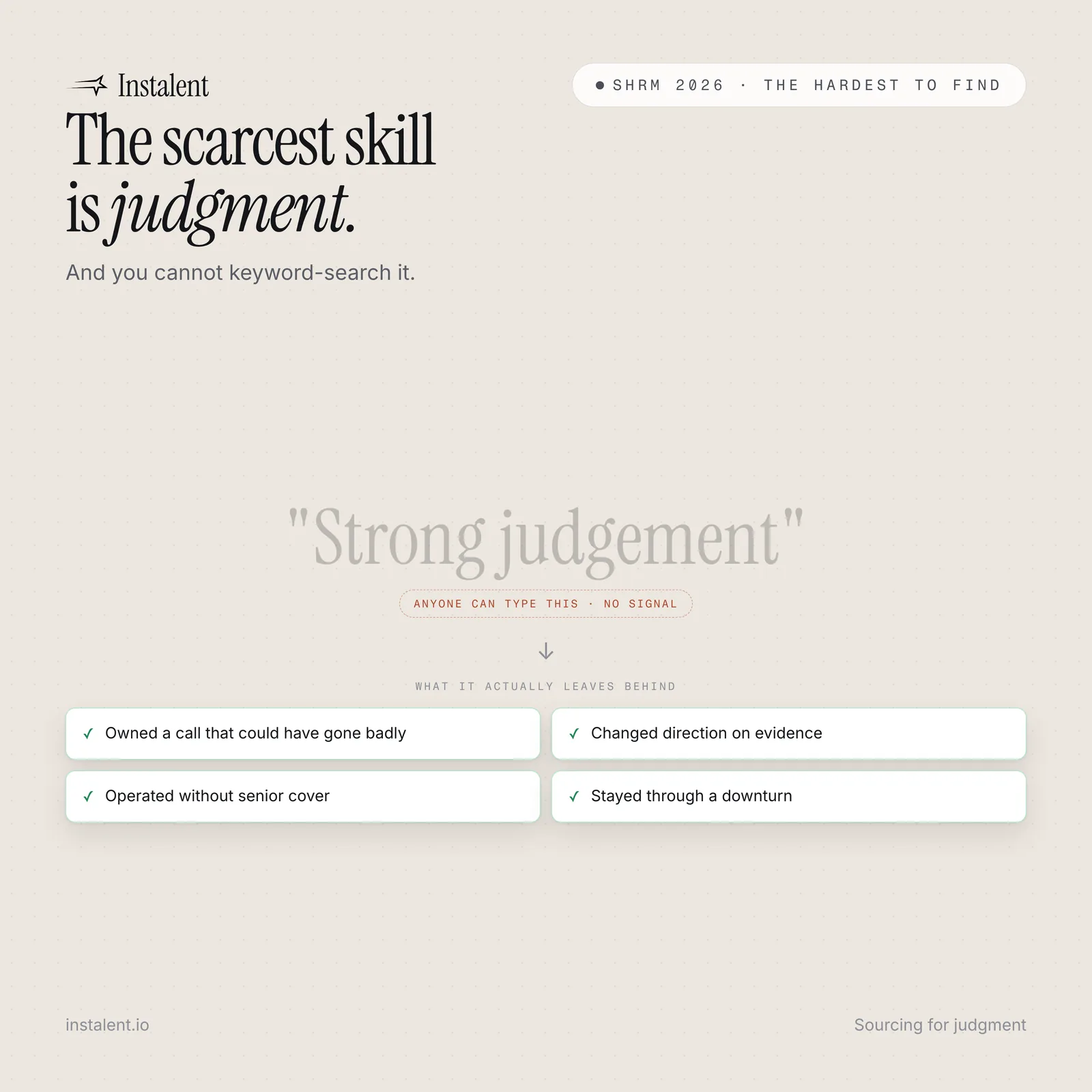
The hardest skill to hire for is judgment, not a technical one. What it leaves behind on a profile, how to write it as a must-have, and how to score it honestly.
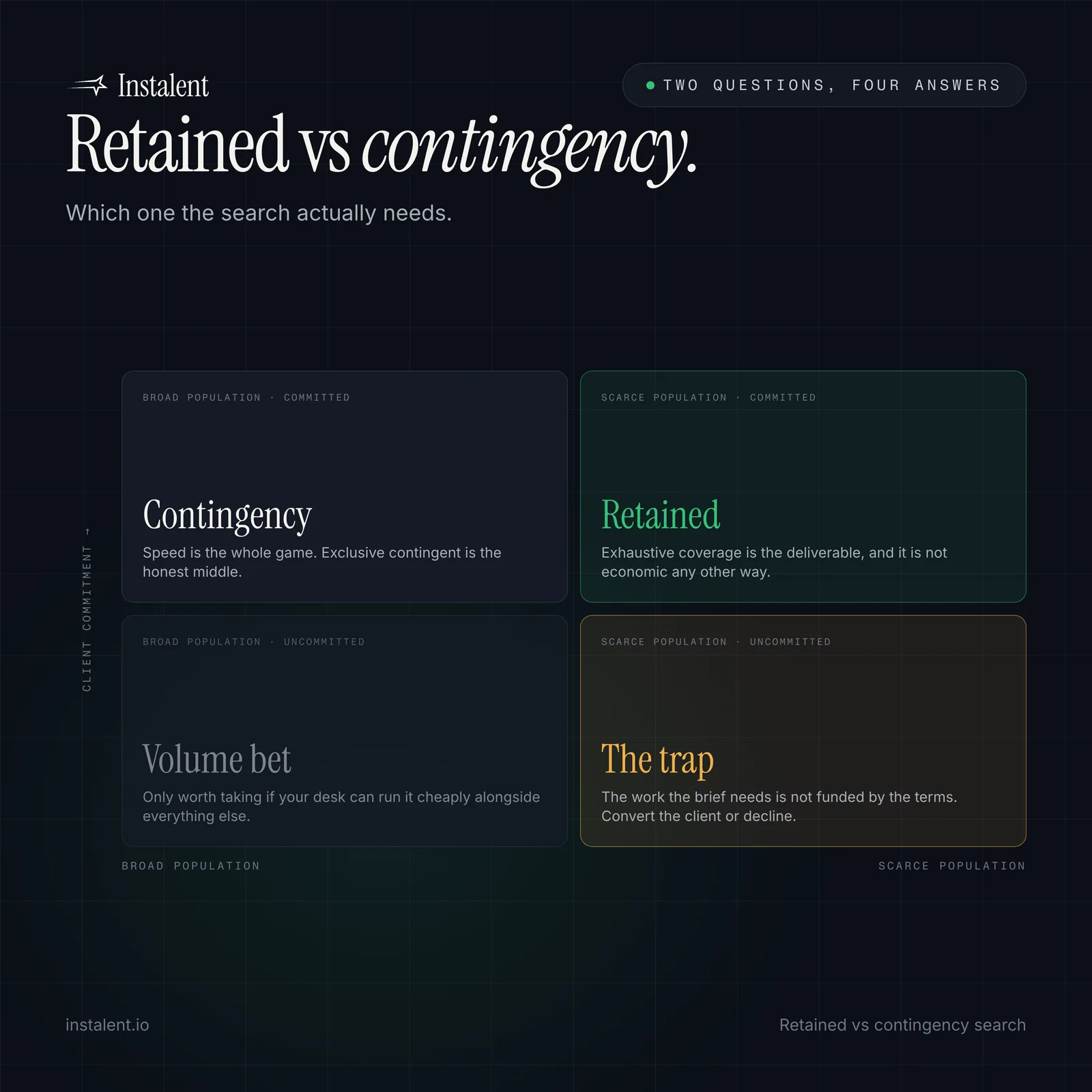
Retained search vs contingency search, decided from the desk: what each model really buys, why the usual fill-rate claims do not hold up, and the two questions that settle it.
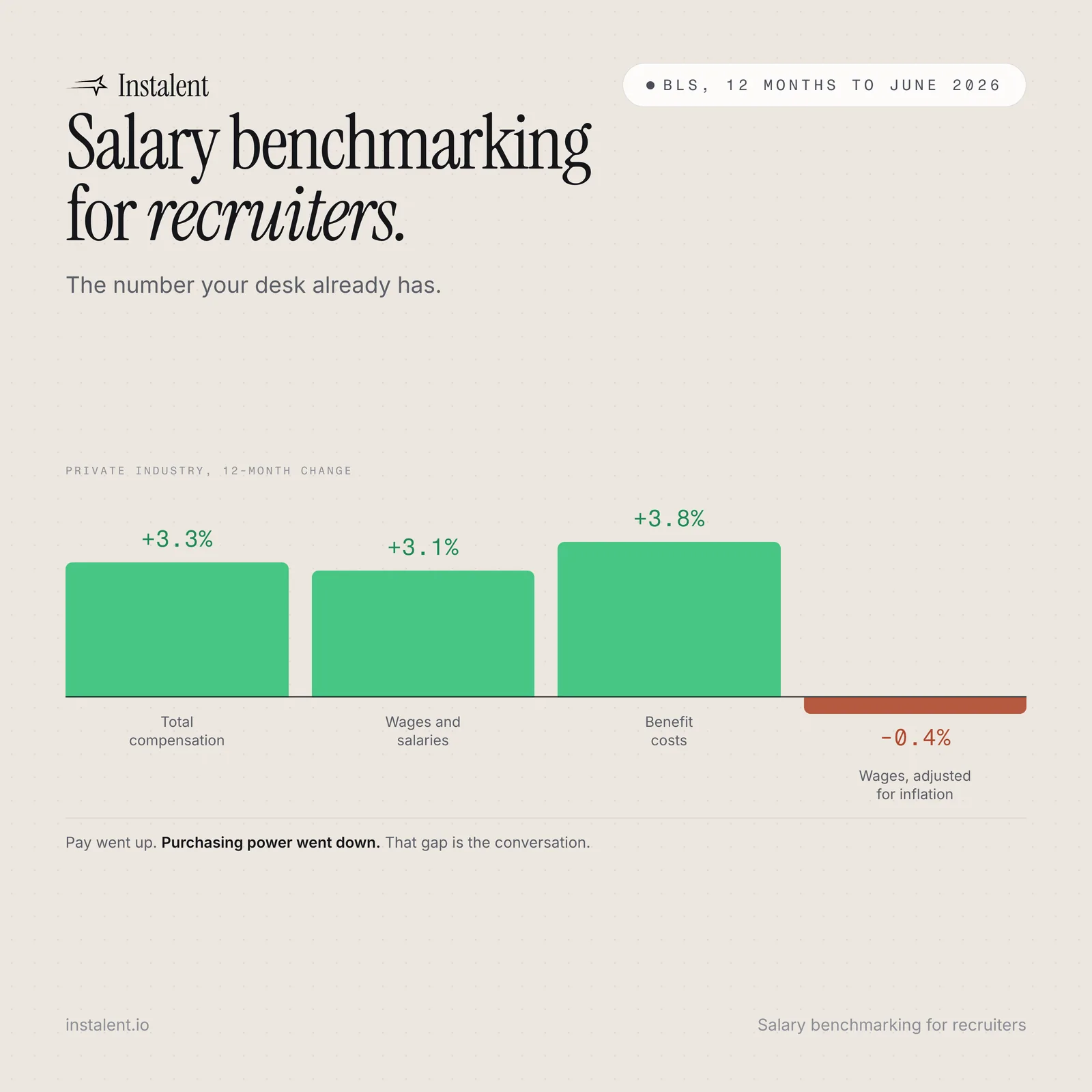
How to conduct salary benchmarking on a live desk: why survey data goes stale, the four sources ranked by weight, and what to do when the budget misses the market.
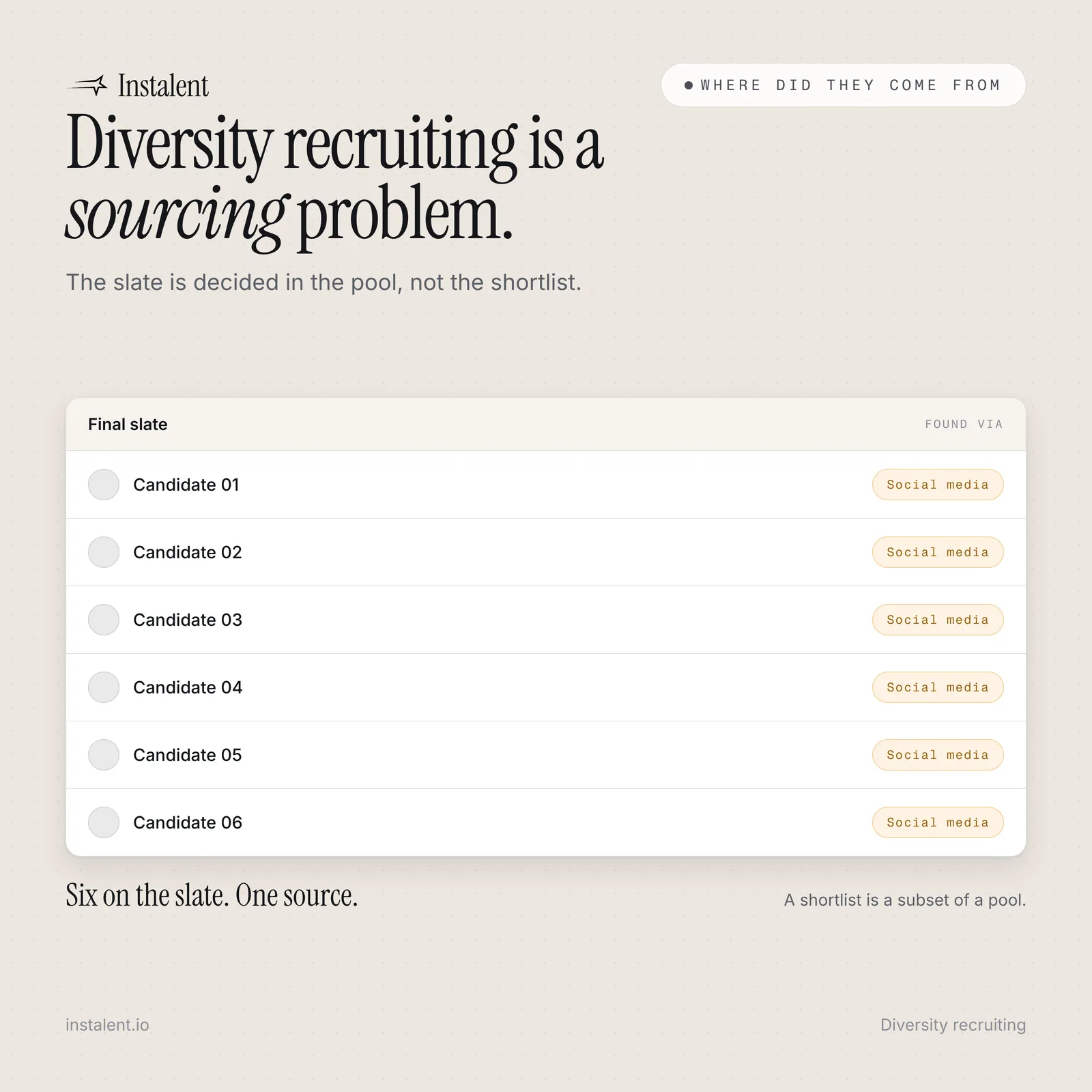
Diversity recruiting starts in the pool, not the shortlist: why single-channel sourcing narrows a slate, how pedigree proxies compound it, and what tooling cannot fix.
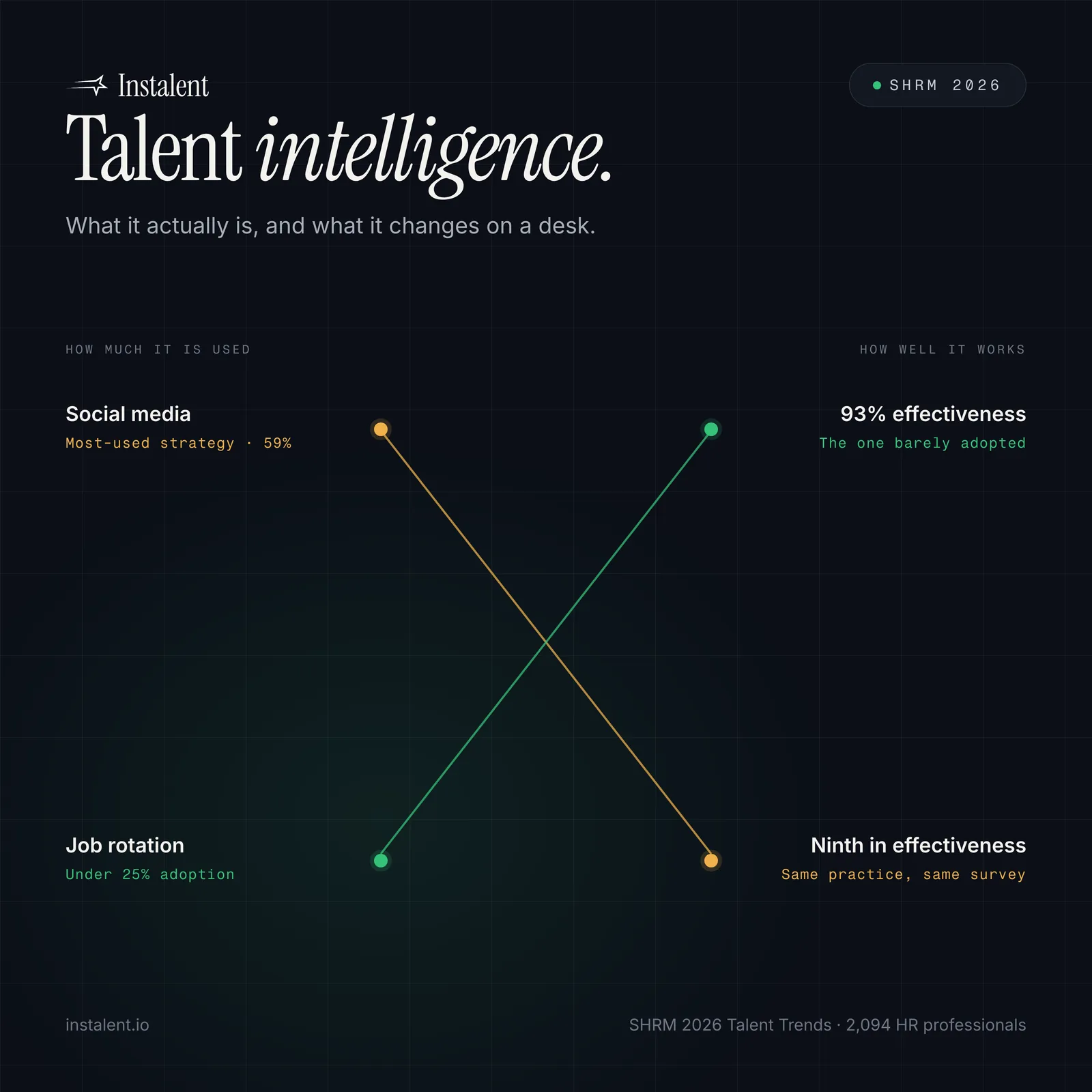
What talent intelligence is, how it differs from talent mapping and recruitment analytics, the four questions it has to answer, and what it changes on a desk.
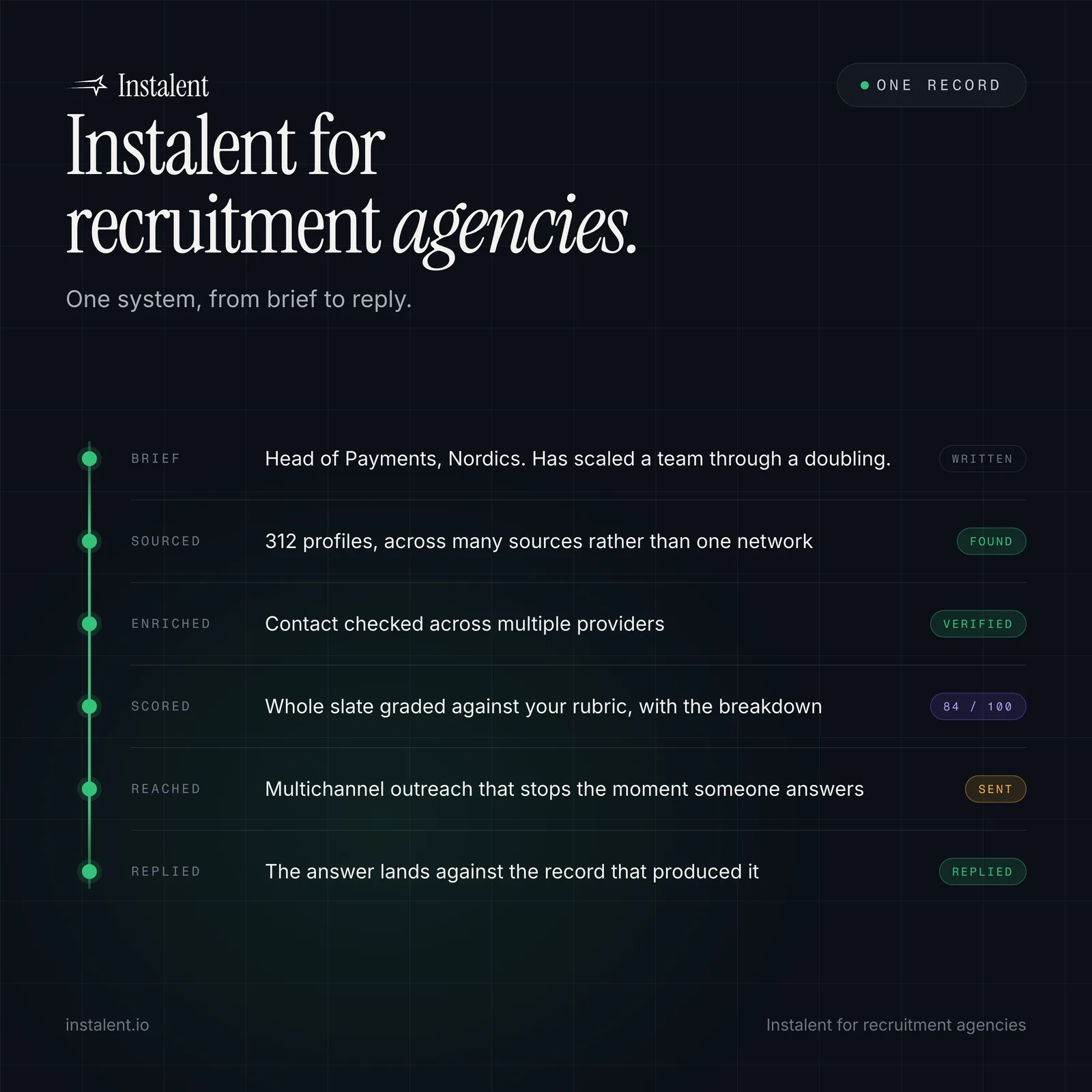
Recruitment agency software that keeps one record from brief to reply: sourcing, verified enrichment, scoring, outreach and client prospecting in one place.
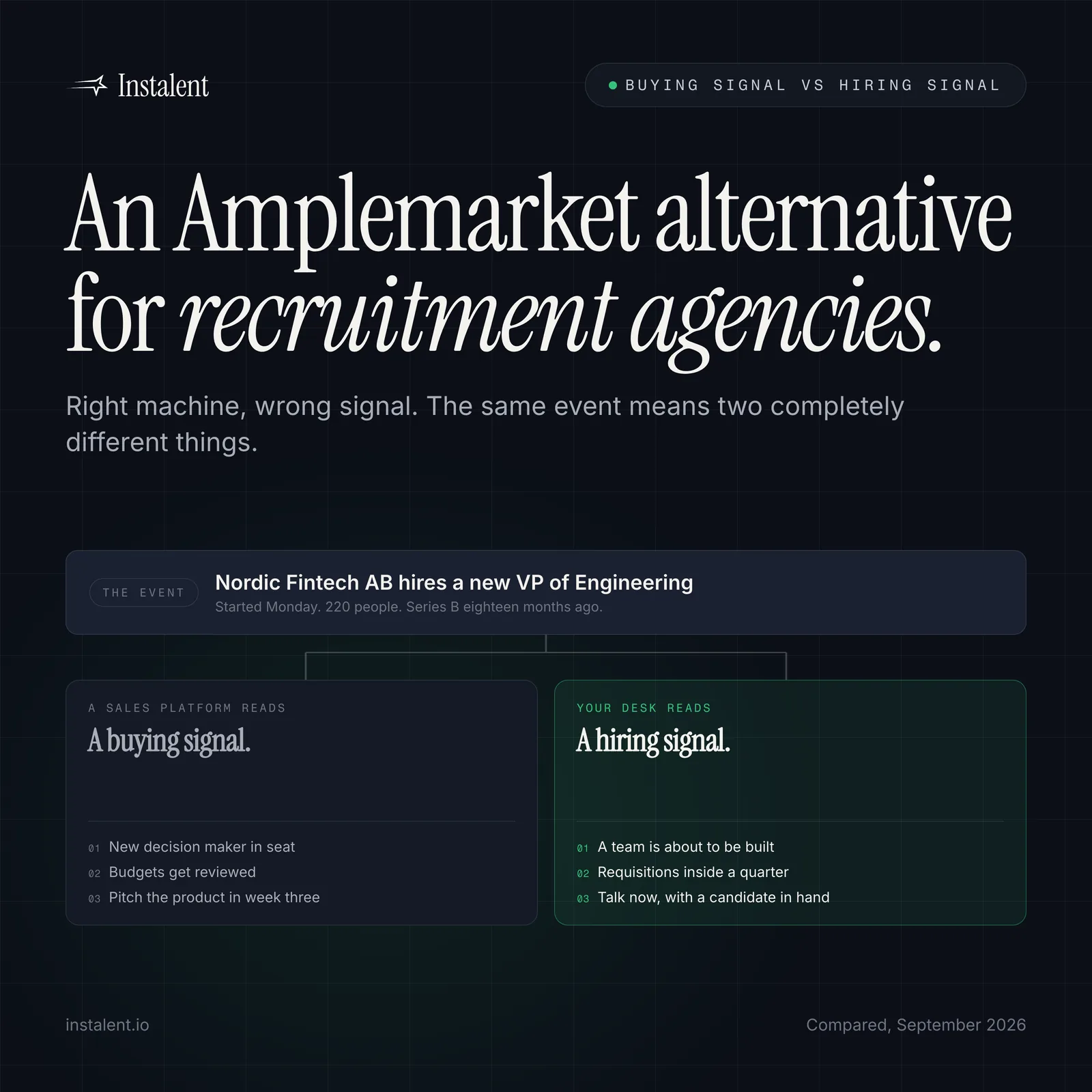
An Amplemarket alternative for agencies. It is the closest thing in sales to a full outbound engine, and its signals point at buyers. Yours need to point at hiring.
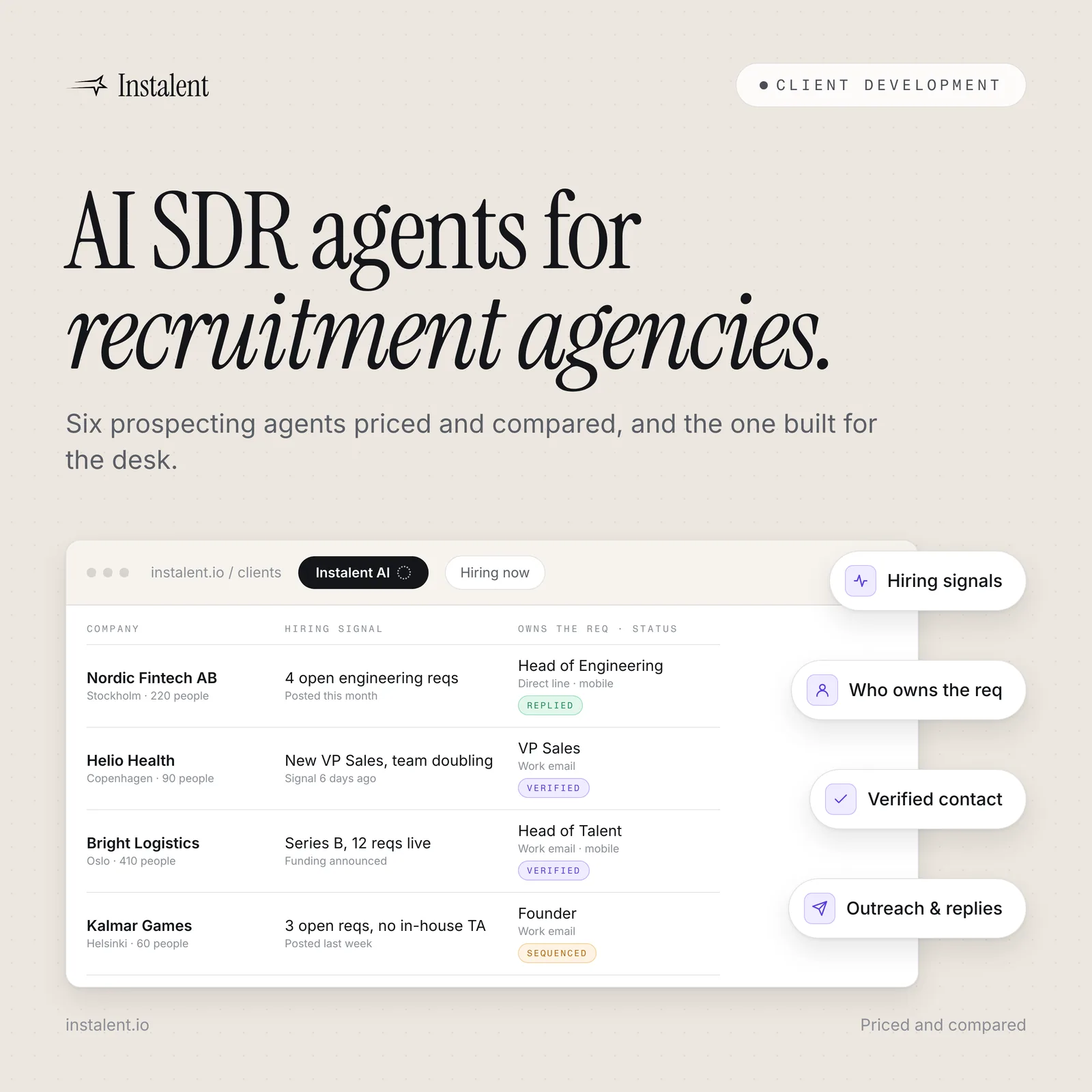
Can a recruitment agency run business development on an AI SDR agent built for software sales? Six prospecting agents priced and compared, and where a recruiting desk needs more.
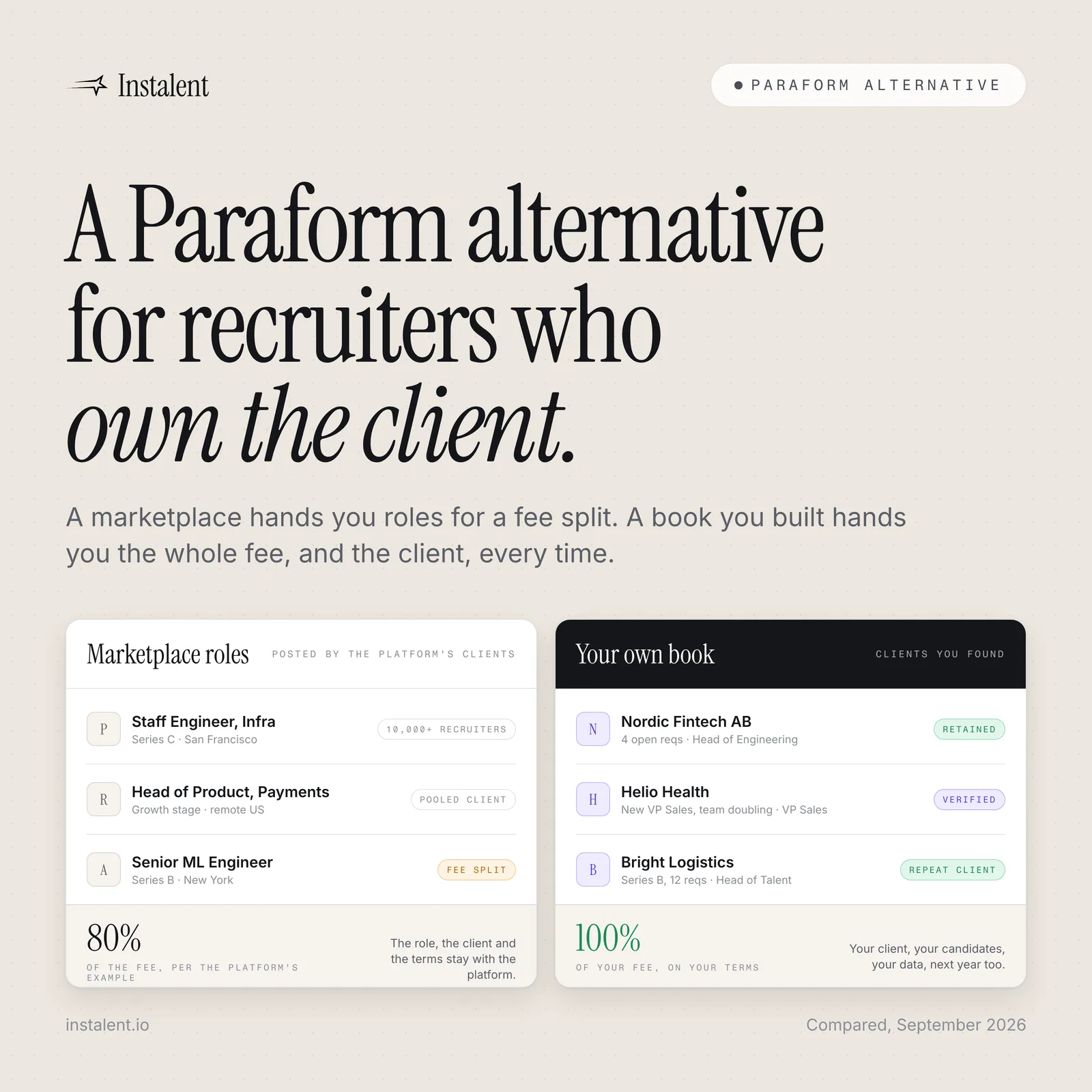
A Paraform alternative for recruiters and agencies: Paraform is a marketplace that hands you roles for a fee split. Instalent helps you find your own clients, source, and keep the whole fee.
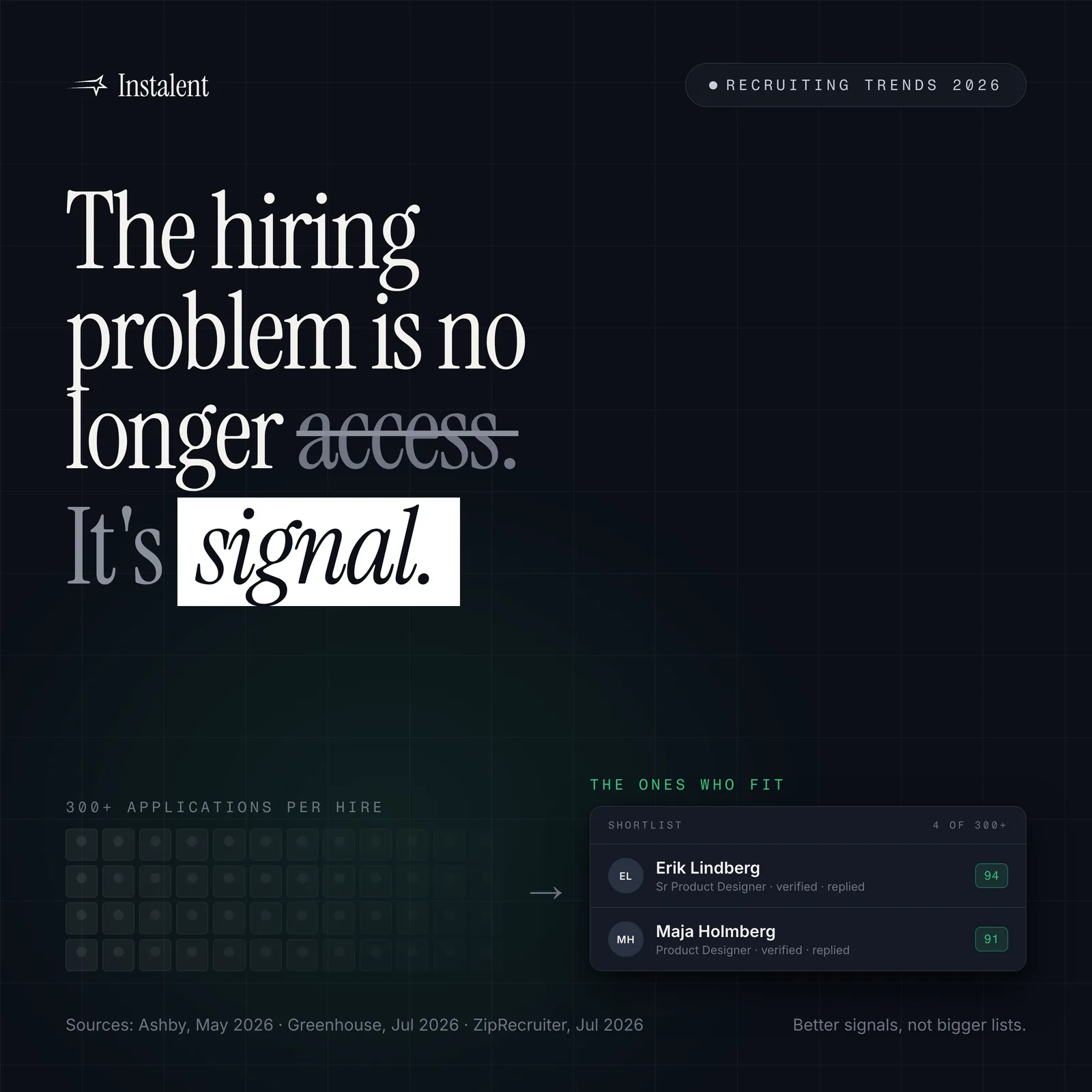
The recruiting trends 2026 data agrees on one thing: reach is solved and signal is scarce. Six shifts, each with a cited number, and what a signal-first desk does differently.
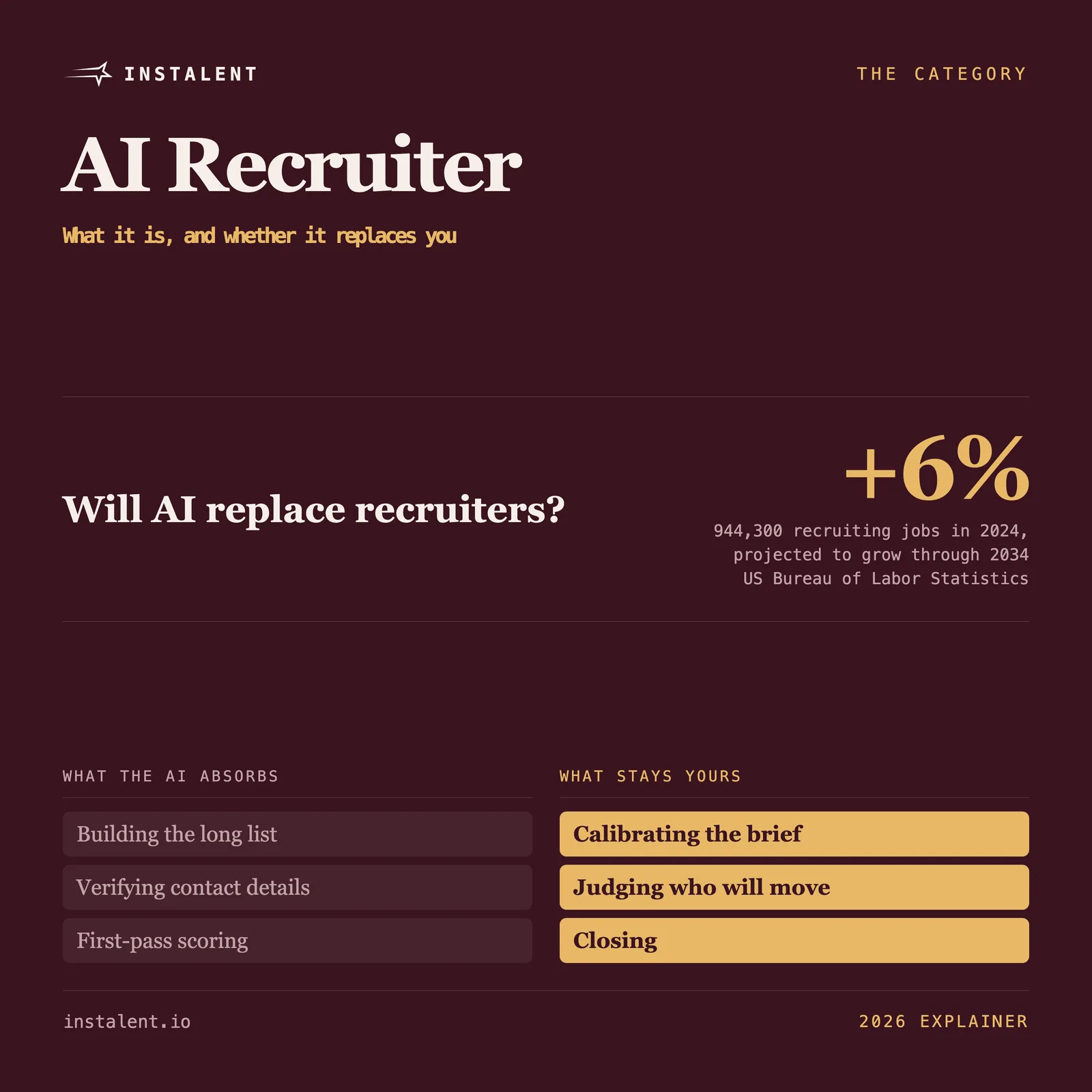
Two very different products are sold as an AI recruiter. Here is what each one does, what the data says about both, and whether either replaces a recruiter.
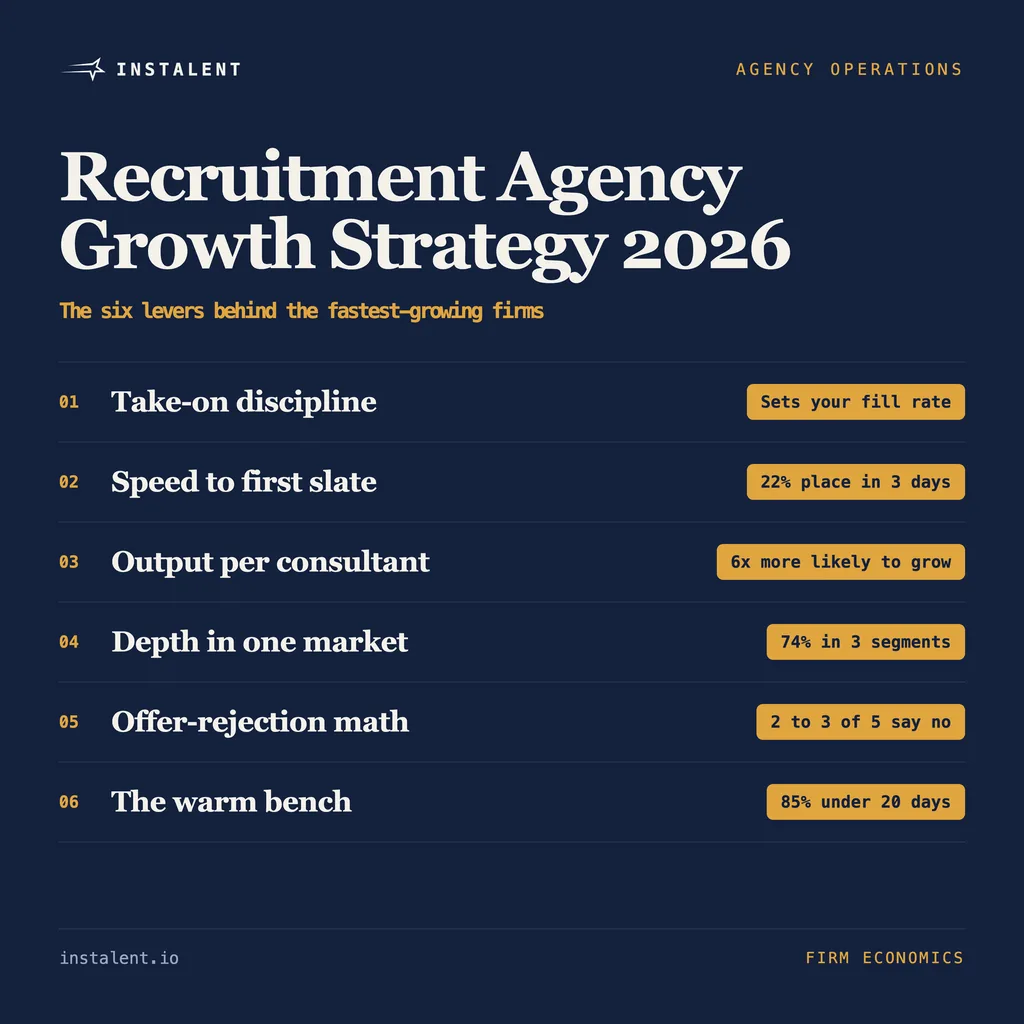
A recruitment agency growth strategy built on 2026 data: what separates firms compounding at 15%+ organic from firms holding flat, and the six levers.
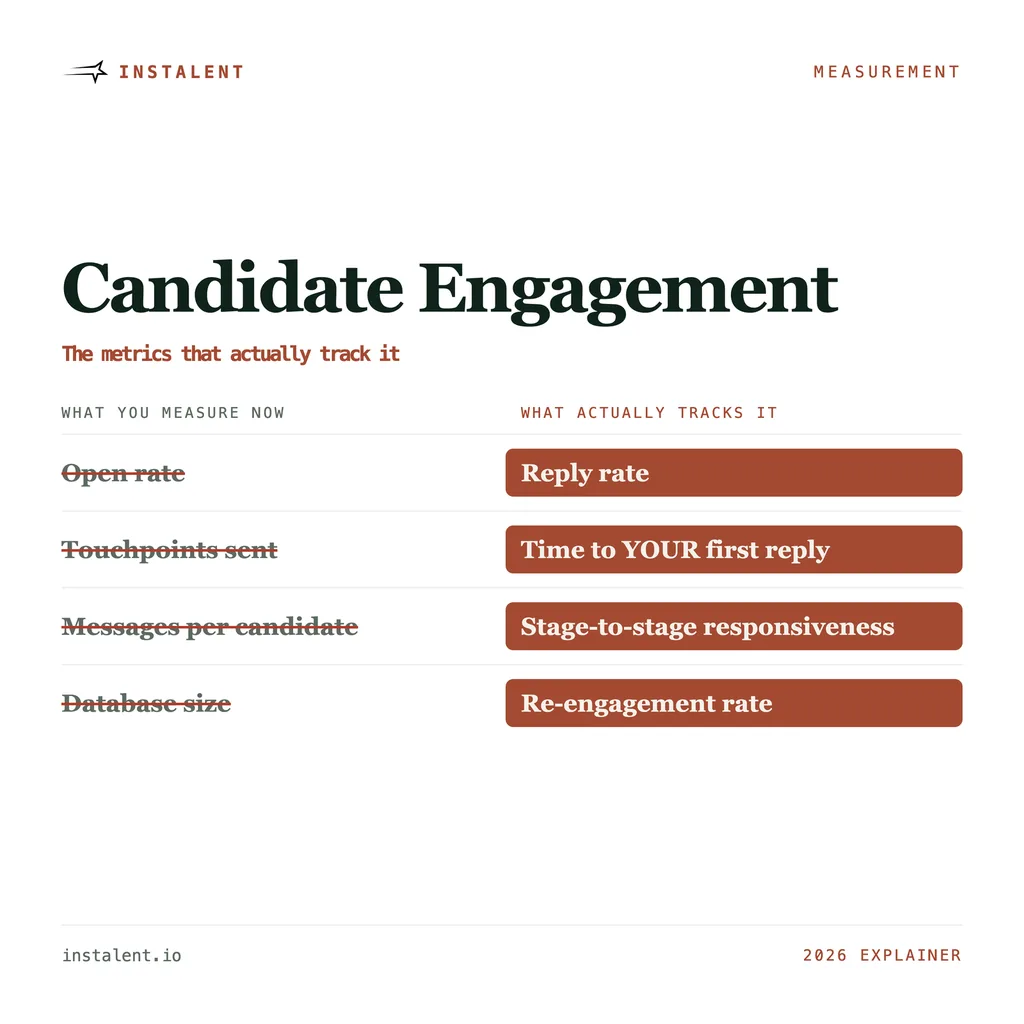
What candidate engagement means, why activity metrics mislead, the four numbers that actually track it, and the candidate engagement best practices that move them.
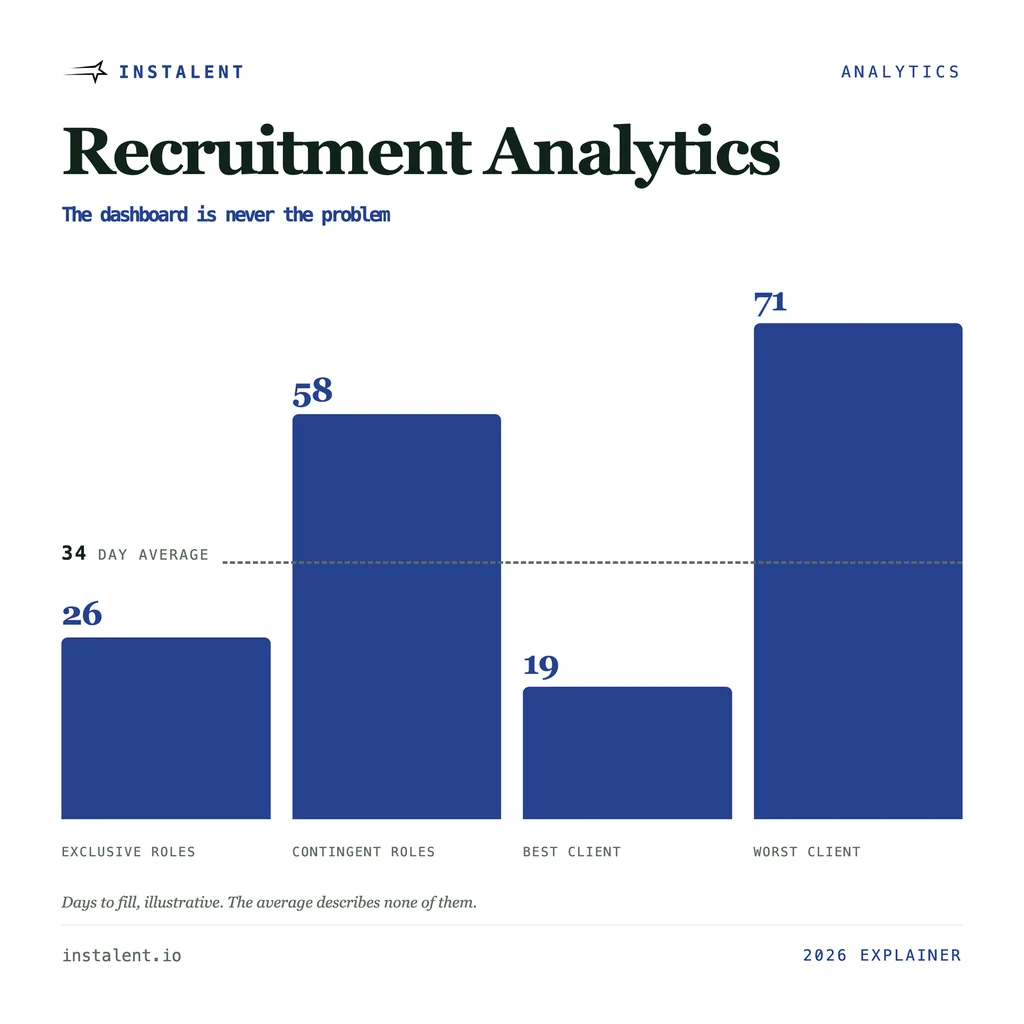
What recruitment analytics is, why recruiting data breaks before it reaches a dashboard, and what recruitment analytics software actually does.
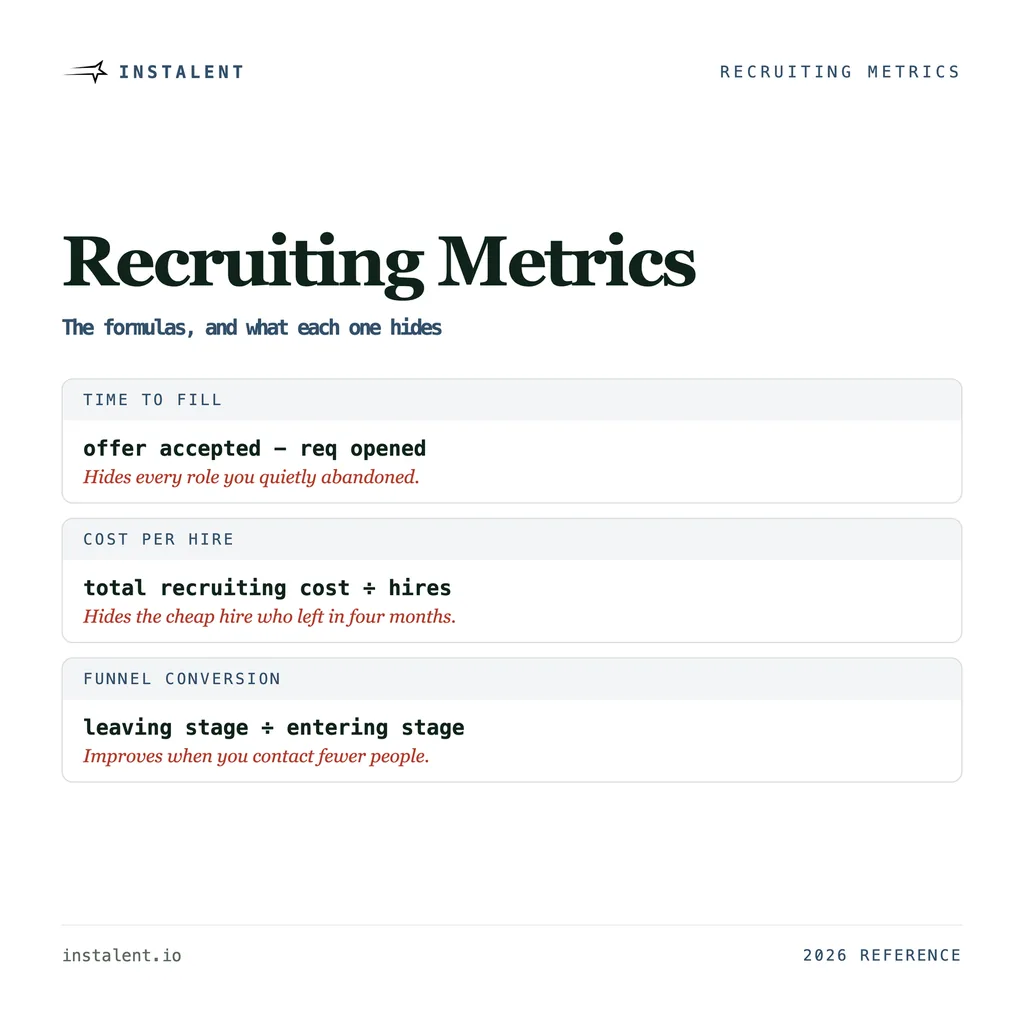
The recruiting metrics that get used - quality of hire, cost per hire, time to fill vs time to hire and recruitment KPIs - with the formula for each.
A solo recruiter has to cover five jobs a 20-person agency splits between people. The operating model that makes that work, and what the growth data says.
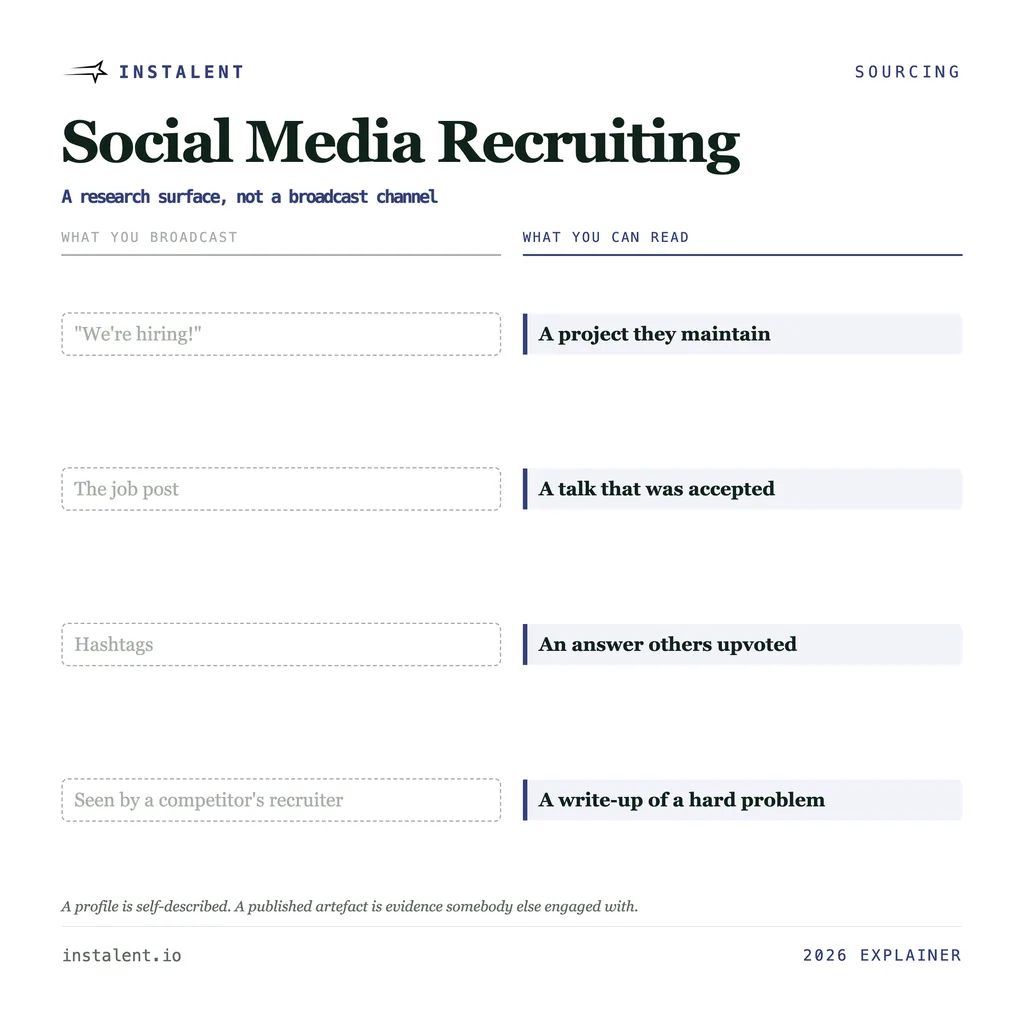
Social media recruiting works as research, not broadcast. What each platform is actually good for, why posting jobs fails, and the line you should not cross.
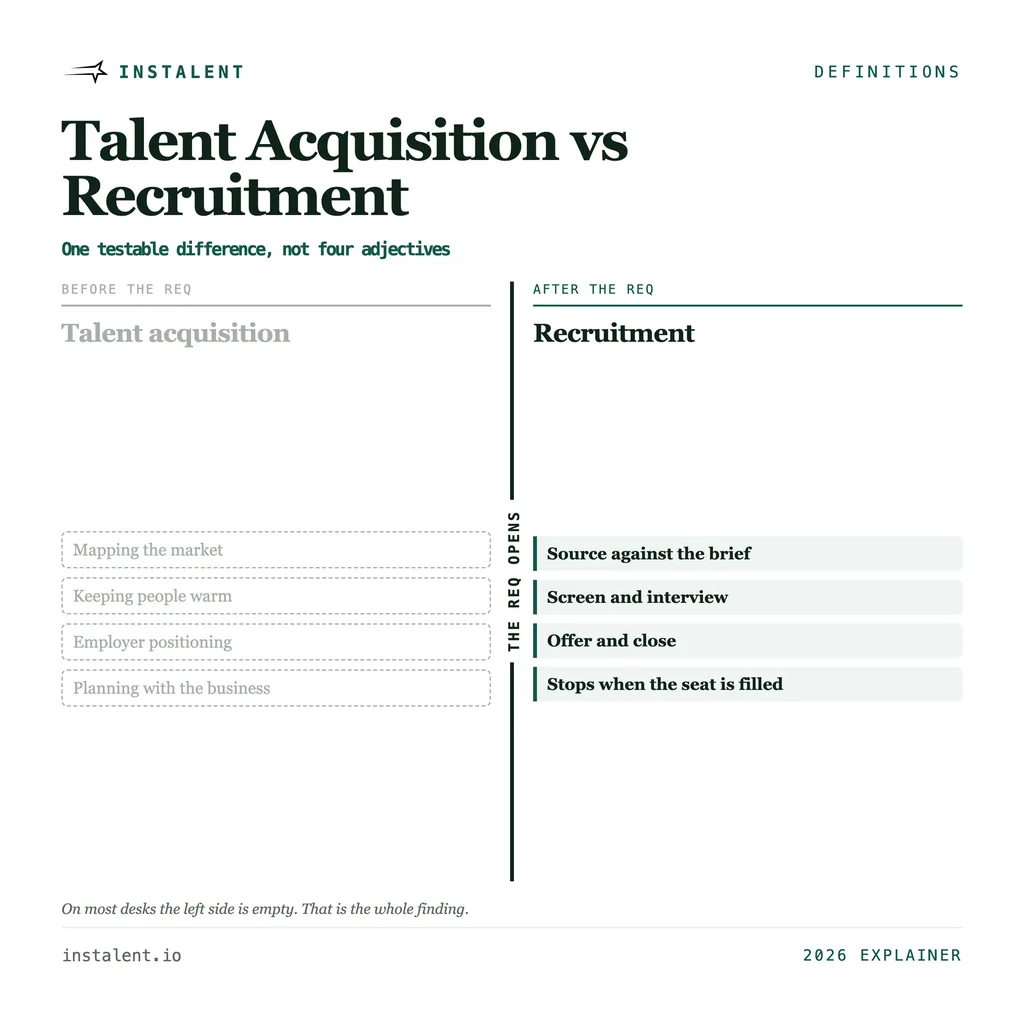
Talent acquisition vs recruitment, without the vague strategic-versus-tactical framing. The one testable difference, and what each actually costs to run.
The staffing market is growing again. For enterprise recruitment and staffing firms this is a year won on efficiency: more output from one platform.
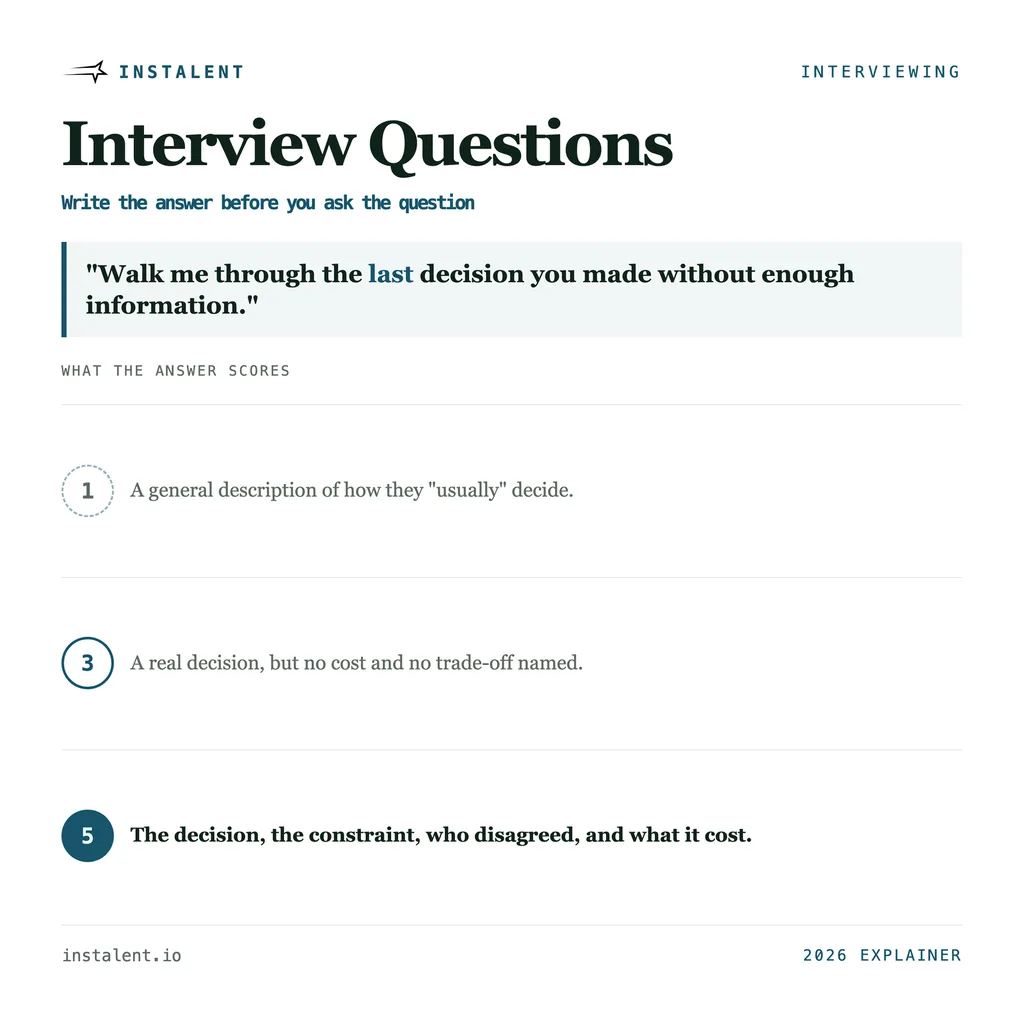
The interview questions to ask candidates that actually predict performance, the ones to retire, and how to score answers so two interviewers reach the same verdict.
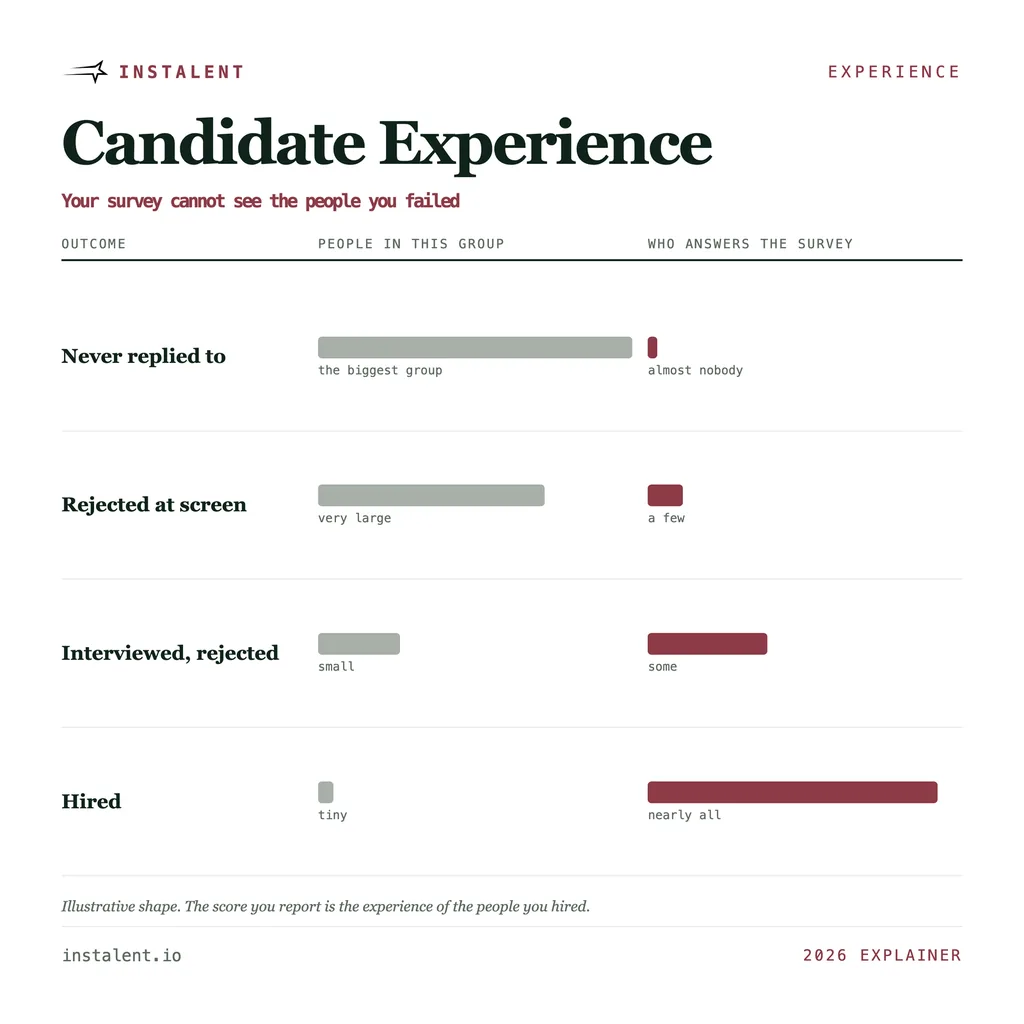
What candidate experience is, what a bad one costs in revenue, the survey bias that hides it, and the metrics and moments that actually move it.
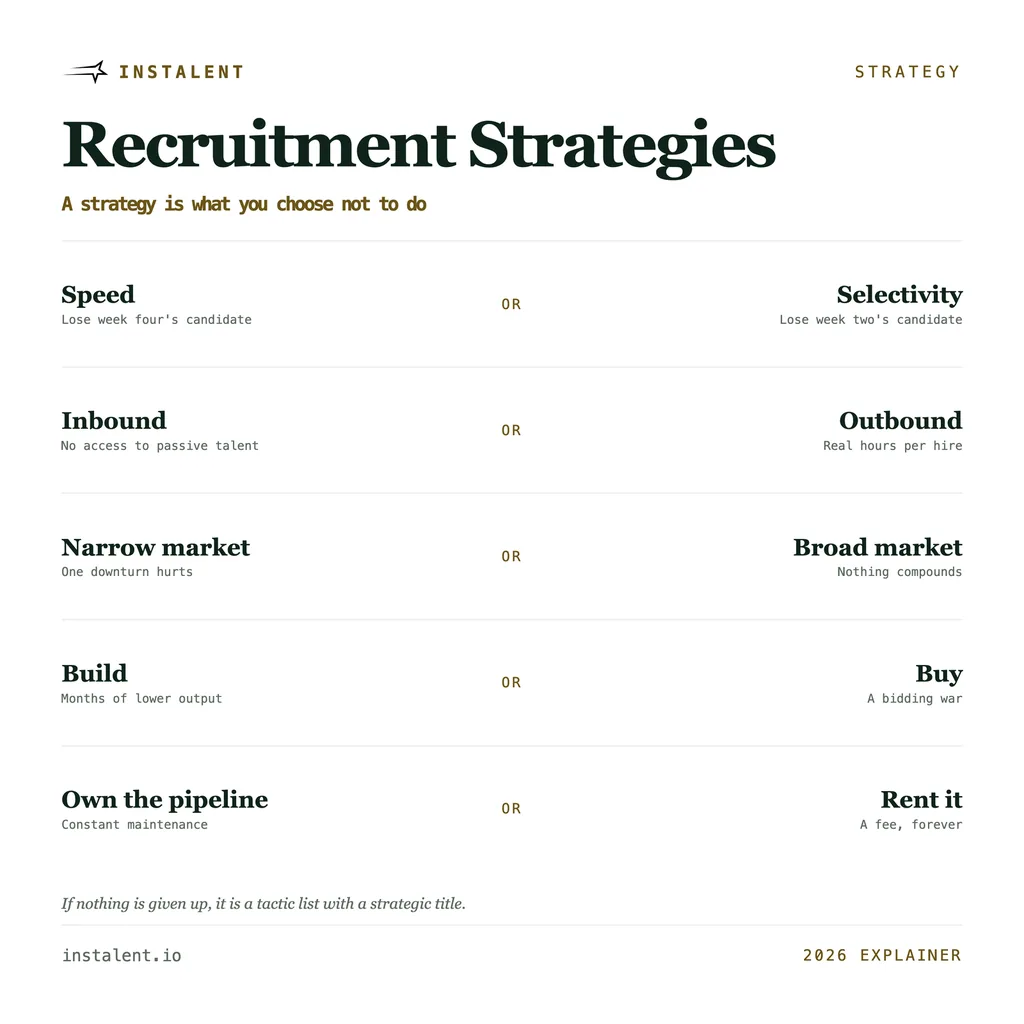
Most recruitment strategies lists are tactics. A real strategy is a choice that excludes something - here are the five forks, what each costs, and how to pick.
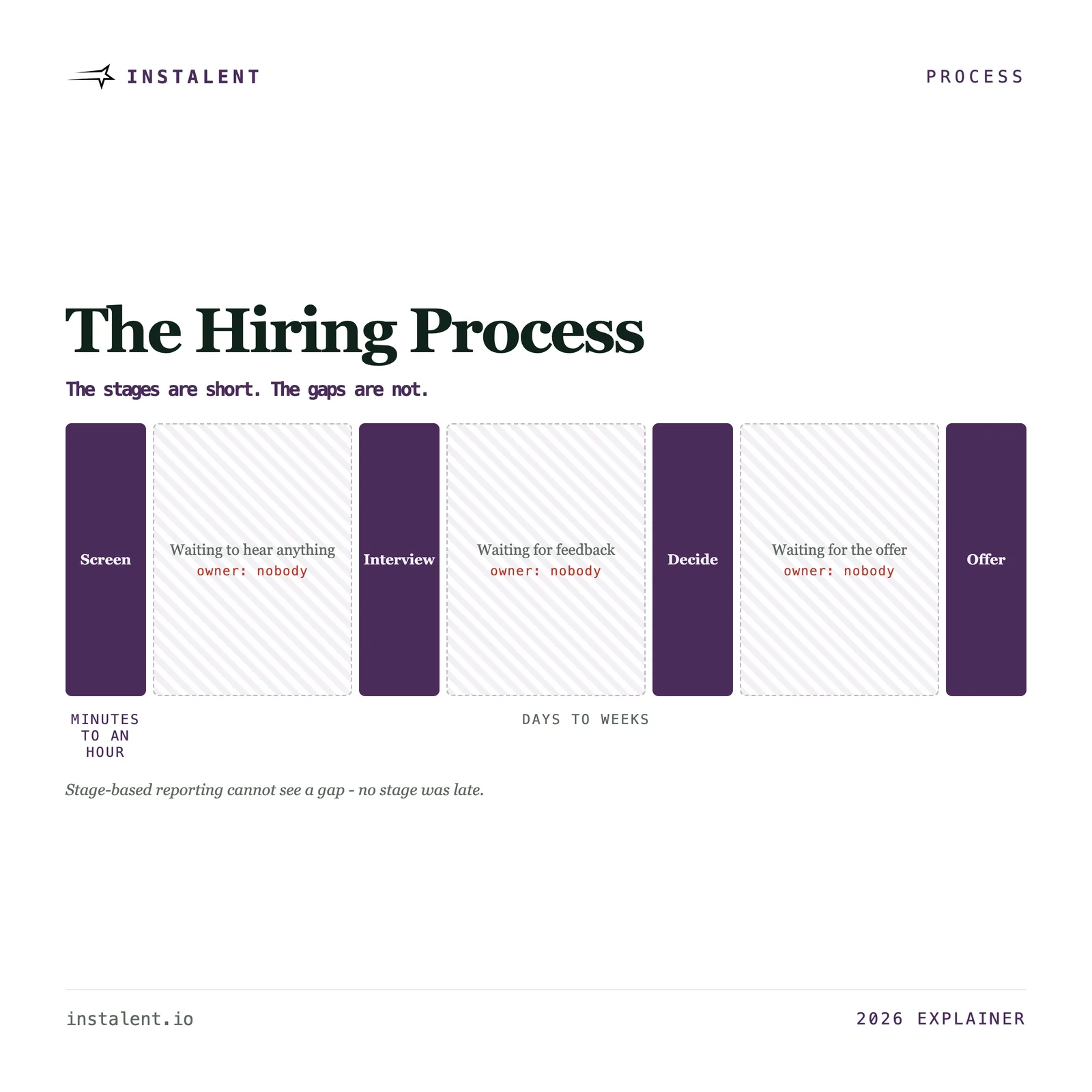
The hiring process stage by stage - and why the failures are almost never in the stages themselves but in the unowned gaps between them.
Client market mapping finds every company that employs a role, then hands you the decision-makers. The market map that used to take a week, built in minutes.
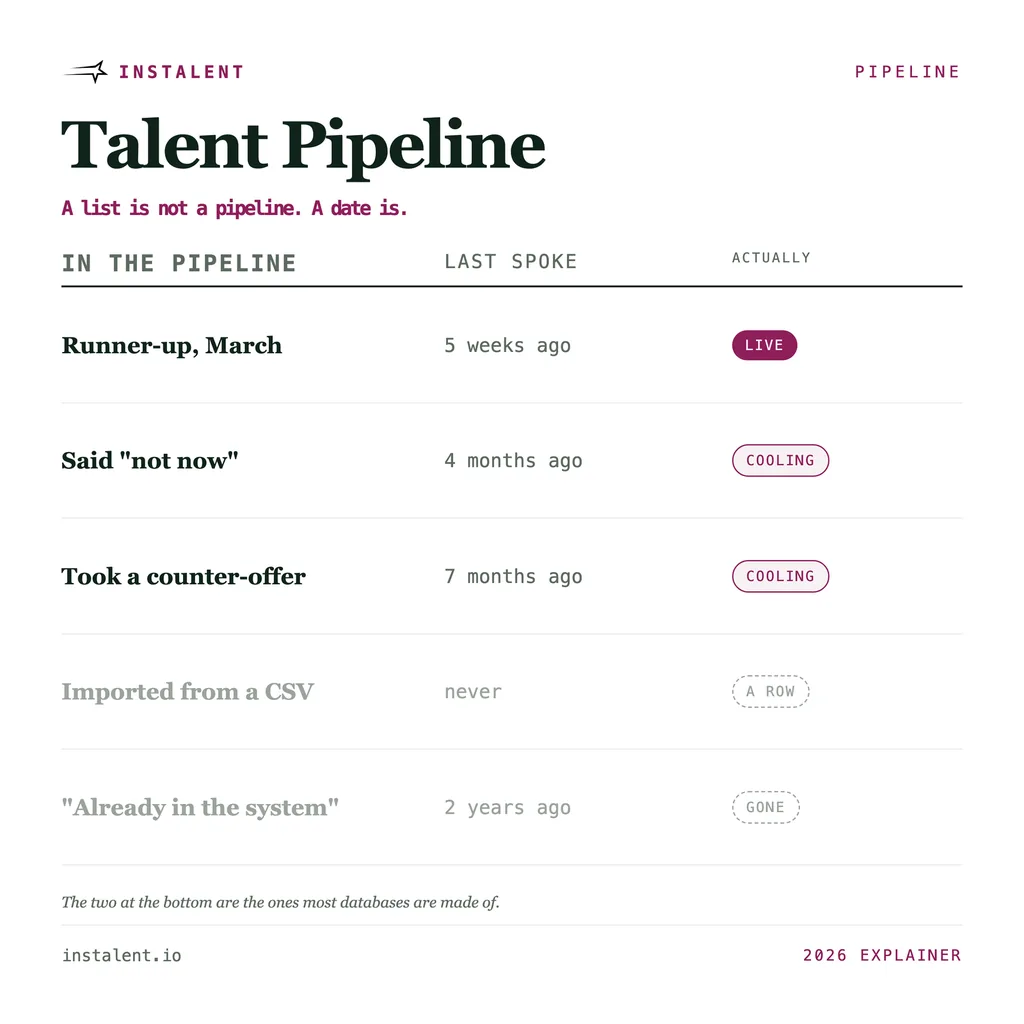
What a talent pipeline is, how it differs from a talent pool, the five steps to building one, and the two clocks that quietly turn a strong one into a list.
The ROI of AI sourcing, measured honestly: how recruiter hours, time-to-fill and cost-per-hire really move, plus the benchmarks to run the math on your own desk.
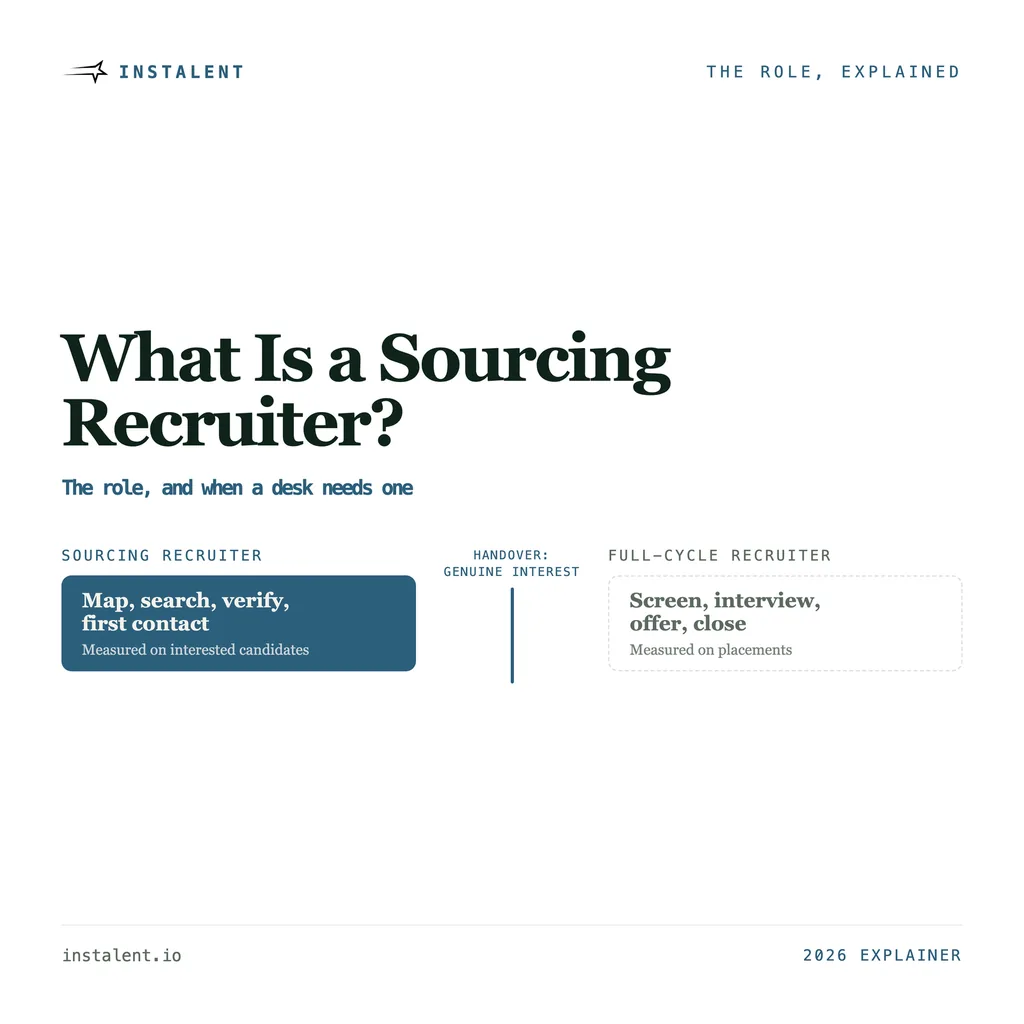
What a sourcing recruiter does, how a sourcer differs from a recruiter, and the honest test for whether your desk needs a dedicated one.
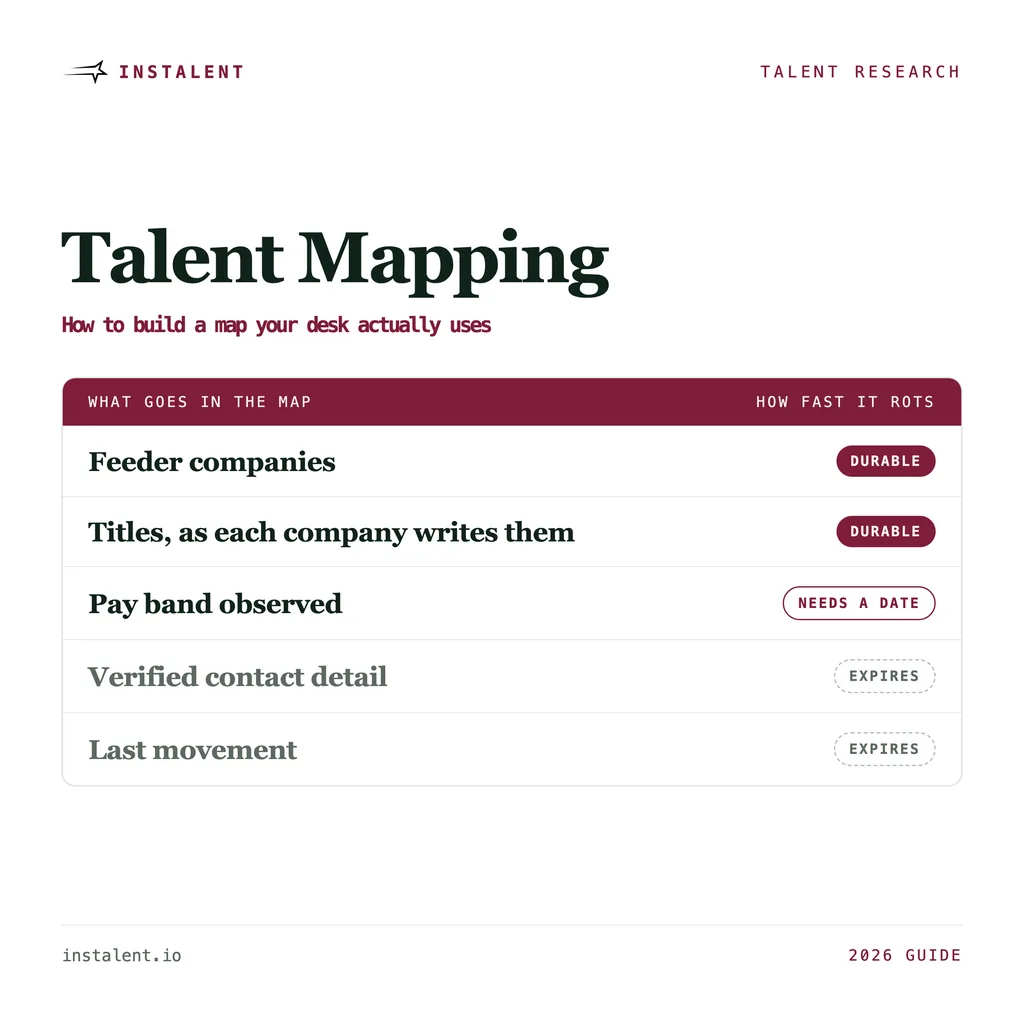
What talent mapping is, the five-step talent mapping process, the fields that earn their place, and how a map built this way stops going stale.
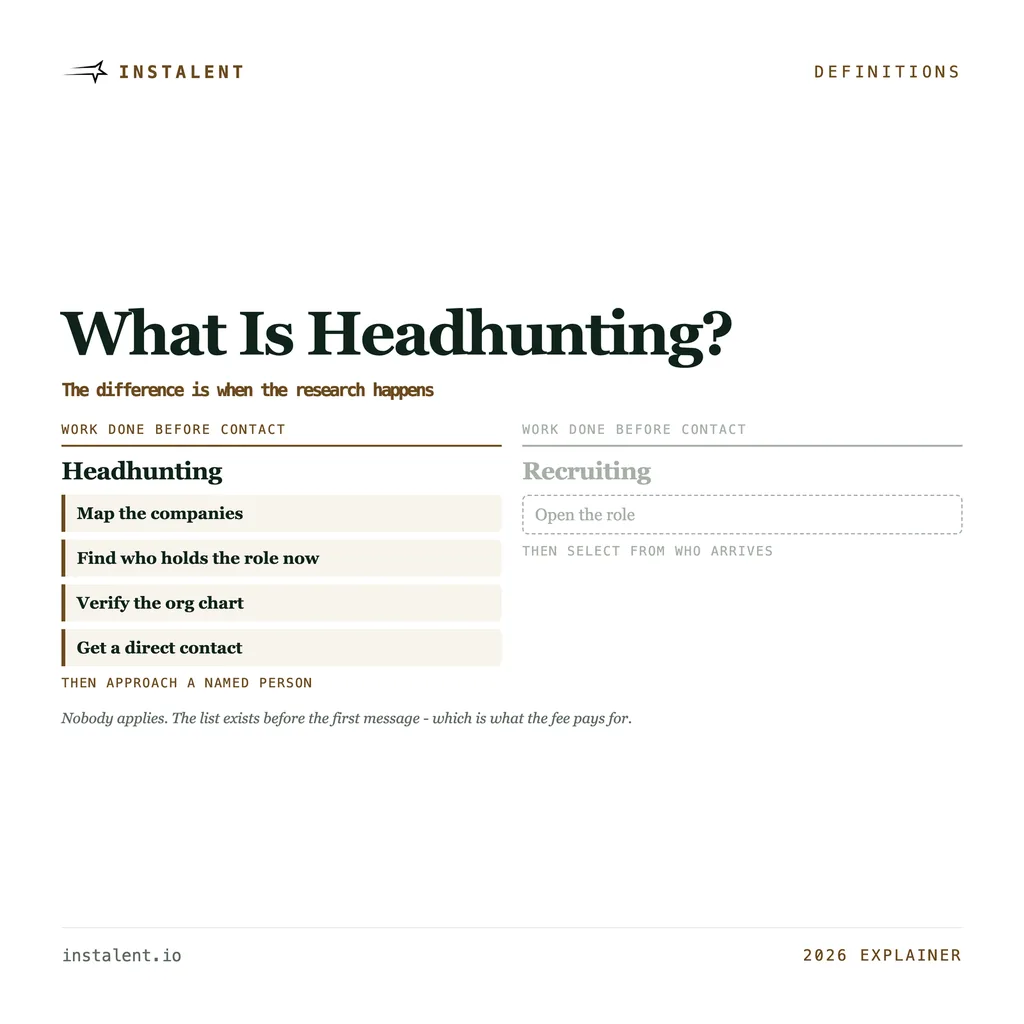
What headhunting actually is, how it differs from recruiting, how executive search firms find candidates, and what the method looks like in technical hiring.
New survey data shows client acquisition has overtaken candidate shortage as agencies' top challenge. Most agency tech stacks are not built for that shift.
New SHRM and Indeed Hiring Lab data shows AI adoption in hiring is real but concentrated at the top. What the gap means for independent agencies.
The state of AI sourcing in 2026, told through cited third-party data from SHRM, LinkedIn and Indeed Hiring Lab - a roundup, not a survey we ran.
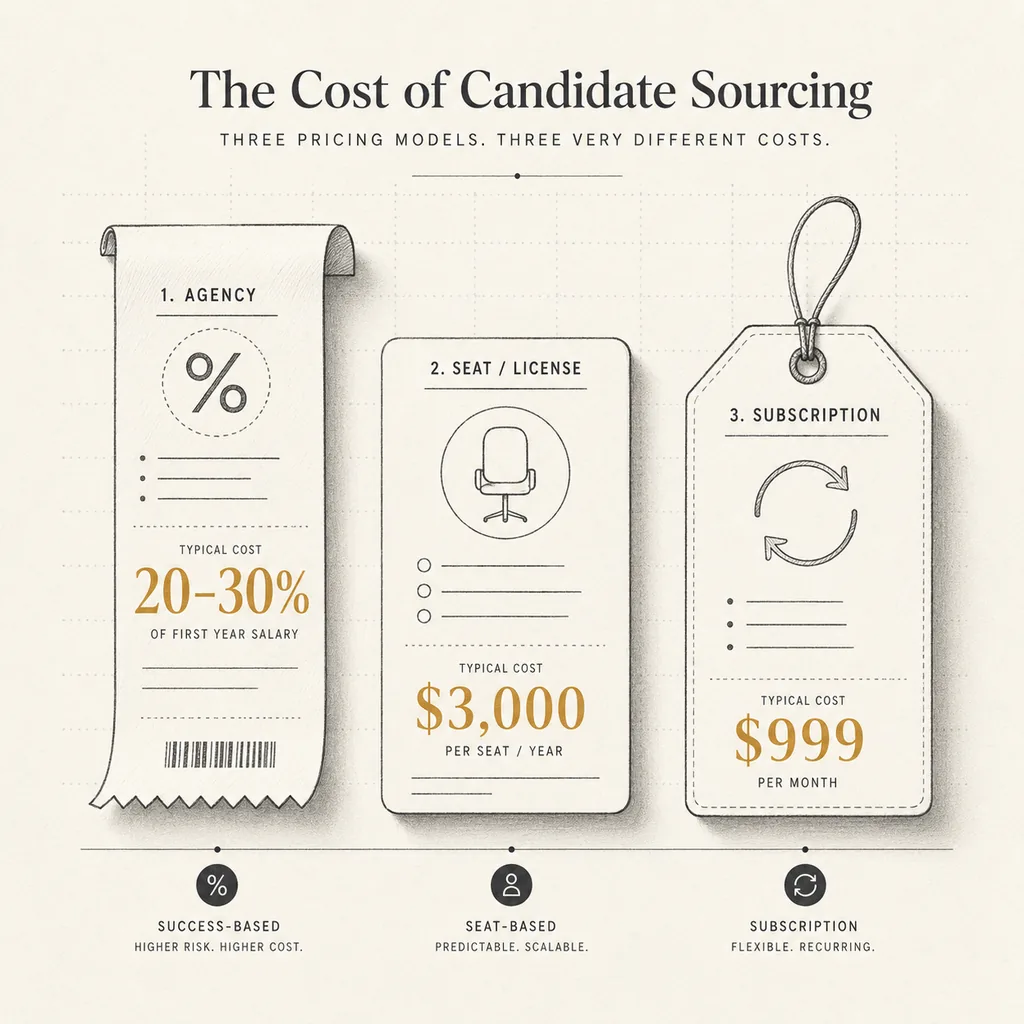
The real cost of candidate sourcing - agency fees, a LinkedIn Recruiter seat, or an AI sourcing tool - compared honestly, so you can pick the model that fits.
Source, verify and reach candidates on one engine. Get 25% off your first month.