The State of AI Sourcing in 2026: The Numbers Worth Knowing
The state of AI sourcing in 2026, told through cited third-party data from SHRM, LinkedIn and Indeed Hiring Lab - a roundup, not a survey we ran.
Do this in Instalent - source, verify and reach candidates in one flow.
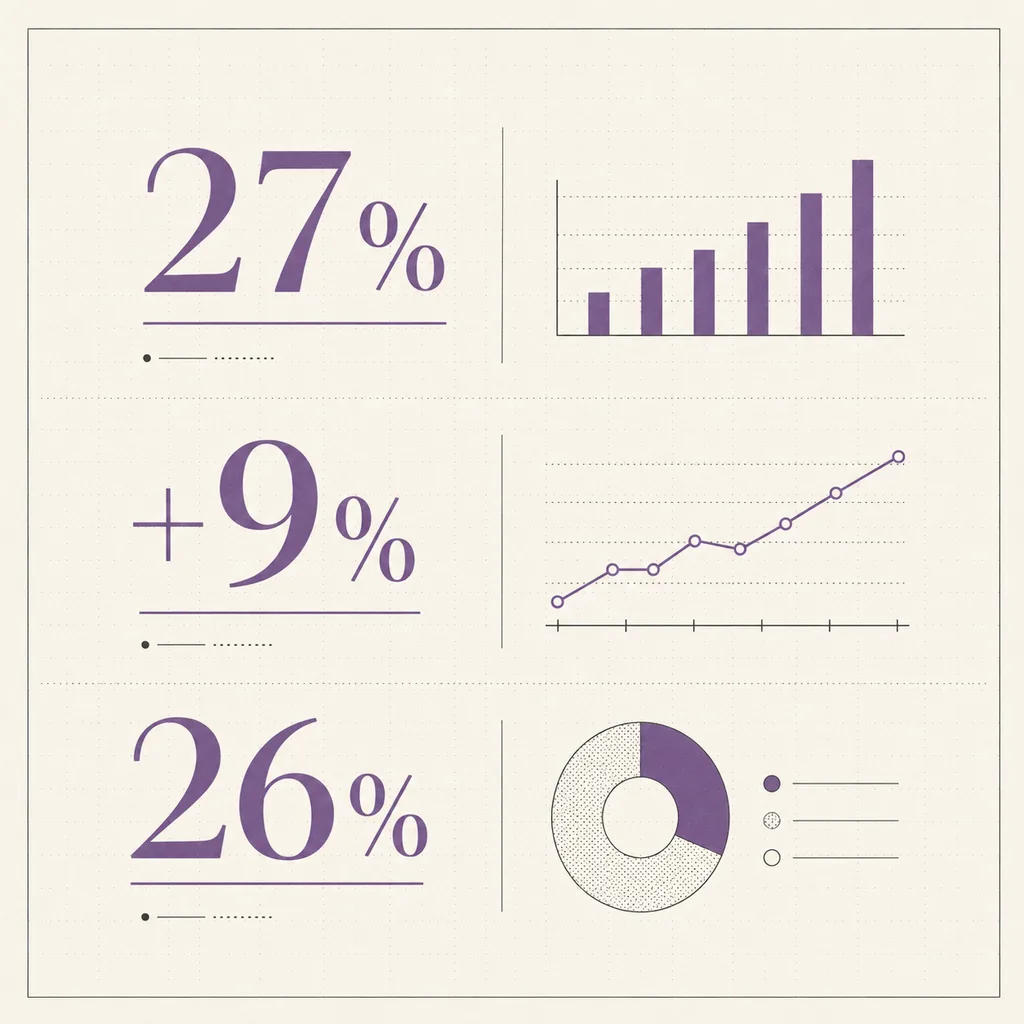
The state of AI sourcing in 2026 isn't one headline number - it's a handful of independent data points that, together, show adoption is real, concentrated in recruiting, and still early.
This is a roundup of the state of AI sourcing in 2026 using only cited, third-party research - Instalent did not run a survey. Each figure below is attributed to its original report so you can check it yourself. The point isn't to dazzle you with a stat; it's to give you a few numbers you can actually defend in a planning meeting, and a clear read on what they mean for how you source next quarter.
The state of AI sourcing in 2026: the data
| Stat | Source |
|---|---|
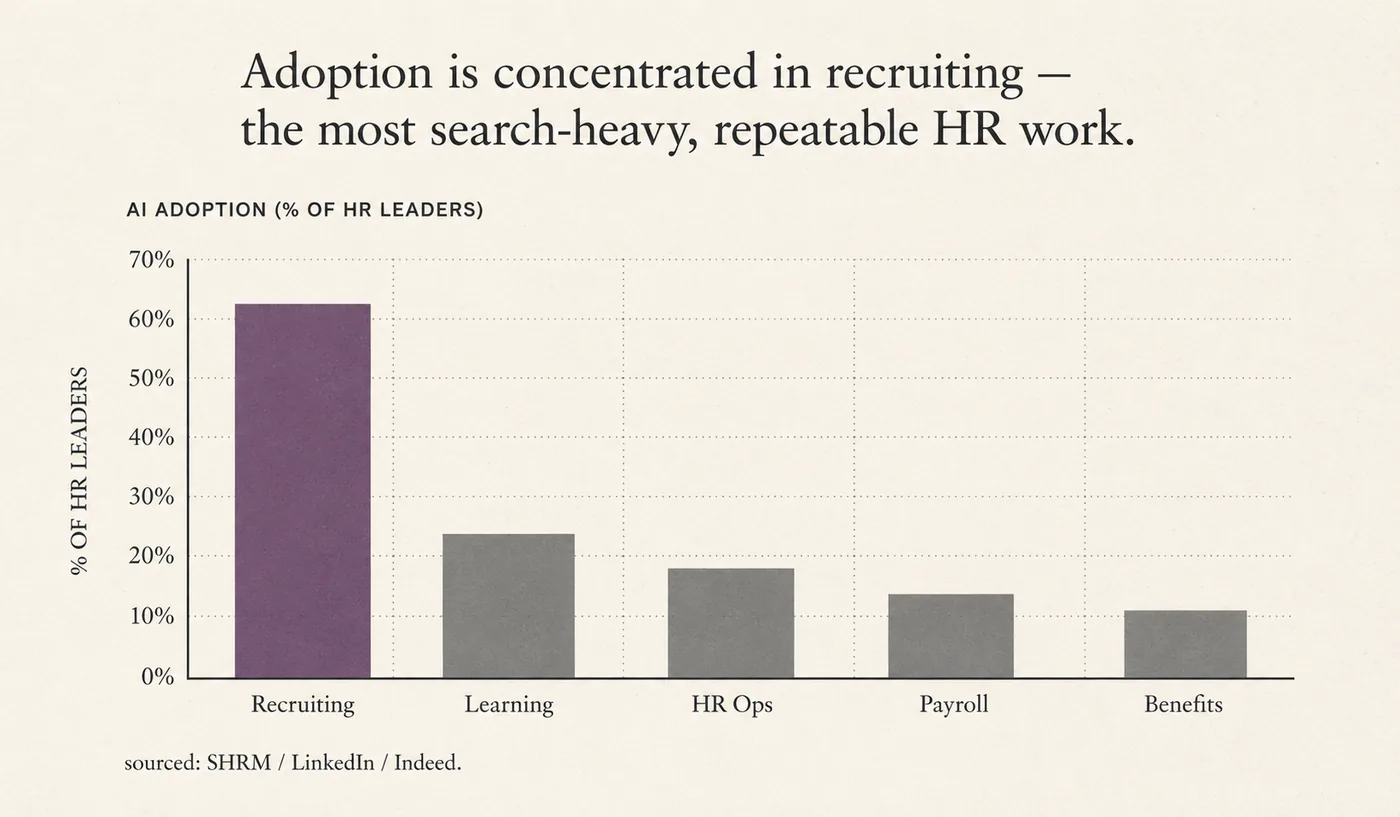
| Recruiting is the most common place organizations apply AI in HR (~27%); fewer than half use AI in HR overall | SHRM, State of AI in HR 2026 (n = 1,908 HR pros) |
| Frequent users of AI-assisted messaging are ~9% more likely to make a quality hire | LinkedIn, Future of Recruiting 2025 |
| 26% of jobs posted on Indeed could be highly transformed by GenAI; 54% moderately | Indeed Hiring Lab, AI at Work 2025 |
What the numbers say together
Adoption is real but uneven: recruiting leads HR in AI use, yet most organizations are still early. The clearest use cases are concentrated in repeatable, search-heavy work like sourcing and outreach.
Reading the AI sourcing adoption trend
The throughline across these independent sources is concentration, not saturation. AI isn't sweeping evenly across every HR function at once. It shows up first exactly where the work is most repetitive and search-heavy - finding and reaching candidates - and that's where early adopters are quietly building an edge while everyone else waits for a mandate.
Recruiting is the beachhead
Of all the places an organization could apply AI in HR, sourcing and outreach are where it lands first. That's not an accident. These are high-volume, pattern-heavy tasks: building lists, checking contact details, writing a first-touch message a dozen times a day. They're the parts of recruiting most amenable to automation, and the parts that - once sped up - free a recruiter to spend more time on judgment and conversation. The SHRM data says recruiting leads other HR functions in AI use; the reason is simply that the work fits the tool.
The roles you're sourcing are moving too
There's a second, easier-to-miss signal in Indeed's Hiring Lab analysis: generative AI is reshaping the jobs themselves, not just how recruiters work. When a large share of postings could be meaningfully transformed by GenAI, the skills and titles you search against become a moving target. A "data analyst" or "support engineer" req written the way it was two years ago may not describe the role a team actually needs now. Sourcing well in 2026 means sourcing against criteria that have themselves shifted - and revisiting those criteria more often than you used to.
What AI sourcing adoption means for recruiters
You don't need to overhaul your stack to act on any of this. A few practical takeaways:
- Point AI at the repetitive middle. The clearest, best-evidenced wins are in list-building, contact verification and first-pass screening - the search-heavy work. Automate that first; keep your hours for the parts that need a human.
- Treat AI-assisted messaging as a craft, not a shortcut. The edge frequent users see comes from sending more relevant outreach, faster - not from blasting templates. Personalization and timing still decide whether a message lands.
- Revisit your criteria. If the roles are being reshaped, so are the signals that mark a strong candidate. Re-check the must-haves on a req before you source against them, not after a week of dead-end profiles.
Read the source, not the headline
Every figure here is attributed to its original report for a reason. AI-in-recruiting stats get laundered through aggregators until nobody can trace them. Before you quote a number in a board deck, click through to who actually measured it and how - the methodology usually matters more than the headline.
What the AI sourcing numbers don't say
Honesty about the limits matters as much as the figures. This roundup shows that adoption is real and concentrated, but it doesn't show that AI sourcing is universal, mature, or a guaranteed win. Most organizations are still early. "The most common place AI is applied in HR" is a relative ranking, not a majority. And a tool only helps if the workflow around it is sound - weak criteria, sloppy verification or generic outreach will produce bad results faster, not better ones.
So the takeaway isn't "AI replaces sourcing." It's that the search-heavy core of sourcing is the first place the work is genuinely changing, and the recruiters who learn to direct the tools - rather than wait them out - are the ones this data is quietly describing.
Two companion reads on the same data: why most agencies are still on the sidelines of agentic AI breaks the adoption numbers down by company size, and the ROI of AI sourcing covers what it actually moves on time-to-shortlist and cost-per-hire.
Instalent is built for that concentration point: natural-language sourcing, verified enrichment and AI scoring against your criteria, in one flow. See the about page or pricing.
Try a free search - paste your role and watch Instalent source, enrich and score candidates in seconds. Start free →
Sources
Find better candidates, faster
Source, verify and reach candidates on one engine. Get 50% off your first month.
Keep reading