Recruiting Cold Outreach: 3 InMail & Email Templates to Personalize
Three short recruiting cold outreach templates - InMail and email - built on personalization and a clear ask, plus how verified contacts make them land.
Do this in Instalent - run multichannel campaigns and keep every reply in one inbox.

Recruiting cold outreach fails for two boring reasons: it's generic, and it never reaches the inbox. Fix both and your chances improve. Here are the principles that make a cold message land, plus templates you can use today.
Most of the cold messages a strong candidate gets are forgettable. They open with a vague compliment, bury three asks in one paragraph, and read like they were sent to a list - because they were. The recruiters who get replies aren't writing cleverer copy. They're writing shorter, more relevant copy to the right person at the right moment, and they have a verified way to reach that person. The templates below are a starting point, but the templates aren't the point. The thinking behind them is.
What actually makes recruiting cold outreach work
Five things separate a message that gets a reply from one that gets archived.
Relevance to a real trigger. The single biggest lever is timing tied to a reason. "I saw your team just shipped X" or "noticed your company opened three backend roles" tells the person why they're hearing from you now. A message with no trigger is just an ad. With a trigger, it reads like you've been paying attention - because you have.
Brevity. A cold message is read on a phone, between meetings, in five seconds. If it's longer than a short paragraph or two, the length itself is the rejection. Cut every sentence that doesn't earn its place. You are not closing the deal in the first message; you are earning a reply.
One clear ask. Pick a single, low-friction next step - "worth a 15-minute call?" or "want me to send two profiles?" - and ask for exactly that. Two asks halve your odds because the reader has to do more work to say yes. Make saying yes trivial.
A subject line that survives the inbox. On email, the subject is the message most people see. Keep it short, specific, and human - a role and a hook beats a pitch. Avoid words that read as mass-send ("Exciting opportunity!"). On platforms where the first line is the preview, the same rule applies to your opener.
A respectful follow-up cadence. Most replies come from a follow-up, not the first touch. But "following up" can't mean "same message, again." Each touch should add something or change the angle, and the cadence should give people room to breathe.
The 10-second rule
If your first line could be sent to 100 people unchanged, rewrite it. One specific, true detail about the person beats any clever subject line.
Recruiting cold outreach templates
Swap the {{placeholders}}, keep them short, and lead with why this person. These are messaging principles, so they work over email and other channels - adapt the format to fit. Names below are fictional.
1. Initial outreach tied to a trigger. Use when you've spotted a real, recent reason to reach out - a launch, a funding round, a public talk, a relevant project.
Subject: {{role}} at {{company}} - saw your {{trigger}}

Hi {{first_name}} - I came across {{trigger}} and the way you
handled {{specific_detail}} stood out. I'm helping {{company}} hire a
{{role}} doing similar work. Worth a quick 15 minutes, even just to
compare notes?
For example: a subject like "Backend role - saw your talk on queue backpressure," then a first line naming the one idea from the talk you actually remembered. Priya, a senior backend engineer, opens that because it's clearly about her, not a list.
2. The value-first follow-up. Use 3-4 days after no reply. Don't repeat the ask - bring something useful so the follow-up stands on its own.
Hi {{first_name}} - quick follow-up. Whether or not {{company}} is a
fit, here's the thing that made me reach out: {{useful_observation}}.
If a {{role}} move is ever on your radar, I'd love 15 minutes. If not,
no hard feelings - happy to be a contact for down the line.
3. The breakup / last touch. Use as your final message after two or three tries. Counterintuitively, the door-closing note often gets the reply, because it removes pressure.
Hi {{first_name}} - I'll stop here so I'm not cluttering your inbox.
If the timing's just wrong, reply "later" and I'll check back in a few
months. If it's a no, that's completely fine too - thanks for reading.
4. The decision-maker note. Use when you're reaching a hiring manager or founder rather than a candidate - lead with what you'll do for them, fast.
Hi {{first_name}} - saw {{company}} just {{trigger}}. We help teams
like yours find {{role_type}} people fast. Happy to share two profiles
we'd shortlist this week - useful?
A note like that works for a hiring lead at a Series B fintech who just announced a round and is about to scale a team. It's specific, it's short, and the ask costs them nothing.
5. The referral ask. Use when someone isn't a fit themselves but clearly knows the right people.
Hi {{first_name}} - long shot, but you'd know the space better than
most. I'm hiring a {{role}} for {{company}} and struggling to find
people with {{specific_skill}}. If anyone comes to mind, I'd be
grateful for a name - no obligation, and I'll return the favor.
Personalising recruiting outreach at scale, and the follow-ups
Personalization doesn't mean writing every message from scratch. It means every message has one true, specific detail that proves you looked. The trick is to separate the reusable spine of the message from the one line that has to be unique. Keep the structure templated; spend your time only on the trigger, the specific detail, and the right name. Done well, you can send fifty genuinely personal messages in the time it takes to send fifty bad generic ones.
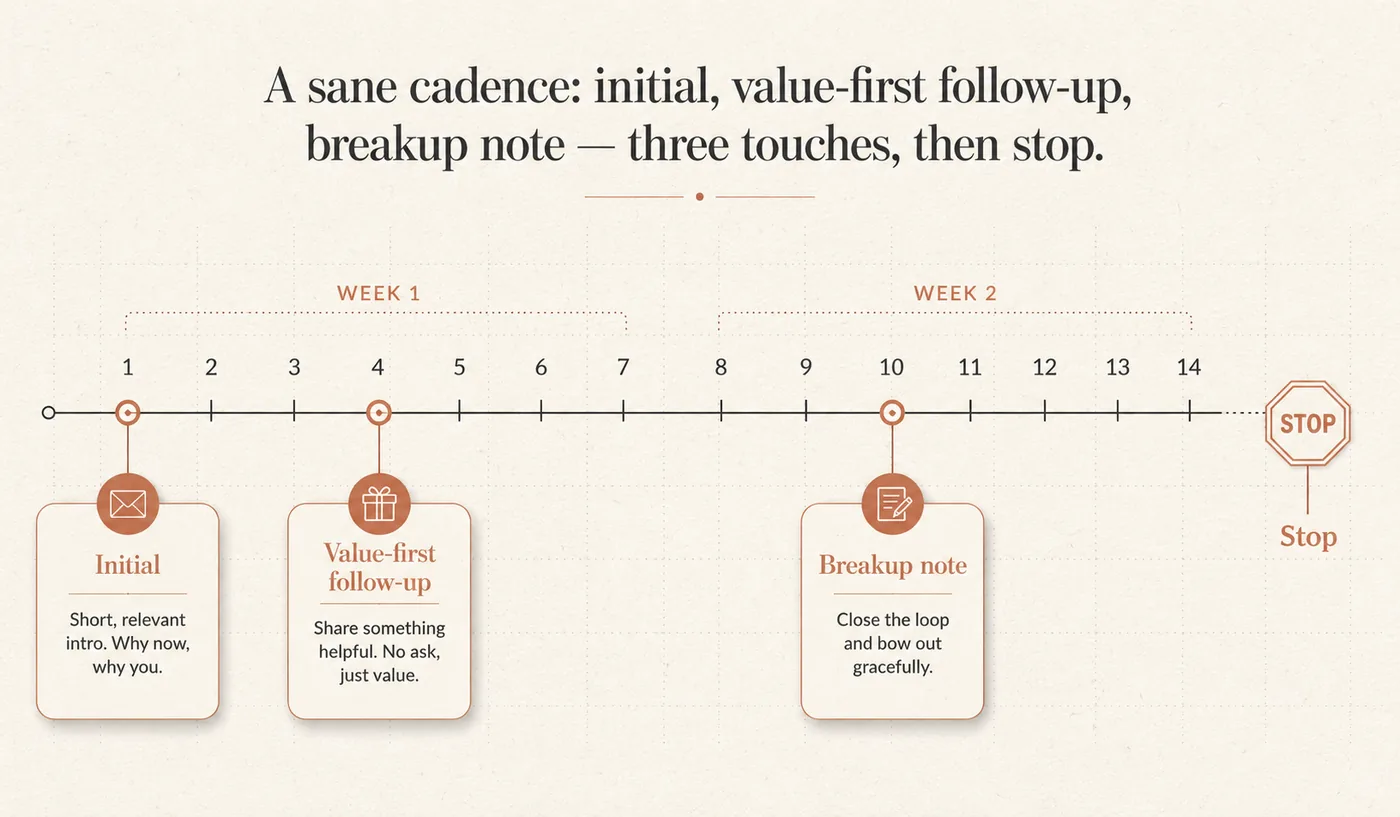
On cadence, a sane sequence looks like: initial message, a value-first follow-up a few days later, then a final breakup note a week or so after that - three touches over roughly two weeks, then stop. If they say "later," honor it and set a reminder. The goal is to be persistent without being a nuisance; the breakup note is your built-in exit so you never become the recruiter people mute.
Where the detail comes from
The hard part isn't writing the line - it's finding the trigger and a reliable way to reach the person. A funding round, a leadership change, or a fresh batch of open roles is a reason to reach out; a verified email or phone is what turns a good message into one that's actually read.
Making cold outreach templates land
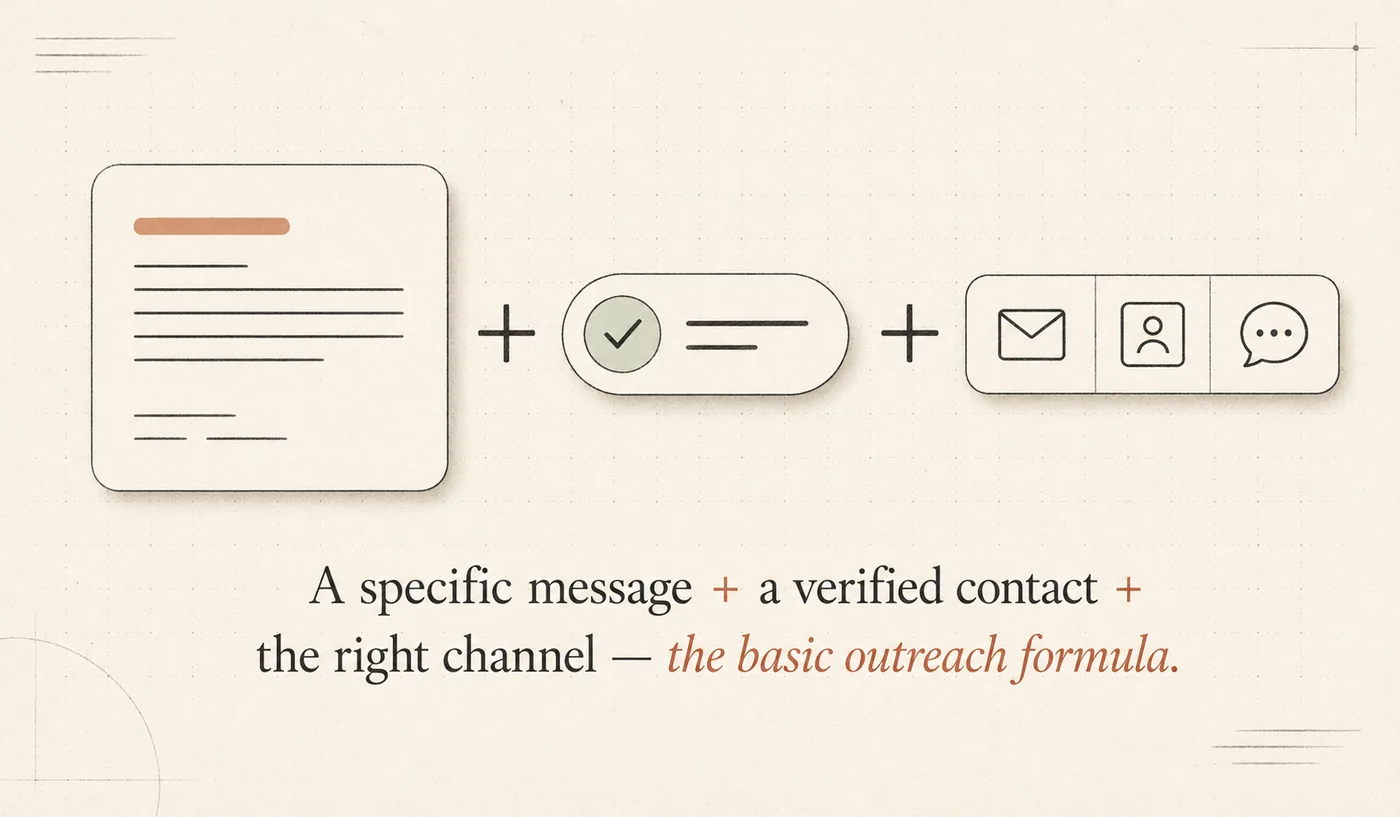
Templates only work if they arrive - and if they're aimed at the right person for a real reason. Cold-email engines like Lemlist and Instantly handle sending and deliverability at volume, but they aren't sourcing tools - you still need the right person, a real trigger, and a verified address first. Instalent covers that upstream half: source candidates or decision-makers in plain language, surface buying signals like hiring, funding, or a leadership change, identify the decision-maker, enrich a verified email or phone, score against your criteria, and run multichannel outreach across email and other channels.
More on the about page and blog.
Try a free search - paste your role and watch Instalent source, enrich and score candidates in seconds. Start free →
Related reading: what is headhunting covers the method behind executive search and how it differs from recruiting.
Sources
Run your whole outreach from one place
Multichannel sequences and a unified inbox for every reply - with sourcing and verified contacts built in, not just a cold-email sender. Get 50% off your first month.
Keep reading