The Complete Guide to AI Candidate Sourcing in 2026
A practical guide to AI candidate sourcing in 2026 - what it is, the five stages from brief to outreach, and how to choose a tool without the hype.
Do this in Instalent - source, verify and reach candidates in one flow.
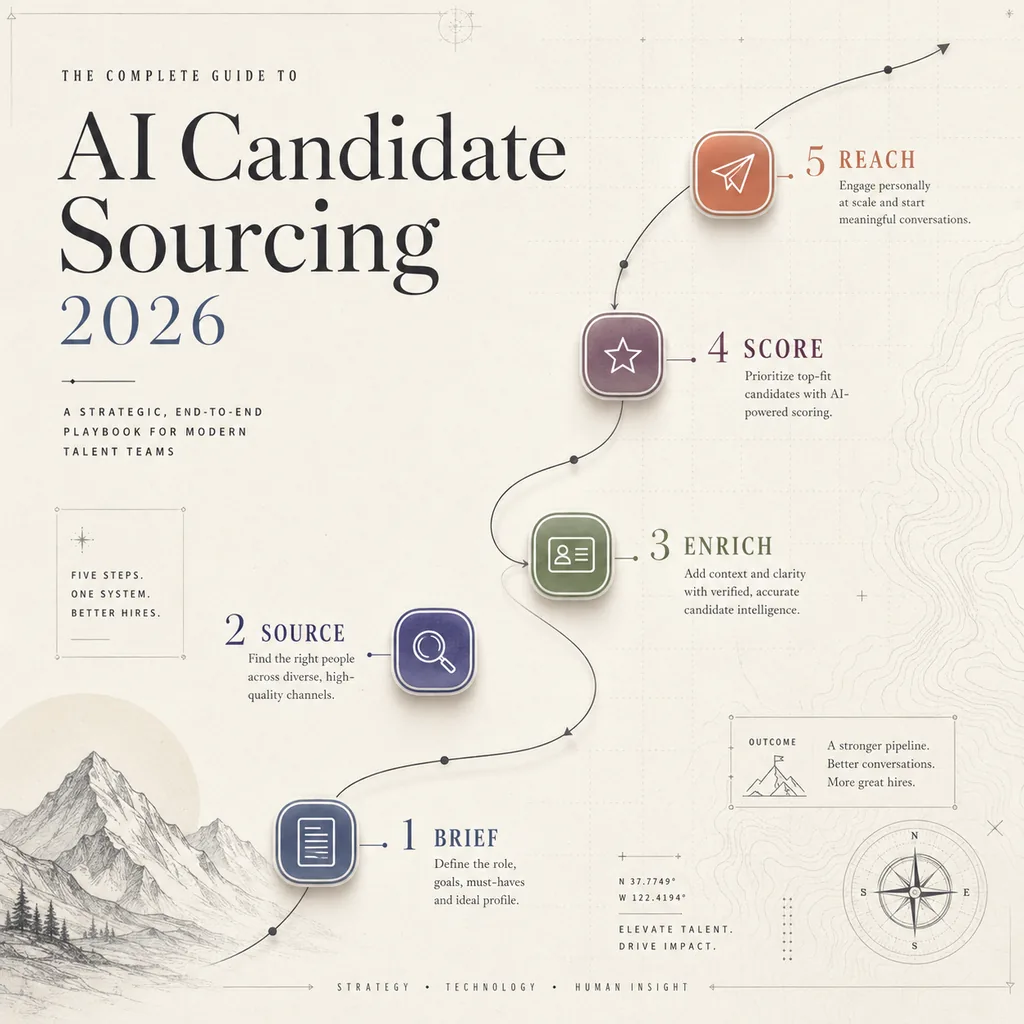
AI candidate sourcing in 2026 is less about a magic "find the perfect person" button and more about compressing a five-step workflow - brief, source, enrich, score, reach - into one fast, repeatable motion.
For most of the last decade, sourcing meant punishing yourself with Boolean strings: stacking titles, OR-ing synonyms, guessing at the keyword some engineer happened to put on their profile. AI sourcing flips that. You describe the role the way you'd brief a colleague, the system reads the shape of who fits - then sources across many places, adds verified contact data, and ranks them against what you care about. Here's the full workflow end to end, then the best practices, the mistakes that quietly waste your week, and what to measure.
1. Define the role and the criteria that matter
Every good search starts before you touch a tool, and the brief is where most sourcing goes wrong - not because recruiters write too little, but because they write the wrong things. "5+ years, React, fast-growing startup" is a filter, not a definition of fit. Separate what you need into three buckets:
- Must-haves - the handful of things that genuinely disqualify someone if missing.
- Strong signals - patterns that correlate with success here, even if they're not hard requirements (shipped at a similar stage, owned a problem end to end).
- Nice-to-haves - the tiebreaker pile, not the bar.
Write criteria as outcomes, not keywords. "Has scaled a payments integration past launch" beats "Stripe," because the AI can reason about the former across people who never typed the word on a profile.
Write criteria you can actually score against
If you can't imagine reading a profile and saying "yes, strong / partial / no" for a criterion, it's too vague to score. Rewrite it until it's a judgment a human could make in ten seconds - that's exactly what good AI scoring needs too.
2. Source in natural language, not brittle Boolean
Once the brief is clear, describe it in plain English: the role, the stage of company, the kind of work, the seniority. A natural-language search reads intent instead of matching exact strings, so it surfaces people a Boolean query would miss - the senior engineer whose title says "Member of Technical Staff," the operator who ran a function without ever using your industry's jargon. And instead of living inside one network, Instalent searches across many vendor sources at once and reconciles them, so a single brief returns a wider, deduplicated pool. Two habits make this stage pay off:
- Iterate, don't perfect. Read the first page, then tighten the description based on who showed up. Sourcing is a conversation with the data, not a one-shot query.
- Layer in timing. This is where intent and buying signals matter - a company that's hiring, just raised, or changed leadership is a warmer target, and its people are likelier to move. Sourcing for who fits and who's reachable now at once is the difference between a list and a shortlist.
3. Enrich with verified contact data
A name without a way to reach the person is a dead end. Enrichment adds verified email and phone data, and the reason to pull from multiple vendors is simple: no single provider has good coverage on everyone. When one comes up empty, another often has it, and the verified result keeps your messages out of the bounce pile. Treat verification as non-negotiable - an unverified email tanks your deliverability and, worse, your sender reputation, and a few bad sends push even your good messages into spam.
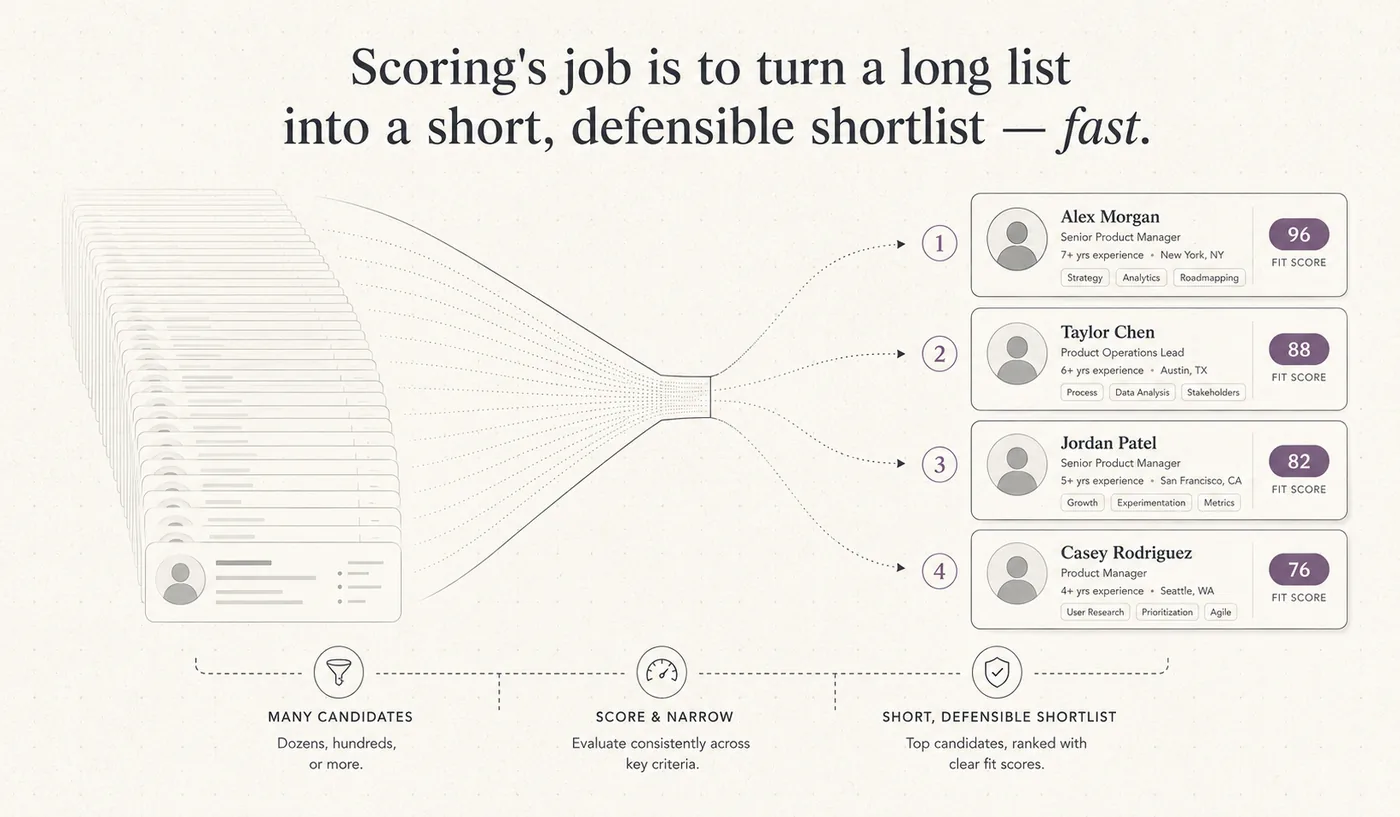
4. Score and shortlist against your criteria
This stage turns a long list into a decision. AI scoring reads each profile against your criteria from stage one and returns a fit assessment with the reasoning behind it - not a black-box number, but a breakdown you can sanity-check and overrule:
| Without AI scoring | With AI scoring |
|---|---|
| Skim 200 profiles by hand | Read 200, surface the 20 worth your time |
| Gut feel, hard to explain | A score plus the reasons behind it |
| Re-litigate fit on every pass | Criteria applied consistently across the pool |
| Hours per shortlist | Minutes, then human review |
The point isn't to replace your judgment - it's to spend it where it counts. Let the AI do the first read across the whole pool, then review the top closely. The score starts the hiring-manager conversation; it doesn't end it.
5. Reach the right person, then sync to your ATS
A great shortlist that never gets contacted is wasted work. Identify the decision-maker - the person who owns the hire or the conversation - and open with something specific to them, not a template blast. Use multichannel outreach to meet people where they respond: email and other channels, sequenced so you follow up without nagging.
Then close the loop. Connecting your sourcing to your ATS means the candidates you found, enriched, and scored flow straight into the system your team already lives in - no copy-paste, no profiles lost in a spreadsheet, no duplicate outreach because two recruiters were unknowingly working the same person.
Don't over-automate the first touch
Automation is for follow-ups and logistics, not for the opener. A fully automated, obviously-templated first message gets ignored - and trains good candidates to ignore you. Personalize the first touch; automate the chase.
Best practices and common mistakes
The habits that separate a sharp sourcing motion from a noisy one are mostly about doing the boring things consistently:
- Brief before you search. Five minutes aligning on must-haves saves an hour sourcing the wrong shape. The mistake here is vague criteria - "senior, smart, startup-y" can't be scored consistently.
- Search iteratively and factor in timing. Read who shows up, then refine; and weigh who's reachable now, not just who fits in the abstract.
- Verify every contact. The fastest way to torch your sender reputation is sending to unverified addresses.
- Score the whole pool, review the top. Let AI do the first read; spend your judgment on the shortlist.
- Personalize the opener, automate the follow-up. Templated first touches feel like spam because they are. Earn the reply, then stay organized - and keep the ATS as your single source of truth so nothing falls through.
What to measure
The last common mistake is not measuring anything - if you can't see what's working, you can't fix it. Track the workflow, not vanity counts. A few signals tell you most of the story:
- Response rate - are the right people replying? Low rates usually point upstream to weak targeting or generic openers, not the channel.
- Qualified-candidate rate - of everyone you sourced, how many clear the bar? The truest test of your brief and your scoring.
- Time-to-shortlist - how long from brief to a list you'd defend to the hiring manager? This is where AI sourcing earns its keep.
Watched across a few searches, the leaks show themselves: a low response rate with a strong shortlist means your outreach needs work; a fast time-to-shortlist with a low qualified rate means your criteria are too loose.
Choosing a tool without the hype
Adoption is real but uneven: per SHRM's State of AI in HR 2026, recruiting is the most common place organizations apply AI in HR (about 27%), even as fewer than half use AI in HR overall. The lesson isn't "buy the flashiest tool" - it's pick one that covers the full workflow you run. Many tools are strong at one stage and weak at the next: great search, no enrichment; or great data, no fit scoring. The value lives in the unbroken chain, so evaluate all five stages together.
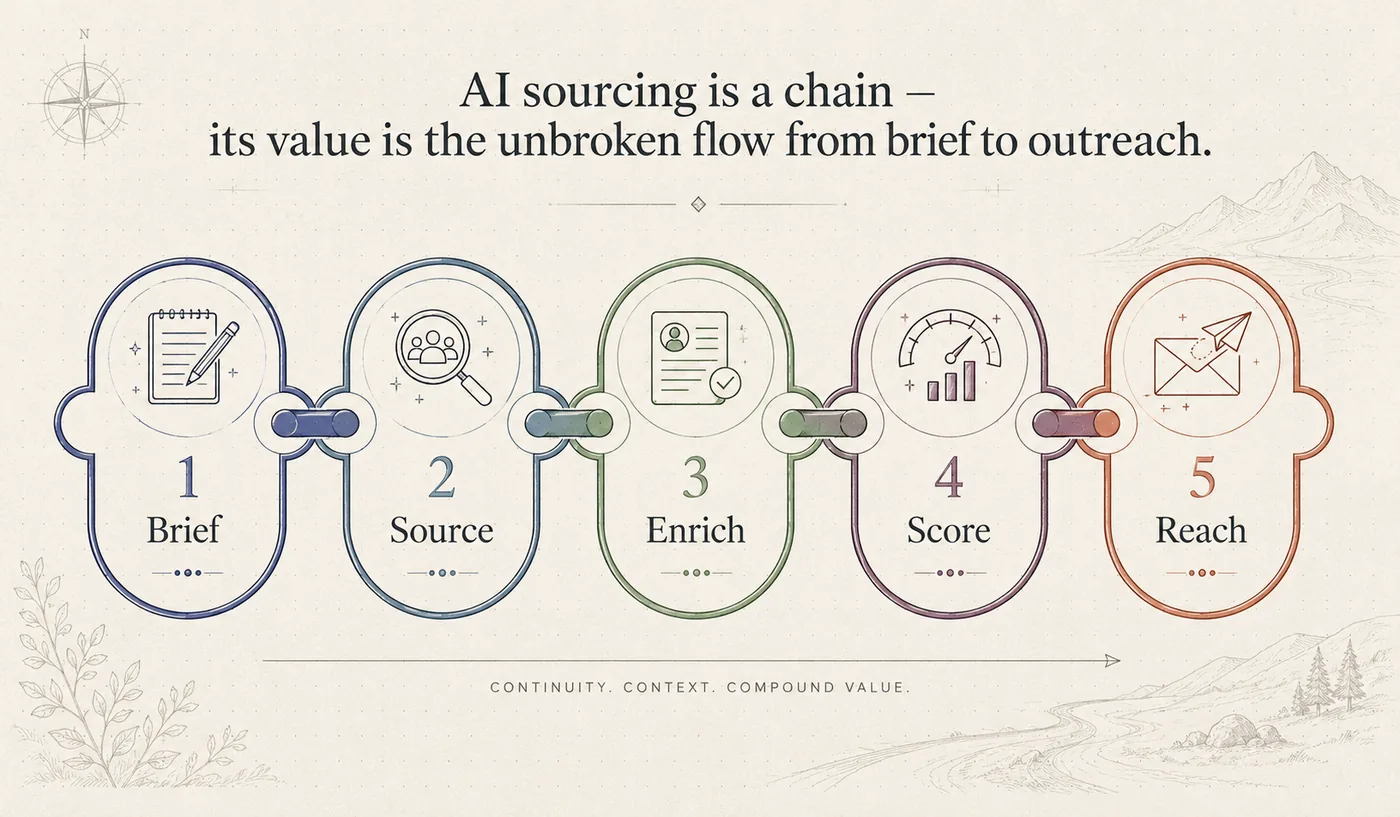
Instalent was built around all five stages in one place - natural-language sourcing across many vendors, company intent signals, verified enrichment, AI scoring against your criteria, multichannel outreach, and ATS sync. Go deeper on the candidate sourcing strategies that actually fill roles, Boolean vs natural-language search, sourcing passive candidates, or the sourcing glossary - and see pricing or the about page.
Try a free search - paste your role and watch Instalent source, enrich and score candidates in seconds. Start free →
Sources
Find better candidates, faster
Source, verify and reach candidates on one engine. Get 50% off your first month.
Keep reading