Buying Signals for Recruiters: Find Companies Hiring or Raising - Before the Job Posts
Buying signals for recruiters - funding rounds, leadership moves and hiring intent - tell you which companies to pitch before the role is even public.
Do this in Instalent - source, verify and reach candidates in one flow.
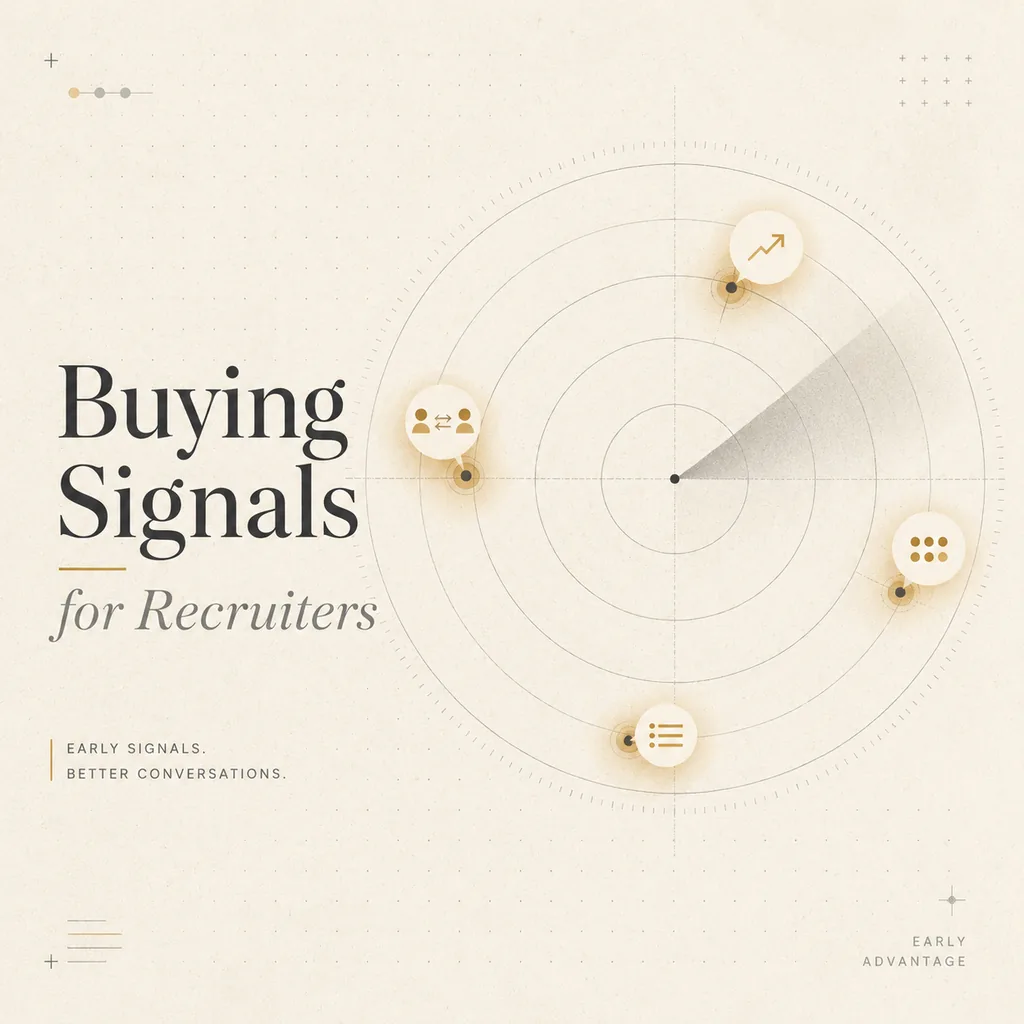
The best buying signals for recruiters show up before a job is posted - a funding round, a new VP of Engineering, a sudden run of open reqs. By the time the listing is live, ten agencies already saw it.
Buying signals are the public moves that predict a hiring need before the company itself has a req written. A round closes, a new department head lands, a careers page that sat untouched for months suddenly carries six open roles - each of those says budget and intent are forming here. Read them early and you pitch a warm, specific need. Read them late and you're one of the ten agencies replying to the same posted job, competing on price and speed instead of relevance.
This is a taxonomy of the signals worth tracking, how to read each one, and - the part most people get wrong - how to act inside the window before the signal goes public and stale.
The main types of buying signals for recruiters
No single signal is decisive. The skill is knowing what each one implies about a hiring need and how confident that read is.
Hiring and job-posting surges
A sudden jump in open roles is the most direct signal there is - the company has already decided to hire and committed budget. The useful read isn't that they're posting, it's the shape of the posting. Five backend roles and a new engineering manager req in the same week is a team being stood up, not a backfill. A first-ever role in a function - a company's first designer, first sales hire, first data engineer - tells you a whole new motion is starting and they have no internal bench to staff around it.
The catch: posted roles are the least exclusive signal, because everyone can see them. By the time you act on a public listing you're already late. Treat a posting surge as confirmation of a need you'd ideally have spotted earlier through funding or leadership moves.
Funding rounds
Capital almost always converts to headcount, and fast. A Series A or B exists to buy growth, and growth means people - usually engineering, sales, and the leadership to run them. The freshness of the round matters more than its size: a round announced last week is a live signal; one from eight months ago has already been worked by every recruiter on the same alert list.
- Seed / Series A - first real scaling. Often founder-led hiring, no talent function yet, high openness to outside help.
- Series B / C - building out functions and middle management. They feel the hiring pain acutely and have budget to fix it.
- Later stage - usually has internal talent teams, so the pitch shifts toward specialist or executive search they can't fill themselves.
Leadership changes
A new VP of Engineering, Head of Talent, or Head of Sales is one of the strongest signals you can act on, because new leaders rebuild. They arrive with a mandate, a plan, and usually a hiring number - and in their first quarter they have neither a full team nor established agency relationships. That's an open door. The same logic applies to a leader leaving: their direct reports may be backfilled and the function may be in flux.
Rapid headcount growth
Steady, broad-based team growth over a few months signals durable demand rather than a one-off req. This is the difference between a company filling a gap and a company scaling a function. Headcount growth is a quieter signal than a funding headline, which is exactly why it's valuable - fewer people are watching it, so the window stays open longer.
New tech or tooling adoption
When a company adopts a new platform, framework, or category of tooling, they often need people who know it - and those skills can be scarce in their existing team. A move into a new cloud, a new data stack, or a new product surface implies roles that don't yet exist on the org chart. It's a softer, more inferential signal than funding, so weight it lower and pair it with corroboration before you build a whole pitch around it.
How to read a buying signal: a quick map
| Signal | What it usually means | How to act in the window |
|---|---|---|
| Hiring / posting surge | Budget committed, team being stood up | Move fast; confirm the shape, not just the count |
| New funding round | Growth capital converting to headcount | Reach out while the round is fresh, before the alert crowd |
| Leadership change | New leader rebuilding a team from scratch | Open early in their first quarter, before relationships set |
| Rapid headcount growth | Durable, repeatable demand | Build a relationship, not a one-role pitch |
| New tech / tooling | Emerging need for scarce skills | Treat as a hint; corroborate before committing |
Timing is the edge
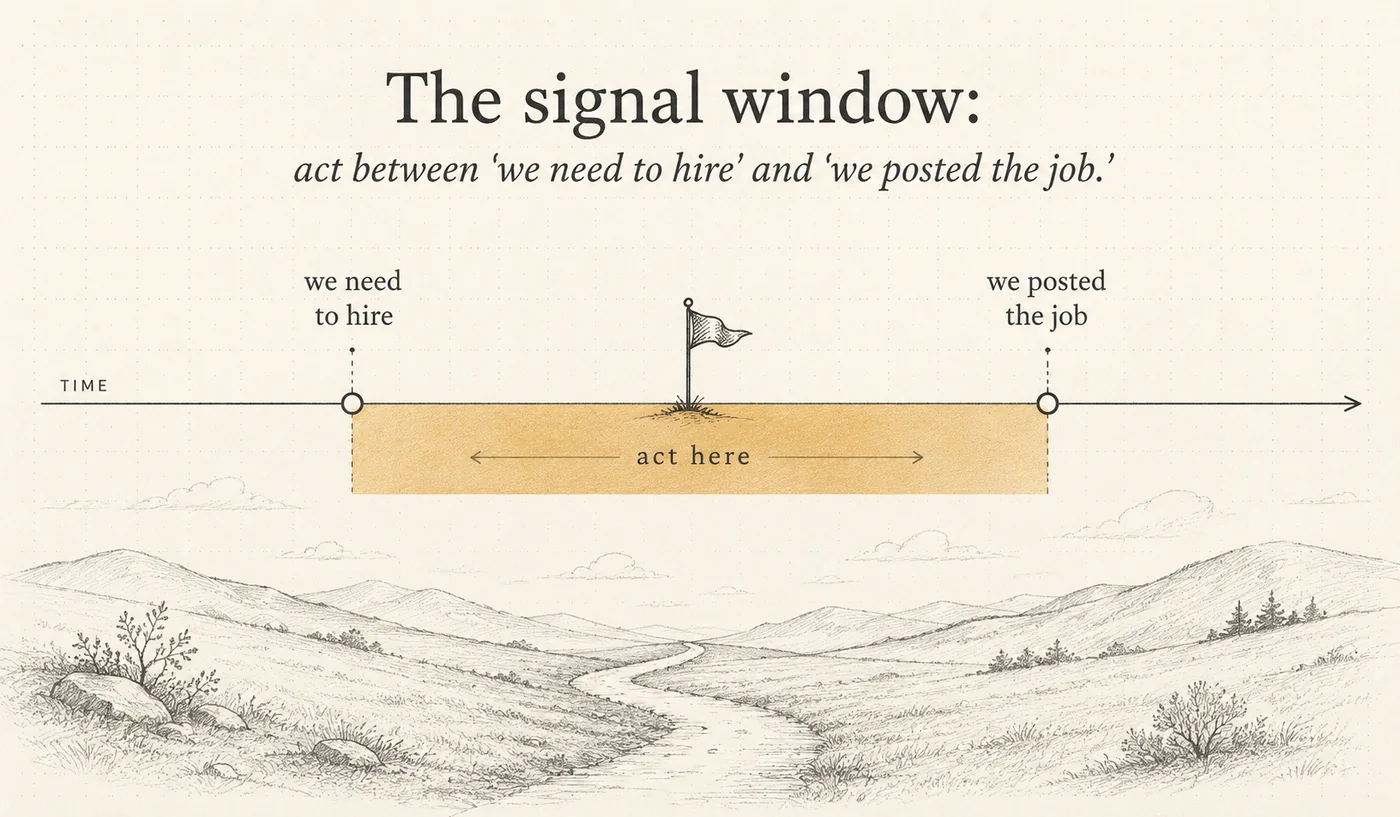
A signal is only useful while it's fresh. The whole game is reaching the decision-maker in the window between "we need to hire" and "we posted the job" - once the listing is live, your edge is gone.
The buying-signal window, and the pitfalls
Every signal has a window: a stretch of time when the need is real but not yet obvious to the wider market. A funding round's window might be a few weeks before every recruiter on the same alert has emailed in; a new leader's window is roughly their first quarter; a quiet headcount trend can stay open for months precisely because so few people watch it. Your job is to enter that window early and exit before it's crowded.
A few ways recruiters burn the advantage:
- Acting on stale signals. A round from last quarter or a leader who's now six months in isn't a signal - it's history everyone has already worked. Date-check before you pitch.
- Over-reading noise. One ambiguous job post or a single LinkedIn title change isn't a trend. Wait for corroboration before you build a campaign on it.
- Chasing signals you can't serve. A fast-growing fintech is a strong signal - and worthless to you if you can't actually source the roles they need. Filter for fit first, then for intent.
- Confusing the company signal with a person. "This company is hiring" isn't actionable until you know who owns the decision and how to reach them.
That last point is where most signal-chasing falls apart. A signal tells you a door might be open; it doesn't hand you the doorknob.
From buying signal to the decision-maker
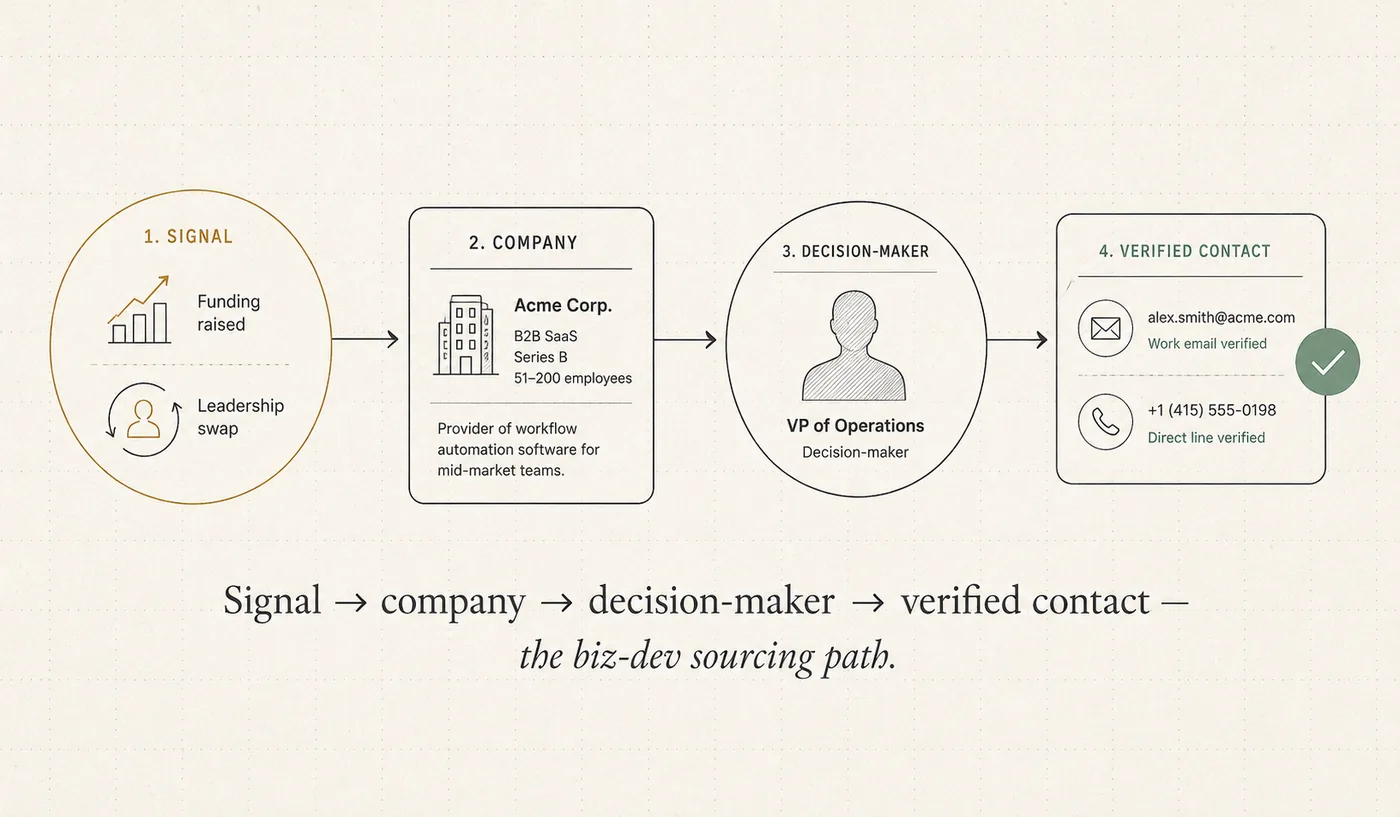
A signal alone isn't actionable - you need the person and a way to reach the decision-maker. Instalent works the sales side of sourcing: surface companies showing hiring or funding/leadership intent, identify the relevant decision-makers (a VP of Engineering, a Head of Talent), and enrich their verified contacts so you can open a timely, specific conversation over email and other channels.
Say a fictional mid-market SaaS company, Northwind Labs, closes a round and brings in a new Head of Engineering the same month. The signal is loud, but it's loud for everyone. What turns it into a conversation is moving fast to the named decision-maker with a verified contact and a message that speaks to the team they're about to build - not a generic "saw you're hiring" note sent a month too late.
Score for fit before you commit
Intent without fit wastes the window. Filter the companies a signal surfaces against the roles you can actually fill, so your outreach goes where you can both win the work and deliver it.
That keeps your outreach ahead of the job board, where margins are thin and competition is loud - and lets you spend the window on companies you can genuinely serve rather than every name an alert spits out. More on the about page, the blog, and pricing.
Try a free search - paste your target and watch Instalent surface intent, decision-makers and verified contacts in one workflow. Start free →
Related reading: talent pipeline covers keeping the people a signal surfaces contactable, and recruitment strategies covers the own-versus-rent choice behind it.
Sources
Find better candidates, faster
Source, verify and reach candidates on one engine. Get 50% off your first month.
Keep reading