Why We Built the Sourcing Playbook: A More Practical Way to Learn Candidate Sourcing
Jon Jönsson introduces the Sourcing Playbook and explains how recruiters can build a more structured, repeatable candidate sourcing process.
Do this in Instalent - source, verify and reach candidates in one flow.
By Jon Jönsson, Founder & CEO, Instalent
When we look at how recruiters usually learn sourcing, one thing becomes clear: a lot of advice is either too broad or too tool-specific.
Recruiters are told to search better, use better keywords, write better messages, or find better candidates. All of that matters. But it does not always answer the bigger question:
How do we build a sourcing process that recruiters can repeat, improve, and actually trust?
That is one of the reasons we created the Sourcing Playbook.
Before Instalent became a platform, sourcing was something we had to deal with in real recruitment work. Finding candidates was not the only challenge. The harder part was knowing what to look for, how to judge the results, how to avoid getting lost in too many profiles, and how to move from search to meaningful conversations.
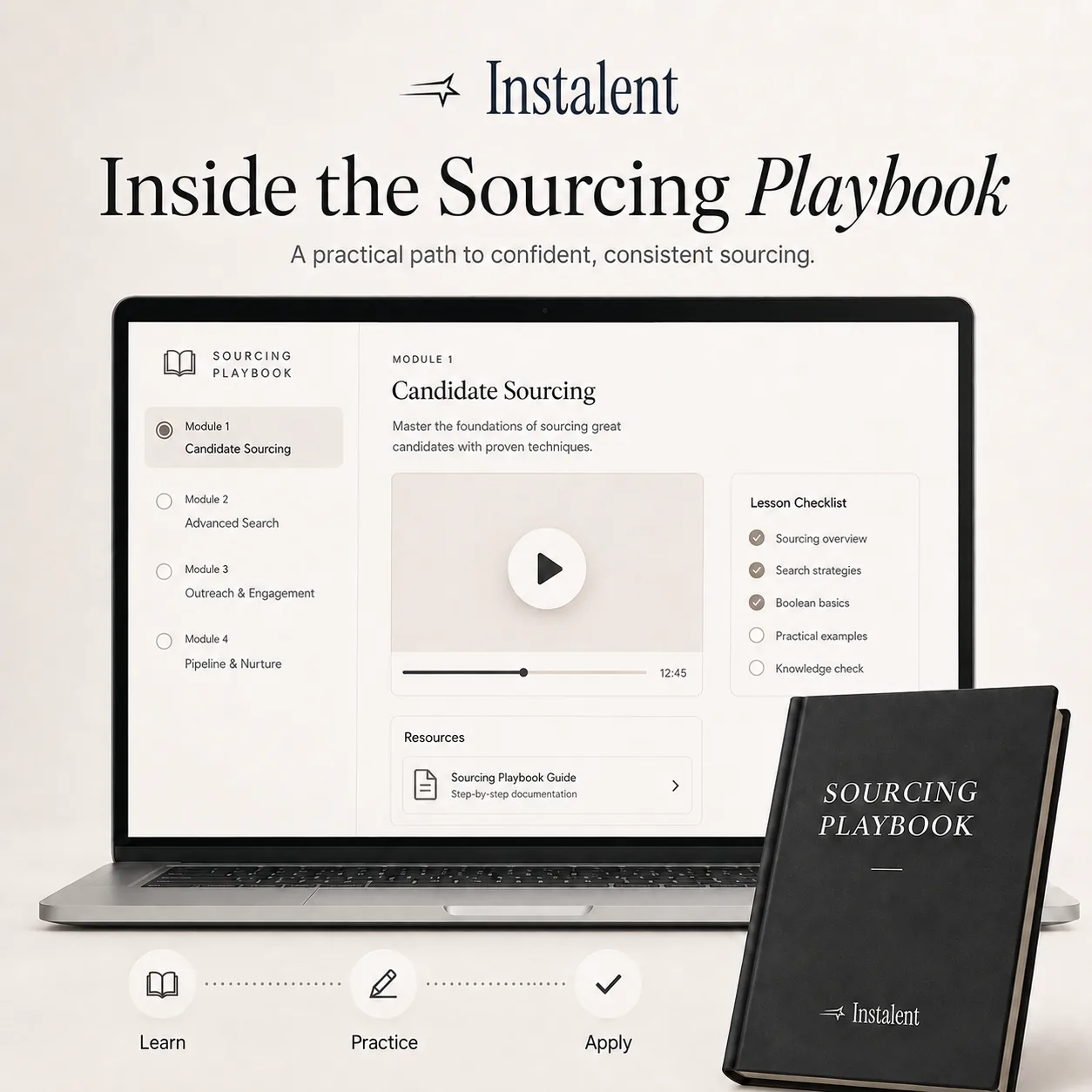
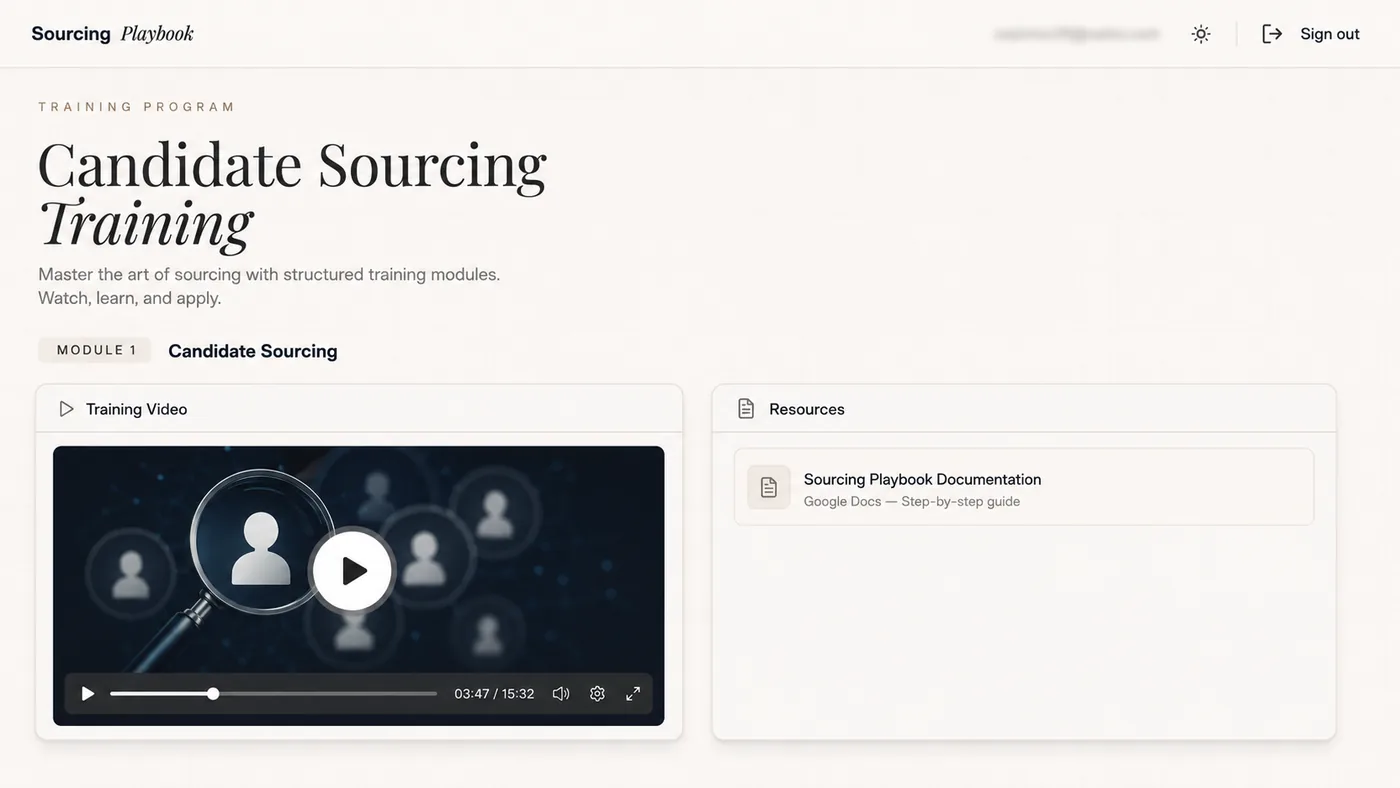
The first module of the Sourcing Playbook is focused on candidate sourcing. It is designed for recruiters who want to understand the process behind good sourcing, not just click through another product demo.
The problem with random candidate sourcing
A lot of sourcing starts too quickly.
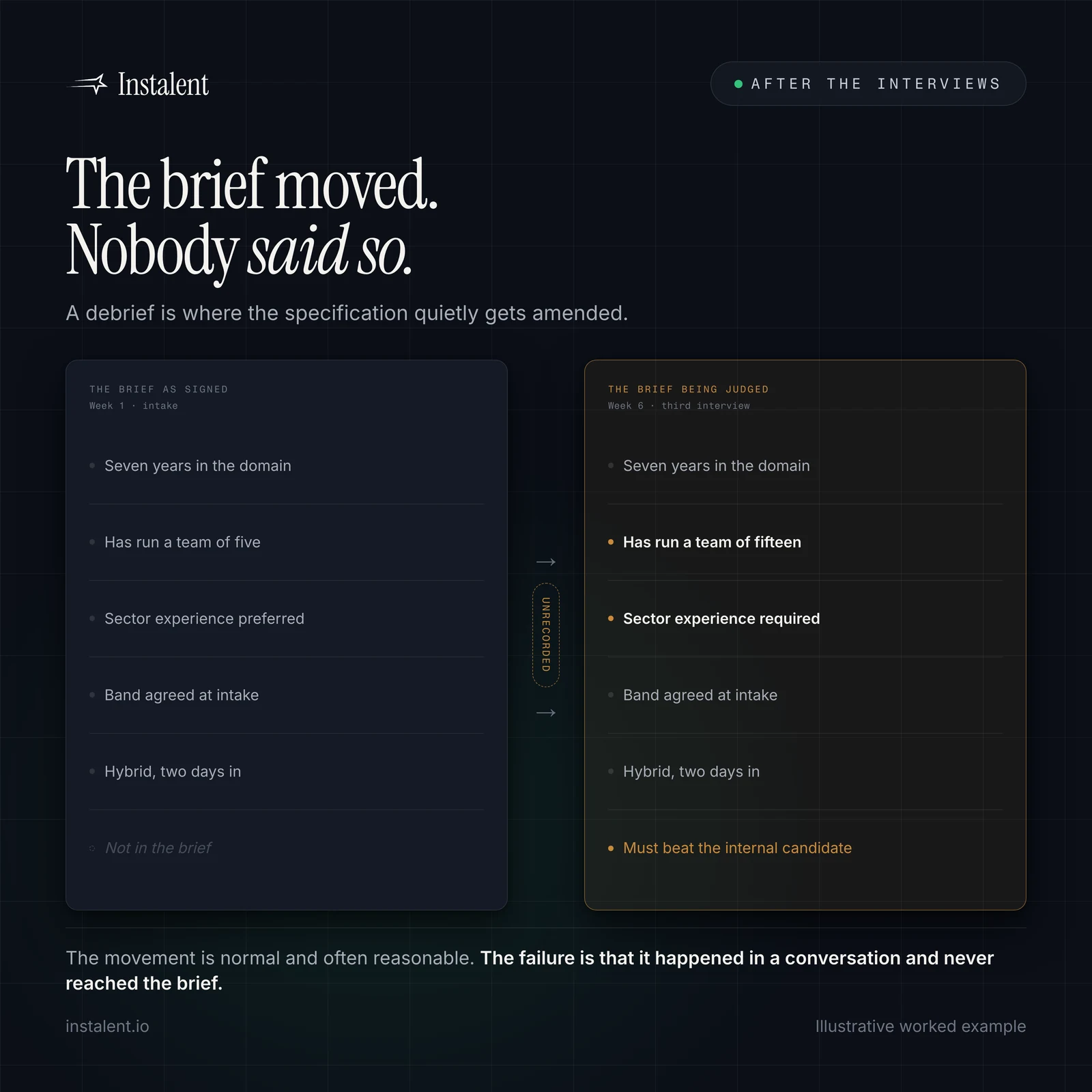
A recruiter gets a role, opens LinkedIn or another sourcing channel, types a job title, adds a location, and starts reviewing profiles. Sometimes that works. But very often, it creates a messy process.
The search becomes too narrow, too broad, or too dependent on one title. Good candidates get missed because they use different titles. Poor-fit candidates get saved because the original criteria were not clear enough. After a while, the recruiter has a list of names, but not always a clear reason why those names should move forward.
In the playbook, we start before the search. We talk about defining what good looks like for the role first. That means looking at:
- Domain experience
- Industry background
- Skills and traits
- Track record
- Salary expectations
- The general impression from a CV or LinkedIn profile
This sounds simple, but it changes the quality of the whole process.

What Module 1 teaches
We do not want this blog to replace the actual module, because the value is in watching the process and following the documentation step by step. But at a high level, Module 1 is about building a more structured candidate sourcing habit.
Jon walks through how to move from role requirements into search criteria, how to adjust the search when results are weak, and how to think about sourcing across multiple channels instead of relying on one place only.
The module also covers an important part that many recruiters skip: evaluation.
Finding 100 profiles is not the win. The real win is being able to understand which candidates are actually worth moving forward with. In the playbook, we explain a simple scoring approach where selected requirements can be evaluated consistently.
Why evaluation matters
Evaluation is not about making recruitment robotic. It is about making the review process clearer and less dependent on gut feeling alone.
Where Instalent fits into the learning path
The Sourcing Playbook can be followed manually, inside Instalent, or with a mix of both.
That matters because good sourcing should not depend only on one tool. Recruiters should understand the method first. The tool should then help make that method faster, cleaner, and easier to repeat.
Inside Instalent, the same sourcing thinking can be supported through search, projects, candidate evaluation, enrichment, and outreach preparation. Instead of keeping everything scattered across tabs, spreadsheets, and notes, recruiters can work from a more connected workspace.
But the main idea is not "use Instalent and everything is solved." The main idea is: learn the process, understand the logic, and then use better systems to execute it.
Who this candidate sourcing module is for
Module 1 is useful for recruiters who are new to sourcing and want a practical starting point. It is also useful for teams that already source candidates but feel the process is too manual, inconsistent, or hard to repeat.
If you are building a recruitment team, training junior recruiters, or trying to improve how your team finds and reviews candidates, this module gives you a clear foundation.
It is not theory. It is the kind of sourcing structure we believe more recruiters should have earlier in their journey.
What comes next
The first module is now available inside the Sourcing Playbook. It focuses on candidate sourcing and how to build a better sourcing process from the beginning.
The next module is focused on client prospecting and outreach, which is another area where recruiters often spend a lot of time manually finding companies, decision-makers, emails, and follow-up opportunities.
There is a lot more coming. Our goal with the Sourcing Playbook is to make it a practical learning path for recruiters who want to understand the work better, not just use another tool without context.
If you are starting your recruitment journey, or if you want to make your sourcing process more structured, Module 1 is a good place to begin.
Related reading: recruitment strategies is the layer of choice above any playbook, and talent pipeline is what the plays should be depositing into.
Watch the modules inside the Sourcing Playbook and start building a more repeatable approach to candidate sourcing.
Visit the Sourcing Playbook here: https://sourcingplaybook.com/
Find better candidates, faster
Source, verify and reach candidates on one engine. Get 25% off your first month.
Keep reading