The LinkedIn Recruiter Alternative Built for AI Sourcing in 2026
A LinkedIn Recruiter alternative that searches in plain English, enriches verified contacts, and scores candidates against your criteria - not just LinkedIn.
Do this in Instalent - source, verify and reach candidates in one flow.
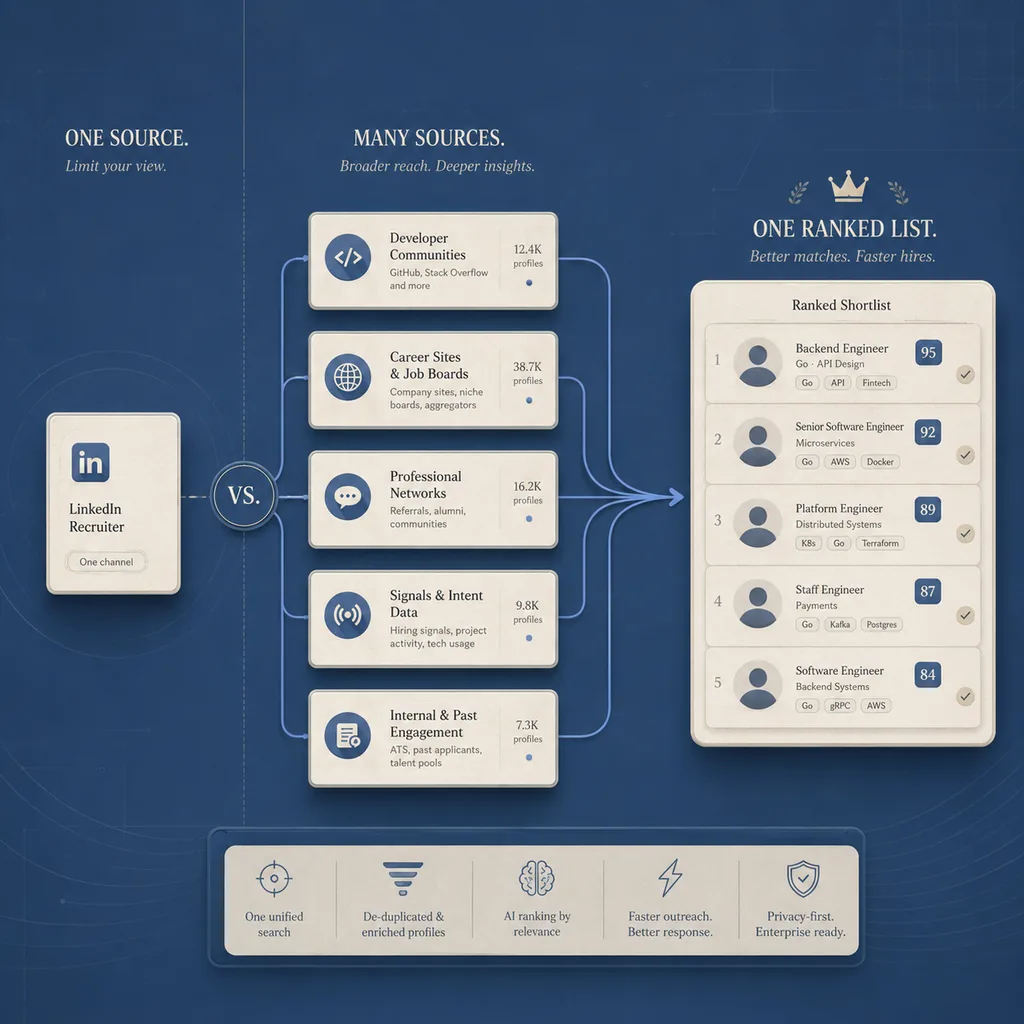
If you are weighing a LinkedIn Recruiter alternative, the real question is not "which tool has more profiles" - it is "which tool gets you to the right ten people fastest, and lets you reach them on your own terms."
LinkedIn Recruiter is the default for a reason. It sits on the largest professional network most working people keep updated, and recruiters already spend their day there. For sourcing inside that network, with its filters and InMail, very little touches it. The catch is that everything about the workflow assumes one network is the whole world - you search it, you message inside it, and your pipeline is only as wide as the profiles people choose to maintain on a single platform.
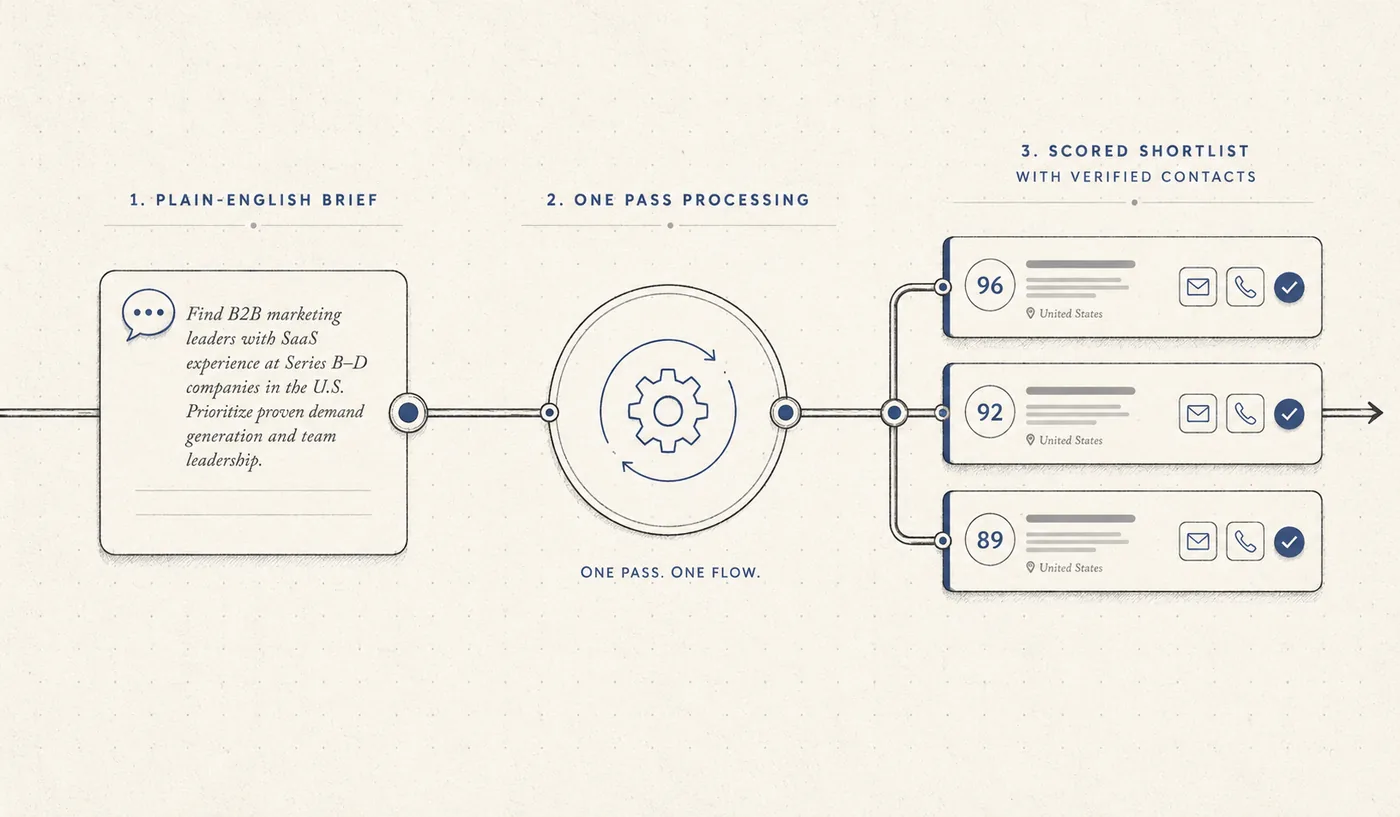
That assumption is exactly where an alternative earns its place. Instalent takes a different path: describe the role in plain English and it sources across multiple vendor sources into one ranked table, enriches verified direct contacts, and scores each person against the criteria you actually care about. The point is not to out-LinkedIn LinkedIn. It is to give you a sourcing surface that isn't locked to a single network or a single inbox.
The limits of single-network sourcing on LinkedIn Recruiter
A network-first tool is only as complete as the profiles inside it. That creates blind spots no amount of Boolean tuning fixes:
- The people who don't keep a profile current. Strong passive candidates - especially senior engineers, researchers and operators - often let their profile go stale or keep it deliberately thin. They are findable, just not where a single-network search looks.
- The vocabulary gap. Boolean strings match the words a person used, not what they actually did. A "staff engineer who scaled payments infrastructure" may never have typed any of those words. Keyword search misses them; intent-based search surfaces them.
- One channel for outreach. When contact is gated behind a platform's own messaging, your reply rate is tied to how often that audience checks that platform. Some of the best candidates barely log in.
None of this makes LinkedIn Recruiter a bad product - it is excellent at what it does. It means a network is a starting point, not the entire map. An alternative helps when you need to see past the edge of one platform.
LinkedIn Recruiter vs Instalent
| LinkedIn Recruiter | Instalent | |
|---|---|---|
| Search | Boolean filters, LinkedIn network only | Natural language across multiple vendor sources |
| Contact data | InMail inside LinkedIn | Verified email / phone (enriched from multiple vendors) |
| Fit scoring | Manual review | AI scoring against your criteria |
| Outreach | InMail | Multichannel outreach (email and other channels) |
| Pricing | Lite ≈ $170/mo ($1,680/yr); Corporate gated | See pricing |
On pricing
Recruiter Lite is publicly listed at about $170/month ($1,680/year). Recruiter Corporate is contact-sales - buyer-reported figures put it near $10,800–$15,000 per seat/year, before InMail and add-on overages. Treat the enterprise number as buyer data, not a published rate.
Why verified off-platform contacts matter
The most underrated difference between the two approaches is not search - it is what happens after you find someone. If the only way to reach a candidate runs through one platform's messaging, your outreach lives and dies by that platform's deliverability, inbox limits and the candidate's login habits.
Verified direct contacts change the math. When you have a confirmed email and, where available, a phone number, you can:
- Reach people where they actually respond - a personal inbox often beats a notification a candidate sees once a fortnight.
- Run a real sequence rather than a handful of gated messages, and follow up without burning a finite per-month allowance.
- Keep your pipeline portable. Contacts you own move with you between roles and tools; messages trapped in one platform do not.
Instalent's enrichment pulls verified email and phone from multiple vendors rather than one, so when a single source comes up empty another can fill the gap. The candidate then enters multichannel outreach - email and other channels - instead of a single locked inbox.
How to evaluate a LinkedIn Recruiter alternative
Before you switch or stack a tool alongside Recruiter, pressure-test it on your own roles:
Run a real brief, not a demo query
Take a role you are struggling to fill and describe it the way you'd brief a colleague - "senior data engineer who's owned a lakehouse migration at a mid-sized fintech." A good alternative should read that intent and return relevant people, not just keyword matches. Imagine a fictional candidate, Priya from Northwind Labs, who never wrote "lakehouse" on any profile but led exactly that work - the test is whether the tool finds her.
Check the contact data, not just the count
A long results list is worthless if you can't reach anyone. Pull ten profiles and verify how many come back with a usable email or phone, and how recently those were confirmed. Coverage and freshness matter more than raw volume.
Score against your criteria - and read the reasoning
AI fit scoring is only useful if it explains itself in language you'd accept from a recruiter, tied to your actual must-haves. Look for a score and a plain-English rationale you can defend to a hiring manager.
Add up the real cost
The license is the obvious number. The hidden cost of a single-network tool is the hours spent tuning Boolean strings and the candidates you never see because they describe themselves differently. Weigh the subscription against time saved and pipeline you'd otherwise miss - that is the honest comparison, and it is where a different cost structure can pay for itself.
Use both, on purpose
This isn't an either/or for every team. Plenty of recruiters keep Recruiter for network depth and add an alternative to widen sourcing beyond one platform and unlock verified off-platform contact. Pick the split that fits your roles, not the marketing.
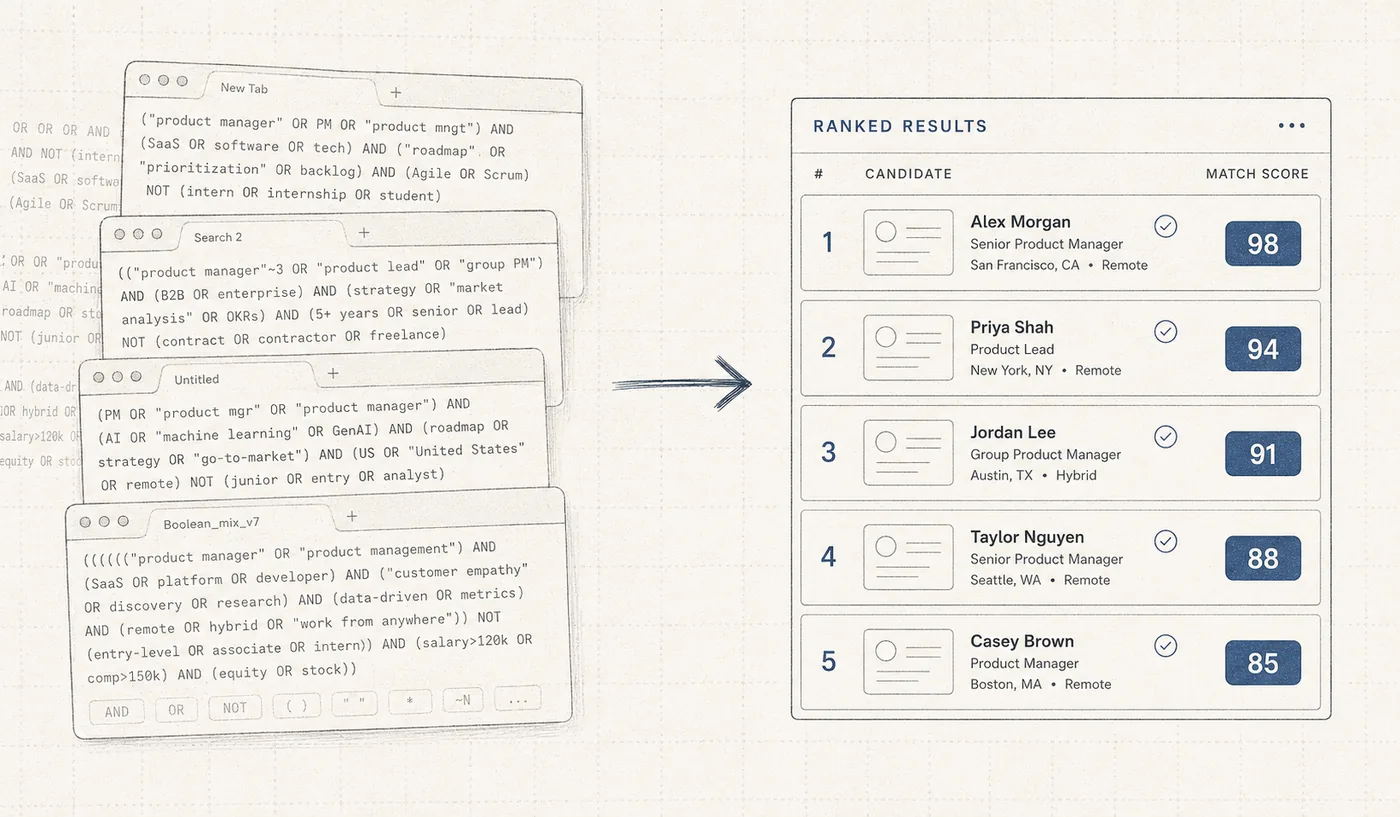
When sourcing, enrichment and scoring share one workspace, the whole brief moves faster. Early customers who switched report 74% less time on search, 3× more profiles reviewed per brief, and 2.4× faster team review when shortlists, history and enrichment live in one place.
Read more on the about page or browse the blog for deeper walkthroughs.
Try a free search - paste your role and watch Instalent source, enrich and score candidates in seconds. Start free →
Sources
Find better candidates, faster
Source, verify and reach candidates on one engine. Get 50% off your first month.
Keep reading