Claude for Recruitment: Reasoning Over the Whole Slate
How experienced recruiters use Claude to score a whole shortlist at once, break down a job spec and read interview debriefs - then run it on live candidate data.
Do this in Instalent - source, verify and reach candidates in one flow.

On a desk carrying fifteen reqs, the expensive part was never the writing. It is holding forty candidates, three job descriptions and a pile of intake notes in your head and scoring them the same way - against the same bar, on a Friday. That is the job Claude is built for: thinking through the whole search at once, on evidence instead of gut feel.
Where ChatGPT is the desk's fast writer, Claude is the one you hand the whole pile to. Three things make that real for an experienced recruiter, and one honest limit keeps it a support tool, not the decision-maker.
Using Claude to score a whole candidate slate in one pass
Claude's context window holds about 200,000 tokens by default - roughly 500 pages - and up to 1,000,000 on its top models. Load the job description, the scorecard and the full candidate list into one window, and it scores every profile against the same criteria in a single pass, instead of judging candidate three in a chat that has already forgotten candidate one. On a heavy req load, that consistency across the slate - not speed - is what matters, because it is what makes two shortlists actually comparable.

Break down the req before you source
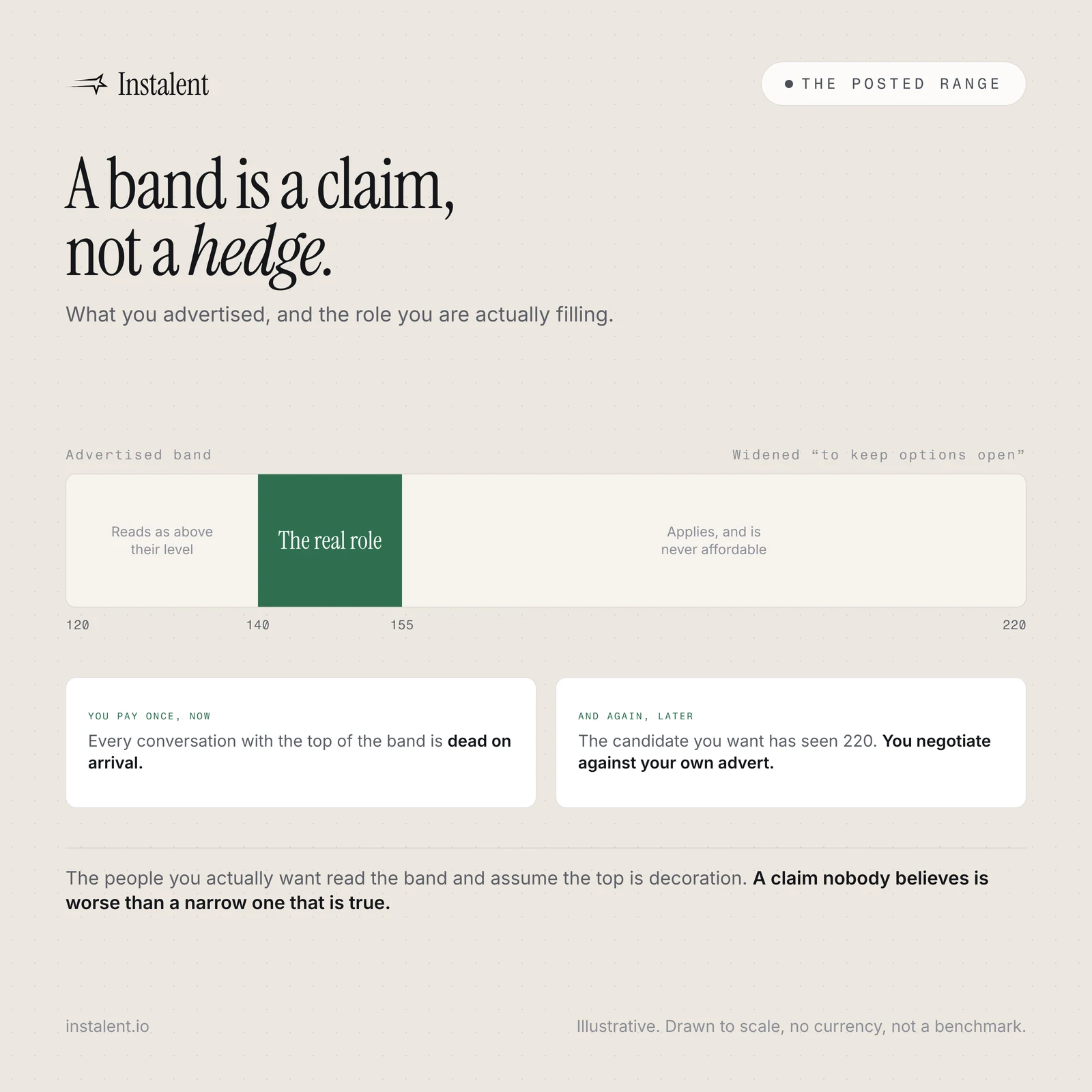
Give Claude a bloated four-page job description and have it split the real must-haves from the wishlist, flag where the language is over-specified or biased, and turn the result into a clean 1-5 rubric with behavioural anchors and screening questions tied to each requirement. You fix the brief before you spend a week sourcing against the wrong one - the highest-leverage move you can make at the start of a search.
Read interview debriefs in one go
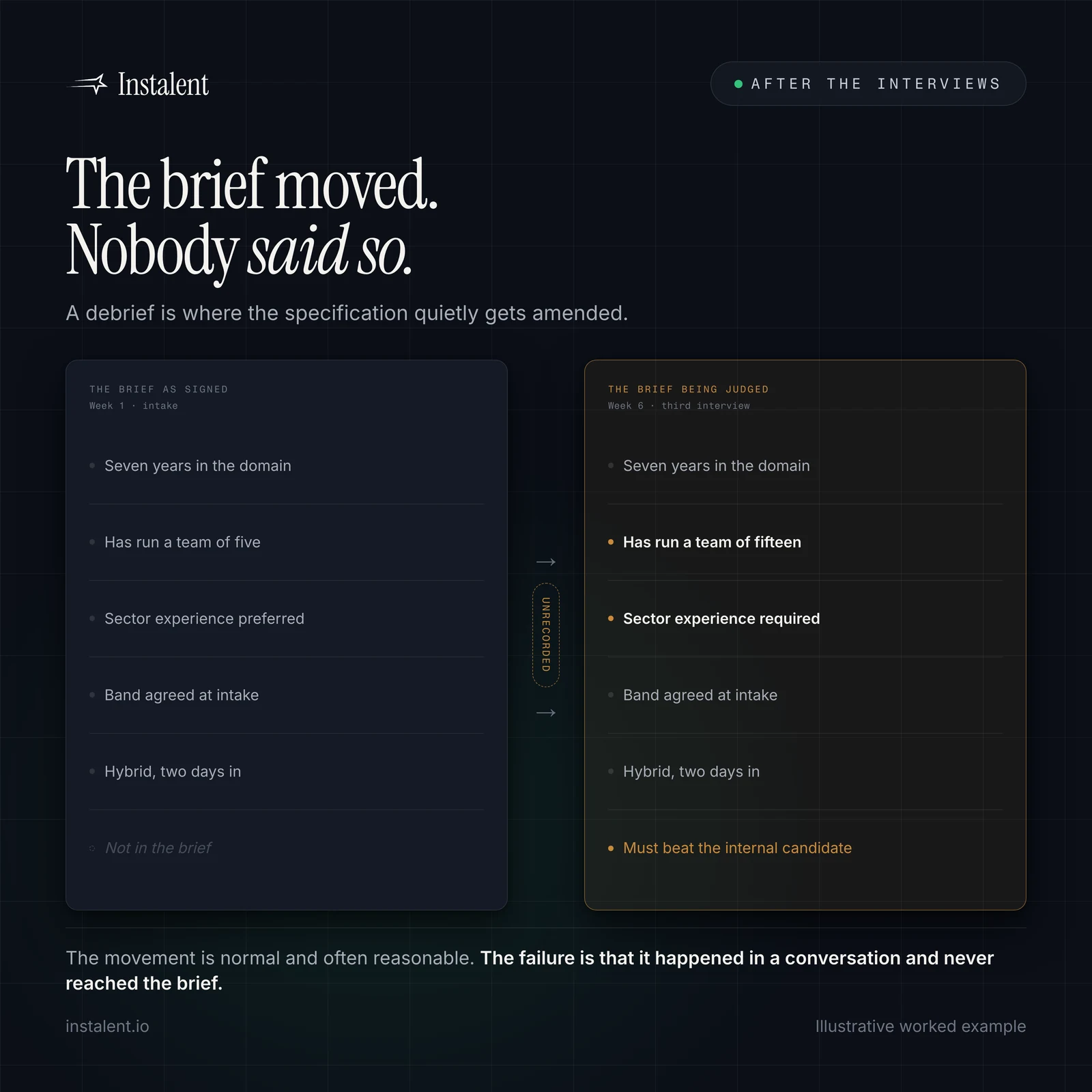
Paste a full panel debrief or a stack of interviewer notes and get a clear read back: the competency signals, where interviewers disagree, the open questions for the next round, and a hire or no-hire call with the evidence cited. Because the whole transcript fits in one window, nothing gets cut - and that write-up saves a coordinator hours on every loop.
Bias-aware, audit-ready scoring
This is where Claude's careful instruction-following pays off on compliance.
The rubric prompt that holds up
"Score each competency 1-5. Cite the exact resume line behind every score. If the evidence is not there, mark it 'unknown' - never guess. Ignore name, age and school; score only demonstrated skills." You get a comparable, defensible slate with citations you can check - the kind of paper trail that survives a New York Local Law 144 bias audit or EU AI Act scrutiny of a hiring system.
Durable desk setup, not throwaway prompts
A prompt is gone the moment you close the tab. Claude's Projects hold context that sticks - a client's comp band, culture and must-haves - kept separate per project so one client's search never leaks into another's. Artifacts turn a scorecard or a side-by-side comparison into an editable, shareable doc a hiring manager can actually read. And Agent Skills let you package a repeatable process - "how we screen this role family" - that Claude loads when you need it. These build up over time instead of vanishing after one chat.
Where Claude for recruitment stops
The limit is the one every language model has, and it is worth saying plainly. Out of the box, Claude only knows what is in the chat. It cannot source a real person, cannot verify a contact, and everything it scores is only as current as the resumes you paste in. Candidate data also carries real privacy and compliance weight the moment it leaves your systems.
2026: the model that built the plumbing
Here Claude splits from every other assistant. In November 2024, Anthropic introduced and open-sourced the Model Context Protocol - the standard for connecting AI safely to real tools and data. The industry adopted it through 2025, and it moved to a Linux Foundation body in December 2025. Claude is built around that connection layer, so "Claude working inside your recruiting stack" is a first-class path, not a bolt-on. The momentum is real: by late 2025 Anthropic reported more than 300,000 business customers and a run rate above 5 billion dollars, and its own research finds people now use Claude to support their work more often than to replace it.
Claude plus Instalent: reasoning on live candidates
Connect Instalent to Claude over MCP and the reasoning engine finally gets real inputs. Describe the role and Claude sources real candidates, enriches verified contacts from multiple sources, scores the live slate against your rubric with the evidence shown, pushes the shortlist to your ATS (RecruiterFlow, Greenhouse, Lever or TeamTailor), and drafts multichannel outreach - with you approving anything that matters. The whole-slate thinking Claude is so good at now runs on real, verified people instead of pasted text.
That is the jump from a brilliant reader to an agent that acts - safely, and on your data.
See it on your own reqs. Get started and run a search-to-outreach pass from Claude itself. Weighing the two assistants? Read ChatGPT for recruitment for the sourcing-heavy side.
Sources
- Anthropic - Introducing the Model Context Protocol (25 November 2024): https://www.anthropic.com/news/model-context-protocol
- Anthropic - Series F at USD 183B post-money valuation (2 September 2025): https://www.anthropic.com/news/anthropic-raises-series-f-at-usd183b-post-money-valuation
- Anthropic / Claude Help Center - Context window on paid Claude plans: https://support.claude.com/en/articles/8606394-how-large-is-the-context-window-on-paid-claude-plans
- SHRM - 2025 Talent Trends: The Role of AI in HR: https://www.shrm.org/topics-tools/research/2025-talent-trends/ai-in-hr
- LinkedIn - The Future of Recruiting 2025: https://business.linkedin.com/talent-solutions/resources/future-of-recruiting
Find better candidates, faster
Source, verify and reach candidates on one engine. Get 25% off your first month.
Keep reading