A SeekOut Alternative for Natural-Language Sourcing and Verified Contacts
A SeekOut alternative that searches in plain English, enriches verified contacts and scores fit against your criteria - with self-serve pricing, not a sales call.
Do this in Instalent - source, verify and reach candidates in one flow.
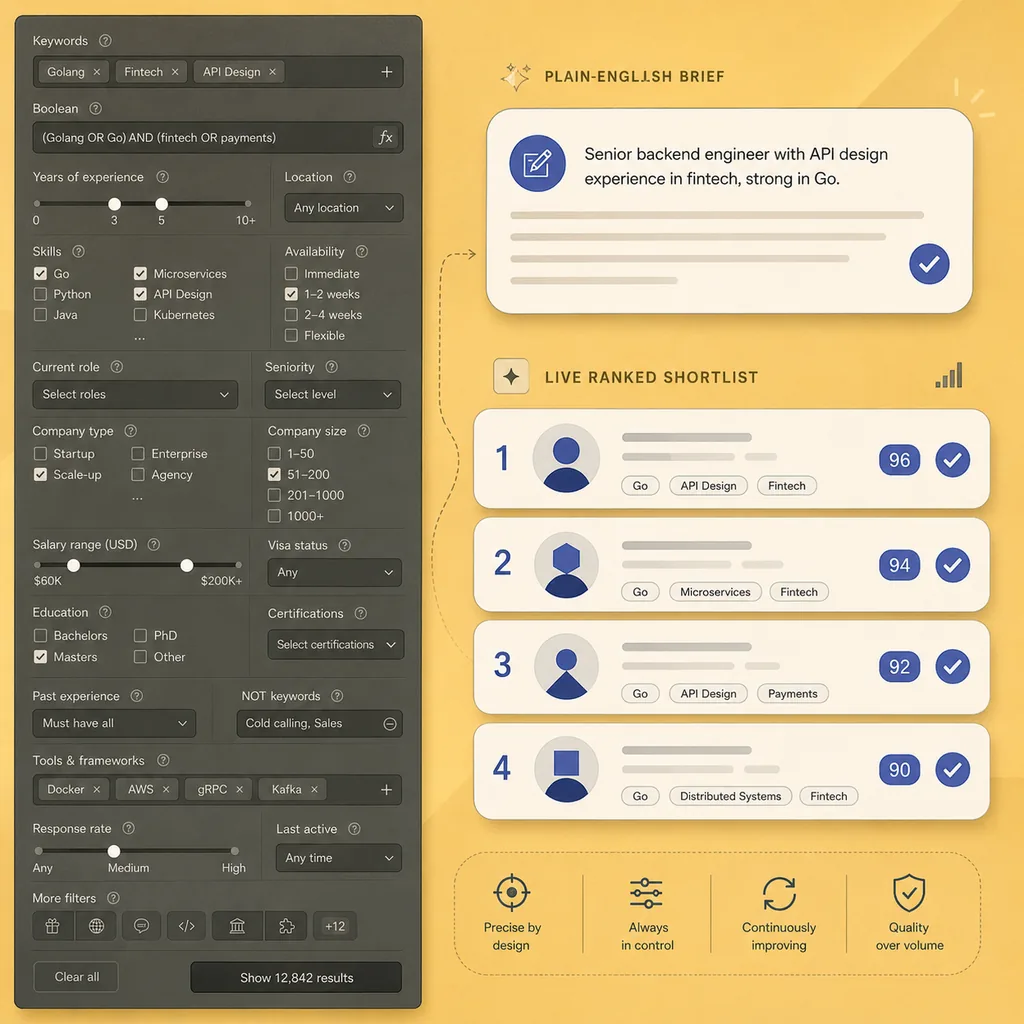
A SeekOut alternative earns the switch by changing the sourcing workflow: plain-English search, verified contacts and scoring - without an enterprise contract just to start.
SeekOut is a strong AI talent-search platform, well known for the depth of its candidate profiles and for talent and diversity analytics that enterprise teams lean on for workforce planning. If your job is to understand a talent market - map where a skill set lives, benchmark a pipeline, report on representation - that depth is genuinely useful. The question worth asking before you renew or sign anything is simpler: which problem are you actually solving day to day? If it's "I need to fill this req, fast, with people I can reach," a workflow built around deep profile records and analytics dashboards can feel heavier than the job requires. That's the gap Instalent is built for - natural-language input, dynamic waterfall enrichment of verified contacts, and AI scoring against the criteria you set, in one flow.
How to evaluate a SeekOut alternative
Before comparing logos, get clear on what you're buying. Most talent-search tools optimize for one of two things, and the trade-off shapes your whole week.
Depth of profile vs breadth of sources
- Depth means a rich, structured record for each person - work history, skills, signals, sometimes inferred attributes. It's excellent for analysis and for telling a thorough story about a candidate before you reach out.
- Breadth means casting across many sources to surface people you wouldn't find in any single index. It favors discovery and reach over a single canonical record.
Neither is "better." A research-heavy executive search benefits from depth; a high-volume technical pipeline usually benefits from breadth plus fast, verified contact data. Instalent leans toward breadth and reach: it searches in natural language across multiple vendor sources at once, then enriches the people worth contacting.
The questions that actually matter
- Can you search the way you think? Plain-English briefs beat stacking boolean filters when the role is fuzzy.
- Are the contacts verified, and from more than one source? A profile you can't reach is a dead end. Single-source contact lookups miss people that a multi-vendor approach catches.
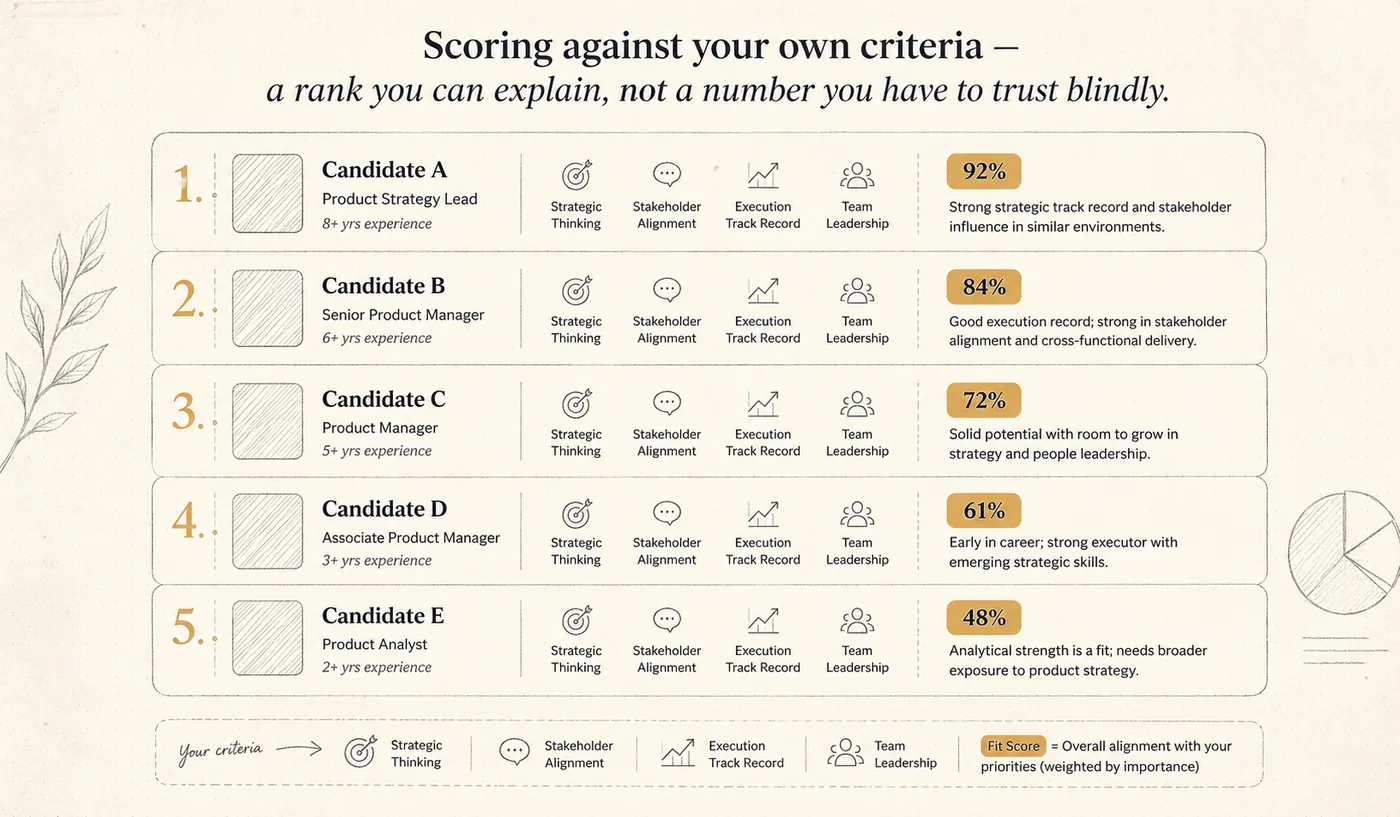
- Does it score against your bar, or a generic match? "Good fit" is your definition, not the vendor's.
- Can you start without a sales cycle? Self-serve access lets you prove value on a live req before committing budget.
SeekOut vs Instalent
| SeekOut | Instalent | |
|---|---|---|
| Search | AI search across 1B+ profiles, filters | Natural language across the open web - GitHub, company profiles, forums and more |
| Enrichment | Contact lookup | Dynamic waterfall enrichment: verified email / phone / LinkedIn |
| Scoring | Intelligent matching | AI scoring/classification against your criteria |
| Entry pricing | Recruit Core ≈ $149/mo billed annually ($1,788/yr) | See pricing |
| Team / enterprise | Contact-sales | See pricing |
Read the table as a difference in emphasis, not a scorecard. SeekOut's profile depth and analytics are real strengths for talent intelligence and reporting. Instalent's emphasis is the everyday sourcing loop - find, verify, score, reach - with as little manual stitching between steps as possible.
On SeekOut pricing
SeekOut's pricing page lists Recruit Core from about $149/month billed annually ($1,788/year); team and enterprise tiers are contact-sales. Independent buyer data puts typical team/enterprise contracts near $20,000/year - treat that as buyer-reported, not a published SeekOut price.
SeekOut vs Instalent: where the workflows differ
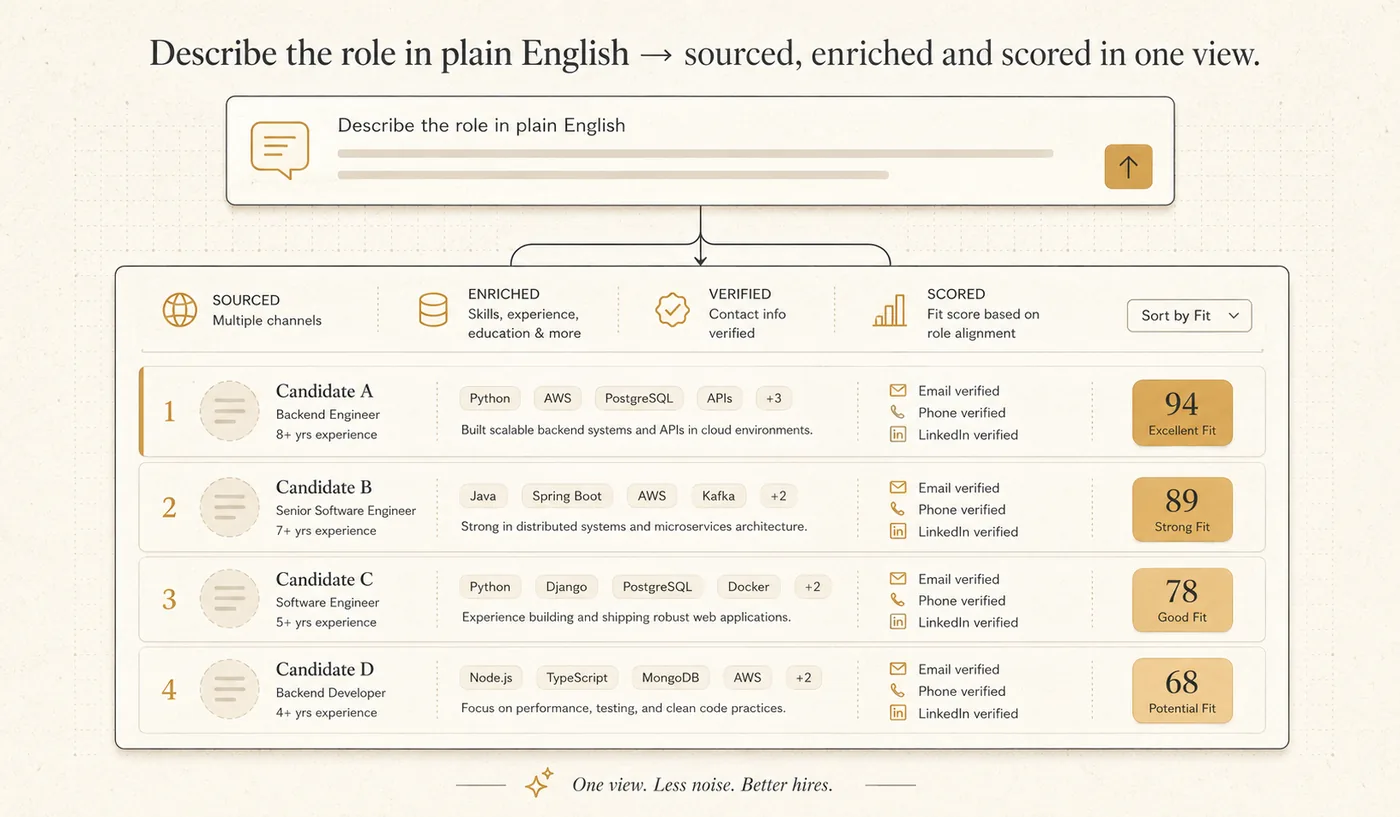
SeekOut leans on powerful filters and a deep profile index; Instalent leans on intent. You describe the role the way you'd brief a colleague, the first profiles stream in within seconds, and the workflow enriches contact options and scores fit against your own definition of "good." The practical effect is that the work happens in one place instead of bouncing between a search tool, a contact-finder, and a spreadsheet.
A concrete workflow
Say you're filling a senior backend role at a fictional Series B company, "Northwind Labs."
- Brief it in plain English. "Senior backend engineers who've scaled payment systems, ideally at companies that grew from 20 to 200 people." No filter tree to assemble.
- Watch results stream in. Profiles arrive across multiple sources within seconds, so you're triaging while the search is still running - not waiting for a batch.
- Enrich the ones worth a conversation. Dynamic waterfall enrichment tries multiple vendors for verified email and phone, so a single source missing the data doesn't end the line.
- Score against your bar. AI scoring ranks each profile against your criteria - the payments depth and the scale-up signal - with a short rationale, not a black-box number.
- Add company intent. Buying signals like recent funding, hiring spikes, or leadership change tell you who's worth prioritizing now versus later.
- Reach out. Move qualified candidates into multichannel outreach over email and other channels, with the shortlist and history kept in one shared workspace.
When SeekOut may still be the right call
If your primary need is enterprise talent intelligence - deep diversity analytics, large-scale market mapping, structured reporting to leadership - SeekOut's strengths line up with that work. A SeekOut alternative makes the most sense when the job is operational sourcing: turning a brief into reachable, scored, prioritized candidates without a heavy filter-building or analytics layer in the middle.
Run the comparison on a live req
Pick a role you're sourcing right now, run the same brief through both tools, and compare on the metrics that matter: how many reachable, verified contacts you get, and how confident you are in the ranking. A two-day side-by-side tells you more than any feature grid.
Early customers report 74% less time on search and 2.4× faster team review with shortlists and history in one shared workspace. More on the about page and blog.
Try a free search - paste your role and watch Instalent source, enrich and score candidates in seconds. Start free →
Sources
Find better candidates, faster
Source, verify and reach candidates on one engine. Get 50% off your first month.
Keep reading