An Apollo Alternative for Finding Companies That Are Hiring
An Apollo alternative built for recruiters and biz-dev - find companies showing hiring or funding intent, then reach the decision-maker with verified contacts.
Do this in Instalent - source, verify and reach candidates in one flow.
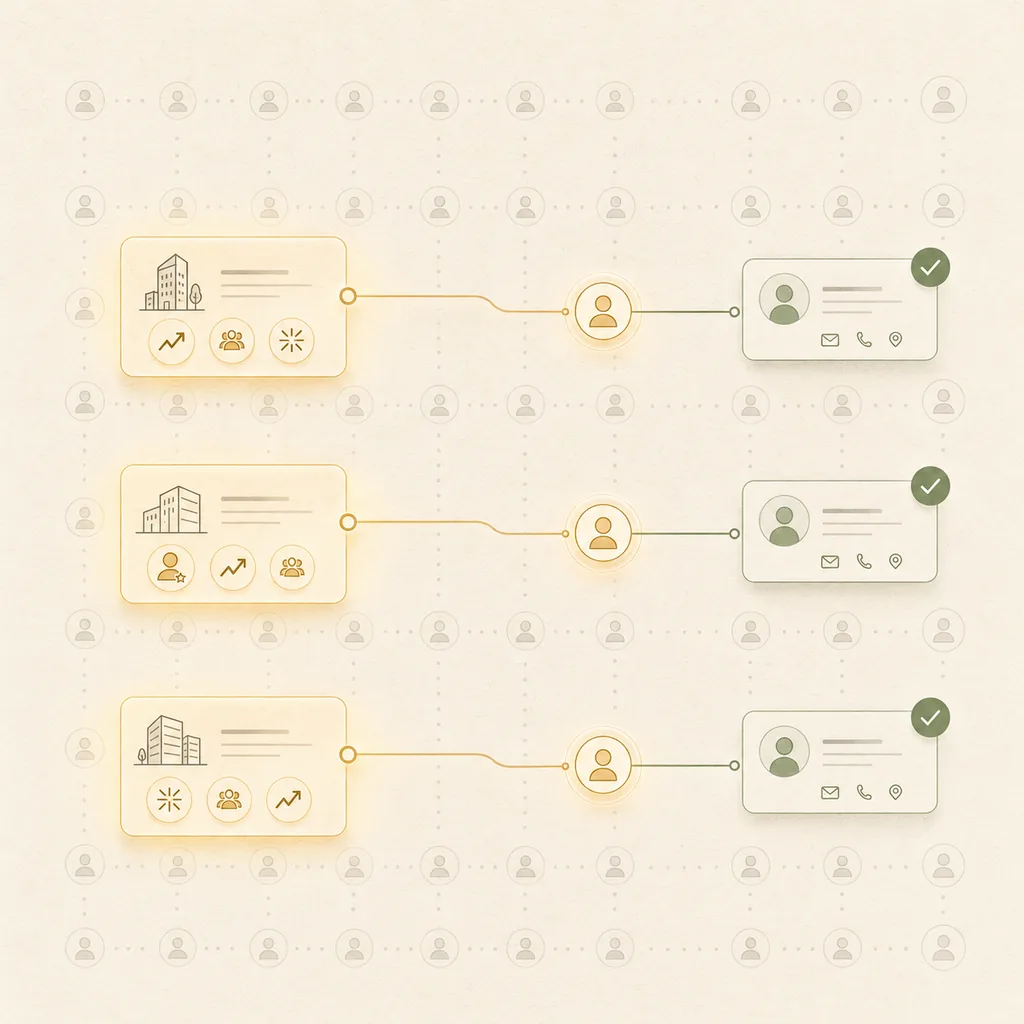
The right Apollo alternative for recruiters isn't "more contacts" - it's finding the companies that may be getting ready to hire, then reaching the person who owns that decision.
Apollo.io is a powerful B2B sales-intelligence database (260M+ contacts) with sequences - built for sales prospecting broadly, not recruiting. It's genuinely good at what it does. But if you run agency business development, the job isn't "find me 10,000 emails." It's "find the companies about to have a hiring problem, and put me in front of the one person who feels that pain." A sales database answers that only by accident. If you want an Apollo alternative tuned to recruiter biz-dev, Instalent starts from intent: surface companies showing hiring, funding, or leadership signals, then identify the decision-makers (a VP of Engineering, a Head of Talent) and enrich their verified contacts.
The bigger-database trap: why Apollo's size is the wrong reason to buy
Every sales-intelligence tool sells you on size. More contacts, more filters, more sequences. The pitch is that volume equals pipeline. For recruiters, it usually means more noise.
A 260M-contact database is fantastic at telling you who exists and almost useless at telling you who's ready. Filter to "VP of Engineering at a 50–200-person SaaS company in the US" and you'll get a list a mile long - which you'll work cold, in the same window as every other recruiter who built the identical filter. The list doesn't know that one of those companies just closed a Series B and is about to triple headcount, while another quietly froze hiring two months ago.
So a static list leaves you guessing on the two things that actually decide whether outreach lands:
- Which companies have a need forming right now, not last quarter.
- When to reach out - early enough to matter, before the role hits every public job board.
That's the gap an intent-first approach closes.
Lead with intent, not filters
Flip the order. Instead of starting from "all VPs of Eng who match a persona" and hoping some are in-market, start from the signal and work toward the person.
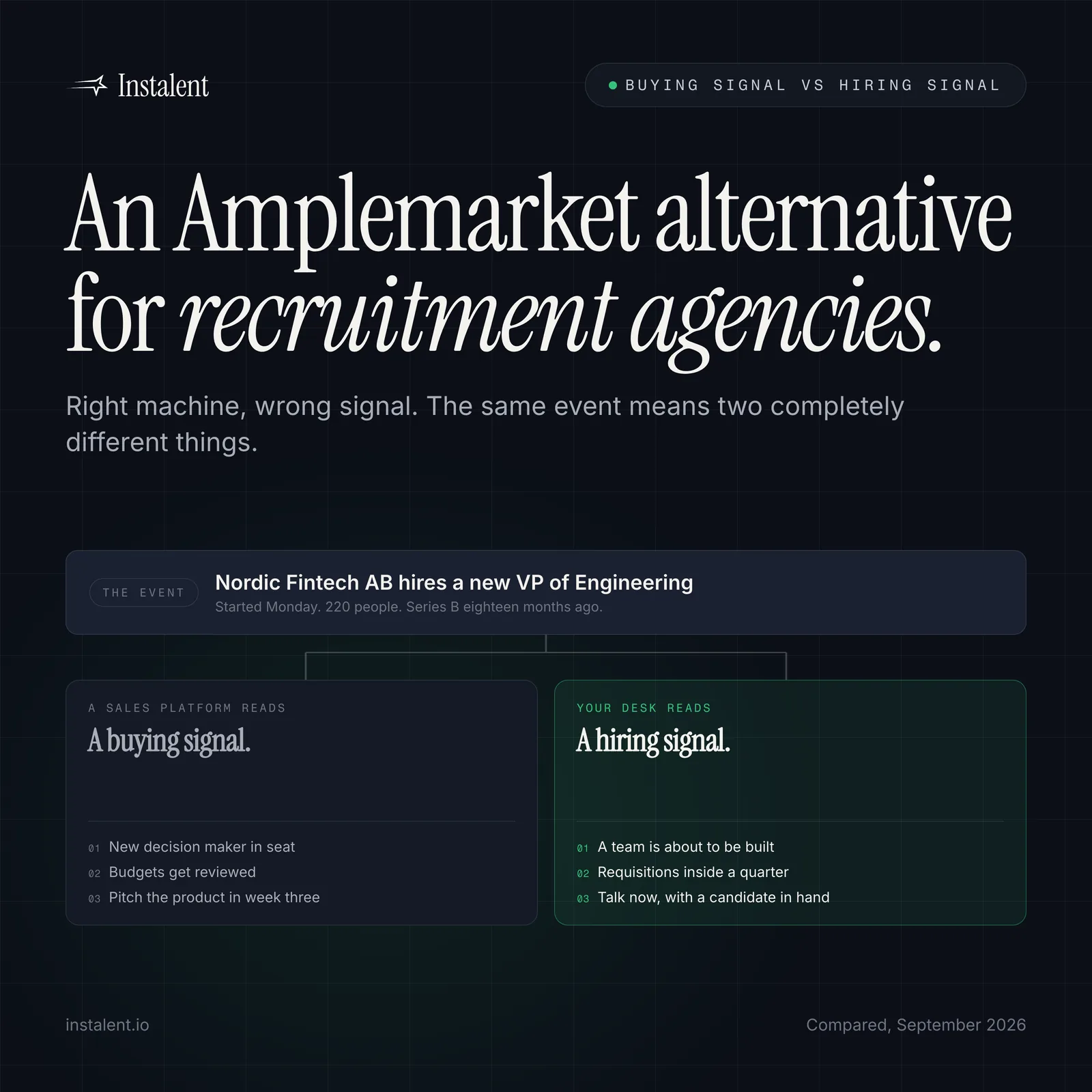
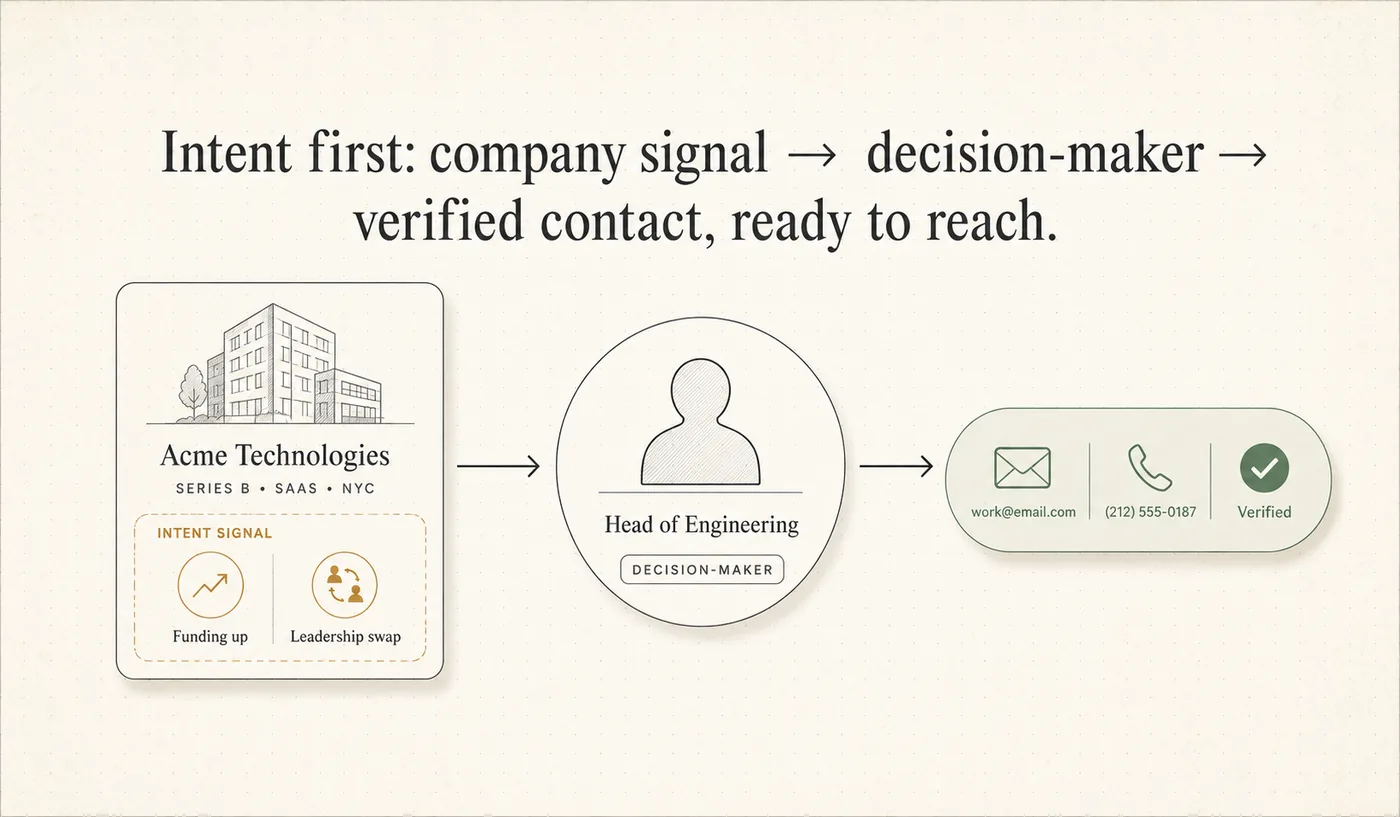
- Find the trigger. A company just raised funding, posted a wave of openings, or changed a key leader. Any of those means a hiring need is forming.
- Find the decision-maker. Inside that company, identify the person who owns the hire - usually a department head or a talent lead, not a generic mailbox.
- Get the verified contact. Pull a confirmed email or phone so your message reaches a human, not a bounce.
For example, a recruiter focused on engineering might watch for a Series A healthtech startup that just announced a funding round and posted three backend openings in a week. That's a far warmer conversation than the same VP cold off a persona filter, because you can open with the thing they're actually dealing with this month.
On Apollo pricing
Apollo's published tiers (as of June 2026, billed annually) are Free, Basic $49/seat/month, Professional $79/seat/month and Organization $119/seat/month. Credit and overage limits apply per plan. Apollo is a sales-intelligence tool - a fair comparison, not a like-for-like recruiting suite.
Apollo vs Instalent
| Apollo.io | Instalent | |
|---|---|---|
| Built for | B2B sales prospecting | Recruiting + recruiter biz-dev |
| Starting point | Company / contact filters | Hiring & funding/leadership intent signals |
| Output | Contacts + sequences | Decision-makers + verified contacts |
| Candidate side | - | Natural-language candidate sourcing too |
| Pricing | Free · Basic $49 · Pro $79 · Org $119 /seat/mo | See pricing |
The difference isn't really "more" or "fewer" features - it's the order of operations. Apollo hands you a database and lets you filter down. Instalent hands you a moment and lets you act on it.
What "verified contact" and "intent window" actually mean
Two phrases get thrown around loosely. Here's what they mean in practice for a recruiter.
Verified contact
A "verified" email or phone is one checked against real signals, not guessed from a first.last@company.com pattern. The payoff is fewer bounces and dead-end dials - which matters more than it sounds, because a high bounce rate quietly damages your sending reputation and buries the messages that would have landed. Instalent enriches contacts from multiple vendor sources, so when one source is thin on a given person, another can fill the gap.
Intent window
An "intent window" is the stretch of time when a company's need is real but not yet obvious to everyone. It opens when the trigger fires - the round closes, the leader starts, the openings go up - and it starts closing the moment the role is plastered across every job board and your inbox looks like everyone else's. Getting in early is the whole game. A short, relevant note while the need is forming beats a polished sequence sent after the company has already been pitched twenty times.
An Apollo alternative workflow you can run this week
You don't need to rip out your existing stack to test this. A simple loop:
- Pick a niche you actually place in - say, backend engineering at early-stage B2B SaaS. Specificity is what makes the signals meaningful.
- Describe the target in plain language and let Instalent surface companies showing hiring, funding, or leadership-change intent in that niche.
- Identify the decision-maker at each - the person who owns the hire, not a shared inbox.
- Enrich the verified contact and score the fit against your own criteria so you're spending time on the accounts most likely to convert.
- Reach out across multiple channels - email and other channels - with an opener tied to the actual trigger, and push the ones who respond into your ATS so nothing falls through.
Score before you send
Don't outreach to every match. Use AI scoring against your own criteria (stage, location, tech, team size) to rank the list first, then spend your best hour on the top of it. A short, relevant note to ten in-market companies beats a generic blast to a thousand.
Where Apollo still fits
None of this means Apollo is the wrong tool - it's a different one. If your day job is broad B2B sales prospecting, building large outbound lists across many industries, or running long automated sequences at scale, Apollo's database depth and sequencing are exactly what you want. The honest framing is fit: a sales-intelligence platform helps you reach many companies; a recruiter-tuned tool helps you reach the right ones at the right moment.
For recruiters who also source candidates, both sides of that work live in one place - company intent and biz-dev on one hand, natural-language candidate sourcing on the other. More on the about page and the blog.
Try a free search - paste your target and watch Instalent surface intent, decision-makers and verified contacts in one workflow. Start free →
Sources
Find better candidates, faster
Source, verify and reach candidates on one engine. Get 50% off your first month.
Keep reading